Algeria
 Egypt
 Libya
 Morocco
 Sudan
 Tunisia
 Benin
 Burkina Faso
 Cabo Verde
 Côte d'Ivoire
 Ghana
 Guinea
 Guinea-Bissau
 Liberia
 Mali
 Mauritania
 Niger
 Nigeria
 Senegal
 Sierra Leone
 The Gambia
 Togo
 Cameroon
 Central African Republic
 Chad
 DR Congo
 Equatorial Guinea
 Gabon
 Republic of the Congo
 São Tomé and Príncipe
 Burundi
 Comoros
 Djibouti
 Eritrea
 Ethiopia
 Kenya
 Madagascar
 Malawi
 Mauritius
 Mozambique
 Rwanda
 Seychelles
 Somalia
 South Sudan
 Tanzania
 Uganda
 Botswana
 Eswatini
 Lesotho
 Namibia
 South Africa
 Zambia
 Zimbabwe
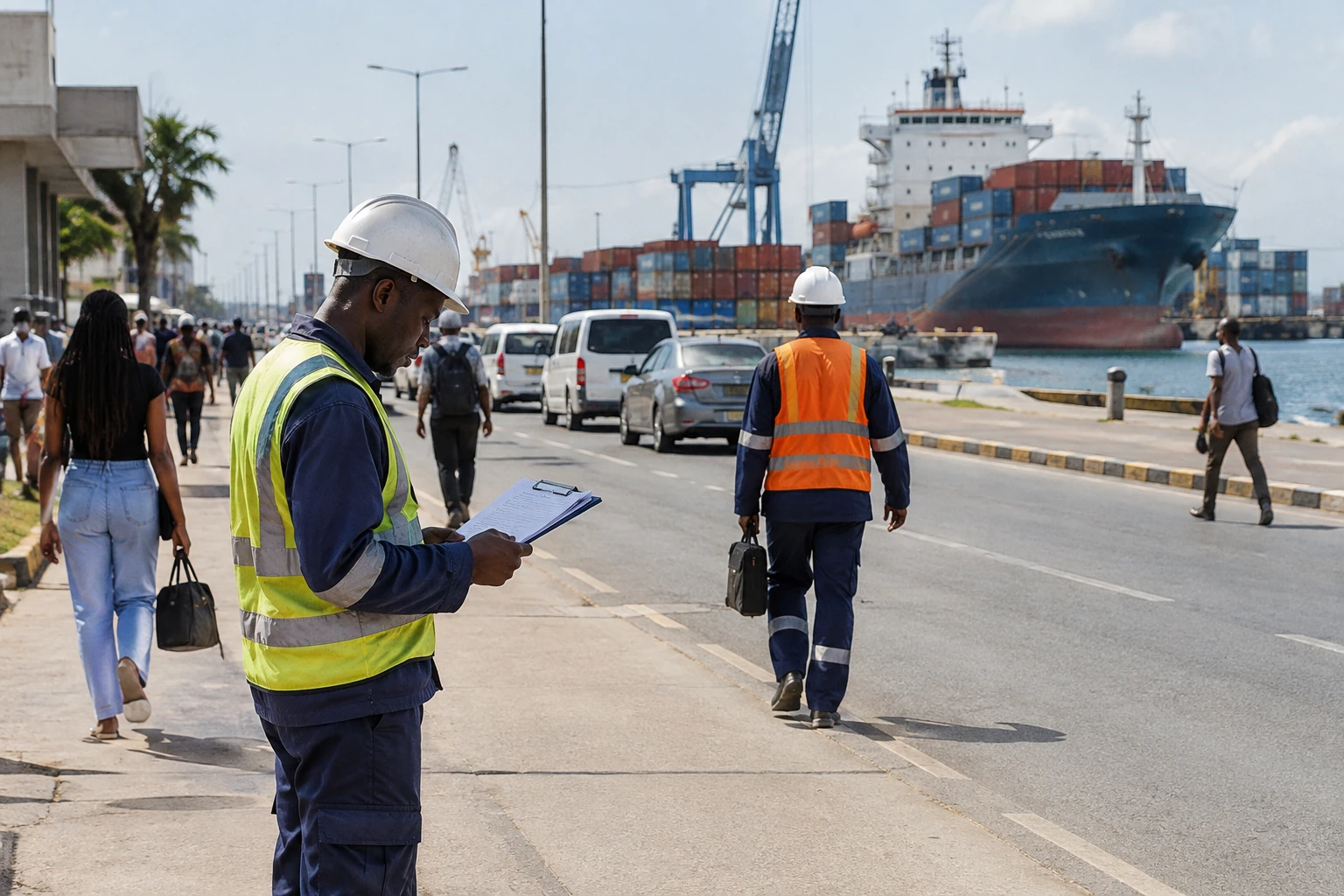
A port can gain cranes, quays and hectares without automatically becoming a regional gateway. For Luanda, the challenge will be to turn new maritime capacity into faster, lower-cost trade for Angolan businesses and their neighbours.
A long-term bet on the Luanda terminal
On 6 October 2026, DP World announced a ten-year extension of its concession for the multipurpose terminal at the Port of Luanda. The agreement now runs until 2051. The operator plans to invest an additional $90 million over the next two years. A specialist maritime industry outlet also reported these key figures.
The programme plans to extend the quay by 222 metres and expand the operating area by ten hectares. The target nominal capacity is 1.2 million TEU a year. TEU, or twenty-foot equivalent unit, is the standard unit used to measure container volume. The terminal should also be able to accommodate two Post-Panamax vessels simultaneously, which are wider than the older sizes compatible with the Panama Canal.
According to DP World, the company has invested more than $260 million since it began operations in 2021. The number of containers handled is said to have risen from about 177,000 TEU that year to more than 350,000 in 2026. These figures, provided by the operator and reported by the trade press, indicate strong growth. However, they do not measure ships’ waiting times or the actual costs borne by importers.
The initial concession, signed in January 2021 for 20 years, already provided for new works and equipment. The extension to 2051 gives the company a longer timeframe in which to recoup its investments. For the Angolan authorities, the challenge is to ensure that the additional time brings observable results: increased capacity, reliable service and local benefits.
Luanda in a reshaping port network
The Port of Luanda plays a central role in trade in Angola, a country in southern Africa whose capital is Luanda. A UNCTAD assessment published in 2024 states that the port accounted for more than 80% of the volume of goods handled by Angolan ports in 2021. This figure covers goods, not containers alone. It confirms the capital’s importance, but also highlights the concentration of flows around a single major port.
The terminal’s modernisation is taking place as Angola seeks to diversify its economy and improve its trade links. It primarily affects shipping lines, importers and exporters that use Luanda. Formal businesses could benefit from smoother operations if the new equipment reduces port calls’ duration. But port charges and delays overland can limit that advantage, particularly for small businesses with less room to absorb additional costs.
Luanda is not the country’s only maritime gateway. Further south, the Port of Lobito is at the heart of a rail and road corridor linking the Atlantic to the mining regions of the Democratic Republic of the Congo and Zambia. In 2023, the three countries signed an agreement, with support from the Southern African Development Community (SADC), to facilitate transit and coordinate the corridor’s development. This project complements Luanda’s role, but also creates another platform that could attract some traffic.
At regional level, shippers can compare several routes to markets in Central and Southern Africa. The choice will depend as much on port capacity as on the regularity of ship services, the condition of roads and railways, border formalities and the overall cost of the journey. Expanding the quay is therefore not enough to guarantee that goods destined for inland areas will move more efficiently.
Performance will also depend on inland links
A nominal capacity of 1.2 million TEU is a development target, not a guaranteed forecast of traffic. To achieve it, the port will need to attract shipping services and sustain sufficient cargo volumes. Accommodating large ships could broaden the options available to shipping companies, but its value will depend on whether they decide to add Luanda to their rotations and how frequently they offer services.
The benefits will not be distributed evenly. Shipping lines and large shippers can take advantage of faster cargo handling. Road hauliers, freight forwarders and port workers, meanwhile, will depend on the volume of activity and how the new equipment is incorporated into operations. Consumers will benefit from any savings only if lower logistics costs feed through to prices, which is not automatic.
Inland connections are therefore crucial. Containers unloaded in Luanda must then reach their destinations, in a capital where a large share of port activity and supply needs is concentrated. For remote regions, efficiency will also depend on roads, rail, customs procedures and coordination between public and private operators. UNCTAD identifies several Angolan corridors as essential routes for domestic and international trade.
A test for integration in Southern Africa
The project is part of regional competition, but also of cooperation between neighbouring countries. SADC is seeking to harmonise transit rules and facilitate cross-border trade. In this context, port capacity will have regional significance only if it is linked to viable corridors and consistent procedures. Port operators can modernise their terminals; states retain a decisive role in access infrastructure and border crossings.
The next steps to watch are concrete: the timetable for the works, the commissioning of the announced equipment and changes in the volume of traffic actually handled. It will also be necessary to see whether the concession extension brings measurable improvements in time and costs for users. That is the test by which Luanda can strengthen its role as a hub for Angola and its neighbours, beyond increasing its capacity on paper.