Algeria
 Egypt
 Libya
 Morocco
 Sudan
 Tunisia
 Benin
 Burkina Faso
 Cabo Verde
 Côte d'Ivoire
 Ghana
 Guinea
 Guinea-Bissau
 Liberia
 Mali
 Mauritania
 Niger
 Senegal
 Sierra Leone
 The Gambia
 Togo
 Cameroon
 Central African Republic
 Chad
 DR Congo
 Equatorial Guinea
 Gabon
 Republic of the Congo
 São Tomé and Príncipe
 Burundi
 Comoros
 Djibouti
 Eritrea
 Ethiopia
 Kenya
 Madagascar
 Malawi
 Mauritius
 Mozambique
 Rwanda
 Seychelles
 Somalia
 South Sudan
 Tanzania
 Uganda
 Angola
 Botswana
 Eswatini
 Lesotho
 Namibia
 South Africa
 Zambia
 Zimbabwe
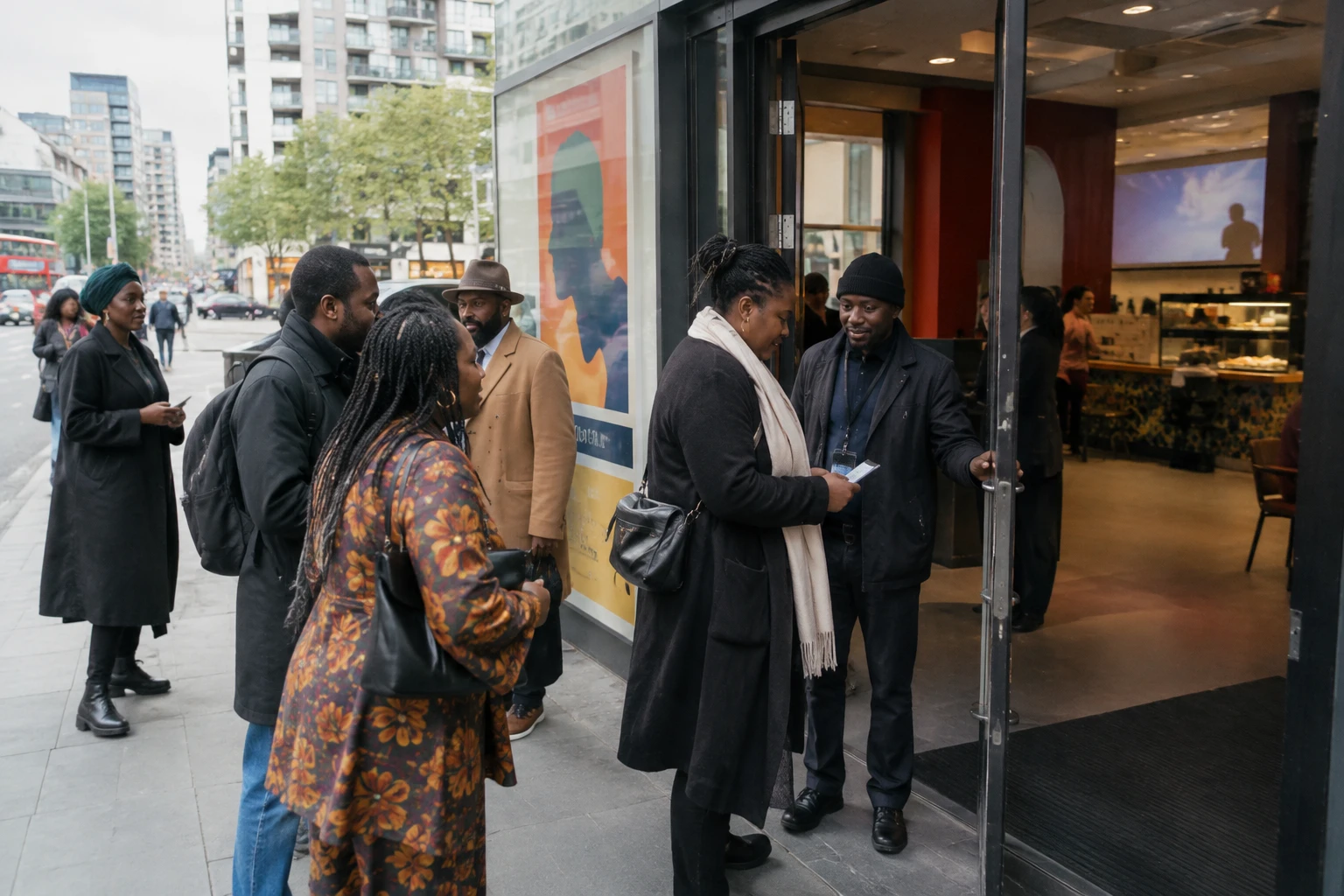
Can a Nigerian film find a venue in London where it is not an exceptional screening, but a regular part of the programme? That is the ambition of EbonyLife Place London, a new cultural venue bringing together cinema, food, art and fashion around African and Black creativity.
For Nigeria, where Nollywood is a major cultural sector, the stakes go beyond opening an address abroad. They also include creating lasting access to films and audiences in a city home to communities from Africa and the Caribbean, and where British and international cultural industries intersect.
A London venue conceived in Nigeria
Nigerian producer Mo Abudu inaugurated EbonyLife Place London on Thursday 8 October 2026, in south-west London, near Nine Elms. The venue opened to the public the following weekend. The news was reported by British trade publication Screen Daily and Nigerian outlet Nigerian NewsDirect.
The project is backed by the founder of the EbonyLife group, a Nigerian production and media company associated in particular with Nollywood, the name given to Nigeria’s film industry. Mo Abudu, who was born in London and partly raised in the UK, has described the centre as a way to make these works accessible without British audiences having to travel to the continent.
The building brings together several spaces: a cinema, a Nigerian restaurant, a lounge bar, a shop featuring designers and works of art. The centrepiece is the Amani auditorium, billed as a 160-seat cinema dedicated to African and Black films. Its programme is expected to include Nollywood films, other African productions and works by British, Caribbean and American Black filmmakers.
The programme is expected to evolve. Information available at the time of opening did not yet set out a full screening schedule or final access arrangements. The venue’s official structure nevertheless presents a cinema programme, premieres, meetings and post-film discussions. EbonyLife Place London’s website also describes its food offering and retail space for African creations.
From cultural venue to value chain
A specialist cinema can help address a practical problem: visibility depends not only on a film’s production, but also on its distribution, screening slots and ability to reach an audience. By bringing screenings together with cultural activities, EbonyLife Place aims to make African stories part of a regular experience rather than confining them to festivals or one-off events.
This presence could matter to several groups. Filmmakers gain another space in which to show their work and meet audiences. Nigerian fashion designers, artists and restaurateurs can reach London customers. For African and African-descended audiences, the venue could provide a cultural meeting place; for other viewers, it makes productions they may know little about more accessible.
These benefits have yet to be measured. Opening does not guarantee sustained attendance or a diverse range of films. The business model will depend in particular on ticket prices, memberships, the regularity of screenings and the ability to attract audiences beyond networks already familiar with African cultures. At the time of opening, membership terms were still to be clarified.
The project builds on experience already gained in Lagos, where EbonyLife Place has brought together leisure and cultural activities since 2019. But the London context is different: the venue must contend with local habits, competition from cinemas and the diversity of Black communities. The cinema therefore cannot, on its own, represent the whole of African cinema. Its programme will need to make room for the continent’s different regions, languages, generations and forms of creativity.
A reach beyond London
The choice of the UK reflects a long-standing flow between Nigeria and its diaspora. London is home to large Nigerian communities and audiovisual industries able to link production, financing, distribution and promotion. A permanent venue could facilitate these exchanges for creators, provided it also serves as a platform for works outside the catalogue of its founding group.
Across West Africa, the launch highlights the ability of Nigerian cultural groups to invest in international markets and establish their own distribution spaces. This approach does not replace cinemas in Nigeria or public policies supporting culture. Instead, it raises a question of complementarity: how can demand for African films abroad be turned into revenue, opportunities and collaborations that also benefit professionals on the continent?
The Lagos precedent gives the group experience in creating venues that bring several activities together. But the London test will be practical above all: will the cinema manage to maintain regular screenings, broaden its partnerships and attract diverse audiences? Attention will also focus on the space given to films from other African countries and to independent productions, beyond Nigerian films and projects associated with EbonyLife.
If the programme finds an audience over time, EbonyLife Place London could help make African cinema a more familiar presence in the British cultural landscape. For Nigeria, the challenge is less to celebrate an opening than to see whether a private initiative can strengthen, over the long term, the international circulation of its stories and those of its neighbours.