Algeria
 Egypt
 Libya
 Morocco
 Sudan
 Tunisia
 Benin
 Burkina Faso
 Cabo Verde
 Côte d'Ivoire
 Ghana
 Guinea
 Guinea-Bissau
 Liberia
 Mali
 Mauritania
 Niger
 Nigeria
 Senegal
 Sierra Leone
 The Gambia
 Togo
 Cameroon
 Central African Republic
 Chad
 DR Congo
 Equatorial Guinea
 Republic of the Congo
 São Tomé and Príncipe
 Burundi
 Comoros
 Djibouti
 Eritrea
 Ethiopia
 Kenya
 Madagascar
 Malawi
 Mauritius
 Mozambique
 Rwanda
 Seychelles
 Somalia
 South Sudan
 Tanzania
 Uganda
 Angola
 Botswana
 Eswatini
 Lesotho
 Namibia
 South Africa
 Zambia
 Zimbabwe
When water becomes a daily management issue
In Libreville, the issue is no longer simply one of domestic comfort. It affects how households are organised, the budgets of low-income neighbourhoods and the state’s ability to guarantee a basic service in Gabon’s capital. Since the water emergency was declared on 1 July 2026, the promise has been a swift return to normal. On the ground, people are still waiting.
This kind of crisis exposes a familiar pressure point in Gabon: when the main network falters, makeshift solutions take over. Private boreholes, water tanks, purchases by the container, occasional deliveries. In other words, access to water is fragmented according to income, neighbourhood and proximity to supply points. In a country often described as rich in water resources, the contrast is all the more striking in Greater Libreville.
An issue that has become public policy
The Gabonese government officially declared a water emergency on 1 July 2026 in response to deteriorating supplies in the capital and its outskirts. A few days later, the authorities said defence and security forces would take part in distribution alongside designated partners, with a dedicated toll-free number for orders in Greater Libreville. These announcements are part of a broader series of measures launched at the start of the year.
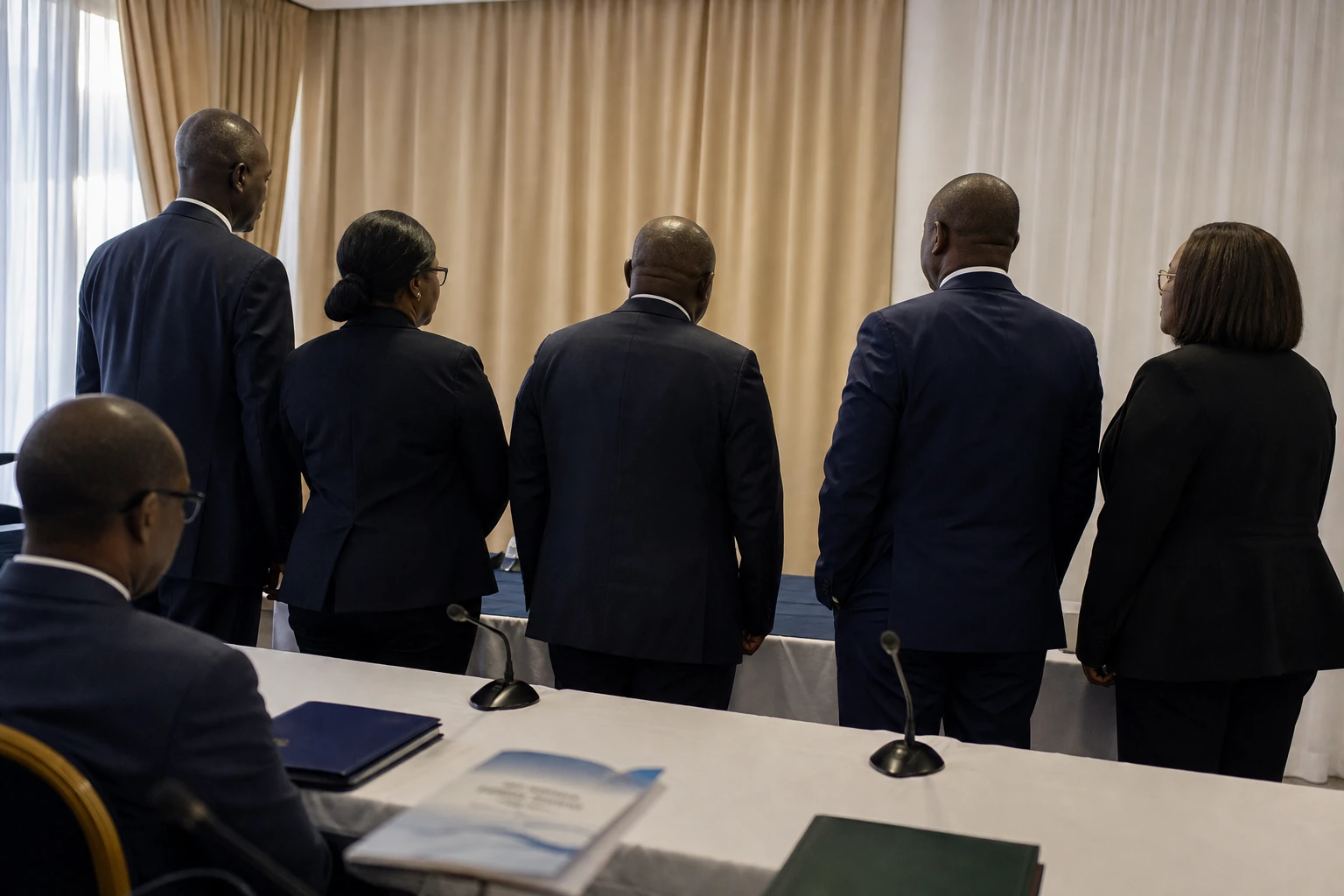
On 29 June 2026, President Brice Clotaire Oligui Nguema had already met staff from the Gabon Energy and Water Company, SEEG, to discuss the continuity of essential services. On 1 July, the Presidency announced the launch of water supplies in Greater Libreville, following direct discussions with staff at the state-owned company. These steps show that the issue has moved beyond a simple technical fault and into the realm of political decision-making.
The context is not new. In January 2026, the Ministry of Universal Access to Water and Energy had already said it wanted to provide immediate solutions, particularly in the worst-affected areas of Libreville. In February, the government’s roadmap even referred to a reorganisation of the sector, including the planned split of SEEG. These developments indicate that the current crisis had been anticipated, at least in official statements.
What the crisis means for Gabonese households
In practice, the water emergency means a higher cost of living for thousands of families. When water does not come from the tap, people have to buy it, transport it, store it and wait for it. Low-income households often pay more per litre than those connected to a regular supply. The crisis also weighs on small businesses, neighbourhood restaurants, hair salons, workshops and informal activities that depend on a continuous supply.
The problem is structural. According to the AfDB, the integrated drinking water supply and sanitation programme for Libreville aims to improve access for hundreds of thousands of residents. The African institution says network expansion has been expected for several years. The gap between announced projects and neighbourhoods’ daily needs helps explain the current tension.
Opinion polls confirm this dissatisfaction. Afrobarometer reported in late 2024 that SEEG was failing to meet water needs, even as access to drinking water in Libreville was expected to increase significantly with ongoing investment. This reality gives the 2026 crisis a long-familiar dimension: it is not just an accident, but a shortfall in public services that has become entrenched over time.
The use of emergency powers changes the approach. The administration is mobilising exceptional resources, setting up a more direct distribution chain and seeking to regain control of a sector in which users’ trust has eroded. But this response is temporary by nature. It provides relief. It cannot replace infrastructure that works or governance capable of absorbing technical, climate-related and urban shocks.
Libreville, a reflection of a wider regional challenge
The case of Libreville extends beyond Gabon’s capital. It is a reminder that in Central Africa, major urban centres are growing faster than water, sanitation and electricity networks. Population growth, urban sprawl and ageing equipment lead to recurring service disruptions. The situation in Greater Libreville therefore also resonates with other CEMAC capitals in the sub-region, where basic infrastructure remains a decisive marker of public sovereignty.
For Gabon, the challenge is twofold. At home, it must restore trust between the state and users. Abroad, it must show that a country rich in resources can turn that wealth into tangible services. The current sequence of events will be closely watched, as it will show whether emergency measures pave the way for lasting sector reform or merely buy time. The date to watch is not just that of the next announcement. It is the day when taps across Greater Libreville finally stop being a daily uncertainty.