Algeria
 Egypt
 Libya
 Morocco
 Sudan
 Tunisia
 Benin
 Burkina Faso
 Cabo Verde
 Côte d'Ivoire
 Ghana
 Guinea
 Guinea-Bissau
 Mali
 Mauritania
 Niger
 Nigeria
 Senegal
 Sierra Leone
 The Gambia
 Togo
 Cameroon
 Central African Republic
 Chad
 DR Congo
 Equatorial Guinea
 Gabon
 Republic of the Congo
 São Tomé and Príncipe
 Burundi
 Comoros
 Djibouti
 Eritrea
 Ethiopia
 Kenya
 Madagascar
 Malawi
 Mauritius
 Mozambique
 Rwanda
 Seychelles
 Somalia
 South Sudan
 Tanzania
 Uganda
 Angola
 Botswana
 Eswatini
 Lesotho
 Namibia
 South Africa
 Zambia
 Zimbabwe
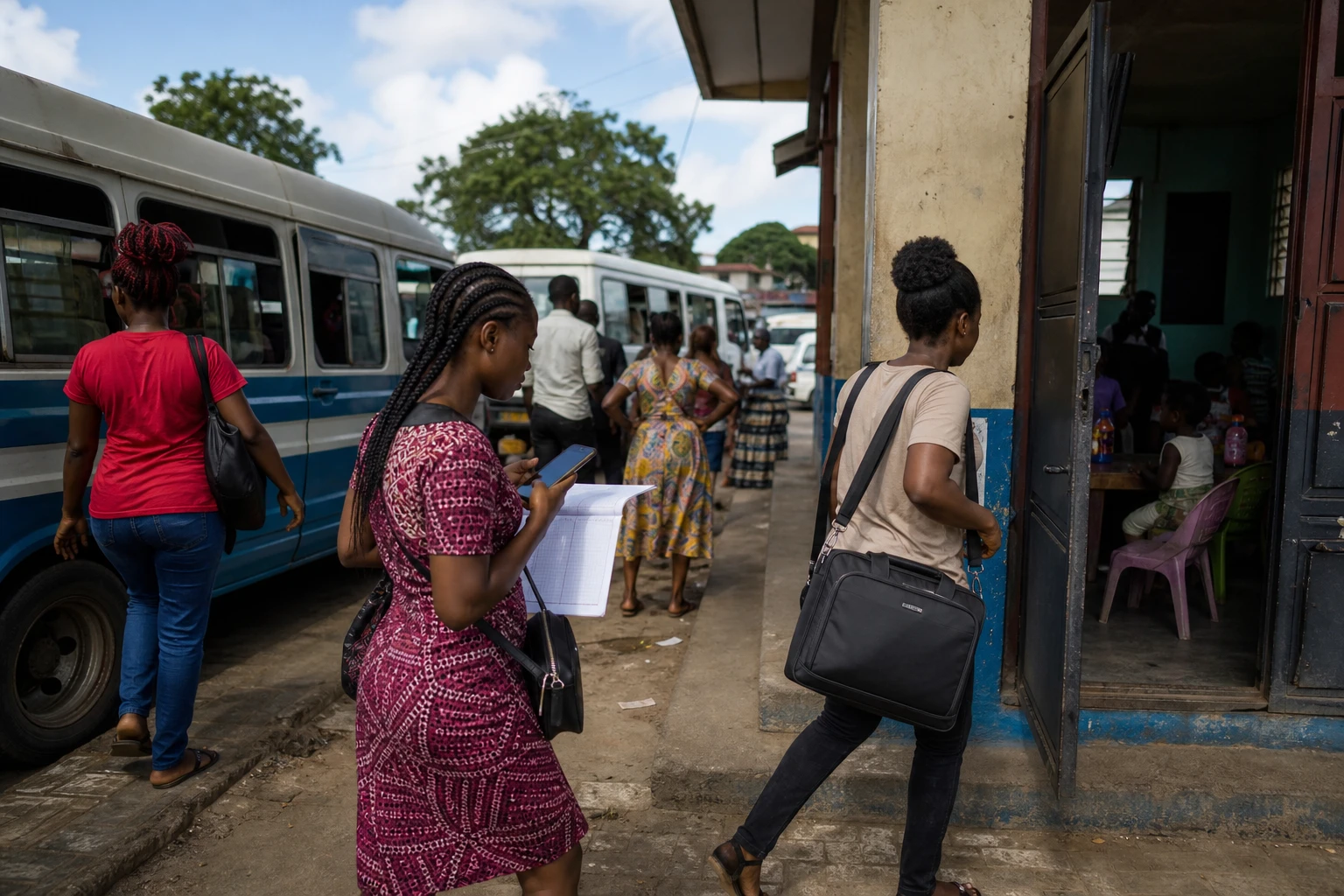
In Monrovia and across Liberia’s regions, access to digital technology depends on more than a phone or an internet connection. For many women, available time, the cost of data, access to training and childcare also weigh in the balance. A new programme aims to address these obstacles together.
Five hubs, from Monrovia to the regions
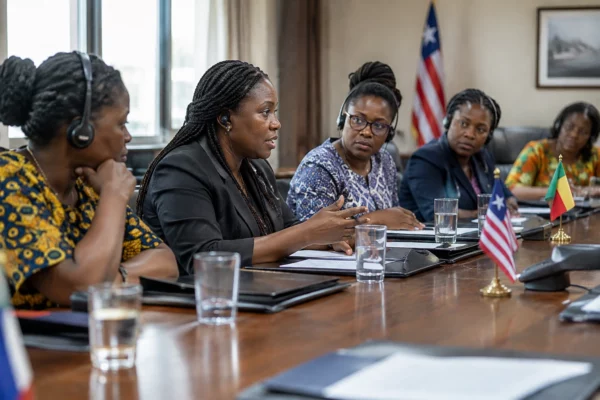
Liberia’s Ministry of Gender, Children and Social Protection and technology company Cybastion signed an agreement on women’s digital and economic empowerment in New York on 23 September 2026. The ceremony took place on the sidelines of the United Nations General Assembly, at a meeting focused on investment in Africa.
The programme plans five sites. A main campus is to be established in Monrovia. Four regional hubs are planned for Voinjama, Gbarnga, Kakata and Buchanan. The programme is expected to run for 36 months, according to information released after the signing.
The centres will offer training in digital skills, business management and entrepreneurship. They are also expected to provide mentoring, business development support and guidance on financial services. The aim is to help participants sell their products more effectively, reach new markets and join more structured value chains.
The project is aimed in particular at women working in the informal economy and agricultural sectors. This focus matters in Liberia, where much economic activity is based on small businesses, local trade and activities that remain outside formal financing channels.
Each hub is to include a childcare service. This addresses a practical constraint: training can remain out of reach if participants have to choose between their work, family responsibilities and attending classes. The programme therefore treats digital access as a matter of skills, but also of social organisation.
The Theya Foundation, a philanthropic organisation linked to Cybastion, is to help deliver the training. The planned partnership with Cisco will draw in particular on the Cisco Networking Academy, a programme that provides training in networking and digital technologies. Young people will also be able to take part in some activities.
A programme that forms part of a broader transformation
The new agreement builds on cooperation launched in September 2024 between the Liberian government and Cybastion. The framework signed at the time covered five years and several areas of work: international connectivity, digital public services, a data centre and cybersecurity.
The 2024 project included plans to improve Liberia’s access to international digital infrastructure. It also covered the design of a data centre to host digital public services. Proposed applications included online administrative procedures, electronic tax services and travel-related services.
The two strands address different needs. The first aims to strengthen infrastructure and government services. The second directly targets users, women entrepreneurs and young people. Their coherence will nevertheless depend on the country’s ability to make connections affordable and available beyond Monrovia.
The Liberian government presents the cooperation as part of its economic modernisation strategy. For Cybastion, it also broadens the company’s work in infrastructure and cybersecurity to include training and women’s entrepreneurship.
Cost remains the main obstacle
Liberia starts from a low level of connectivity. The World Bank said the country ranked 99th out of 100 in the Inclusive Internet Index in 2022. The same document estimated that men were nearly 50% more likely than women to use the internet.
These gaps have more than one cause. The cost of devices and data plans limits regular use. A lack of digital skills also holds back the adoption of online services. In rural areas, distance from training centres and variable network quality add further constraints.
More recent World Bank data show that 29.6% of Liberia’s population used the internet in 2024. This national indicator does not capture differences between women and men, between Monrovia and the counties, or between formal businesses and informal activities. It nevertheless highlights the scale of the market to be built.
The choice of Voinjama, Gbarnga, Kakata and Buchanan gives the programme a territorial reach. The cities play different roles in Liberia’s economy. Buchanan is a port centre, Kakata lies in an agricultural area near the capital, while Gbarnga and Voinjama serve the country’s interior. The programme’s success will therefore depend on how well it adapts to local economies.
An entrepreneur in Monrovia may seek customers online or use digital payment tools. In an agricultural area, priorities may differ: tracking prices, organising orders, improving stock management or reaching a buyer far from the place of production.
A test for West Africa’s digital policy
Liberia is a member of the Economic Community of West African States, ECOWAS. The organisation seeks to strengthen trade, mobility and economic integration among its member states. In this context, women’s access to digital tools has a direct bearing on regional trade and the movement of services.
Small businesses run by women often remain far removed from export support, commercial platforms and structured financing. Wider access to digital skills can narrow that gap. It will not close it automatically: accessible administrative documents, reliable payments, functioning networks and suitable credit mechanisms will also be needed.
The programme will also need to define its expected results. The number of women trained will not be enough to measure its impact. It will be necessary to track business creation and survival, access to finance, changes in income, actual use of digital tools and the participation of women from rural areas.
The next step will therefore be operational: a timetable for the works, funding, beneficiary selection and coordination with Liberian agencies already involved in digital training. If these details are clarified, the five hubs could become more than classrooms. They could link skills, childcare, economic activity and market access across several parts of Liberia.