Algeria
 Egypt
 Libya
 Morocco
 Sudan
 Tunisia
 Benin
 Burkina Faso
 Cabo Verde
 Côte d'Ivoire
 Ghana
 Guinea
 Guinea-Bissau
 Mali
 Mauritania
 Niger
 Nigeria
 Senegal
 Sierra Leone
 The Gambia
 Togo
 Cameroon
 Central African Republic
 Chad
 DR Congo
 Equatorial Guinea
 Gabon
 Republic of the Congo
 São Tomé and Príncipe
 Burundi
 Comoros
 Djibouti
 Eritrea
 Ethiopia
 Kenya
 Madagascar
 Malawi
 Mauritius
 Mozambique
 Rwanda
 Seychelles
 Somalia
 South Sudan
 Tanzania
 Uganda
 Angola
 Botswana
 Eswatini
 Lesotho
 Namibia
 South Africa
 Zambia
 Zimbabwe
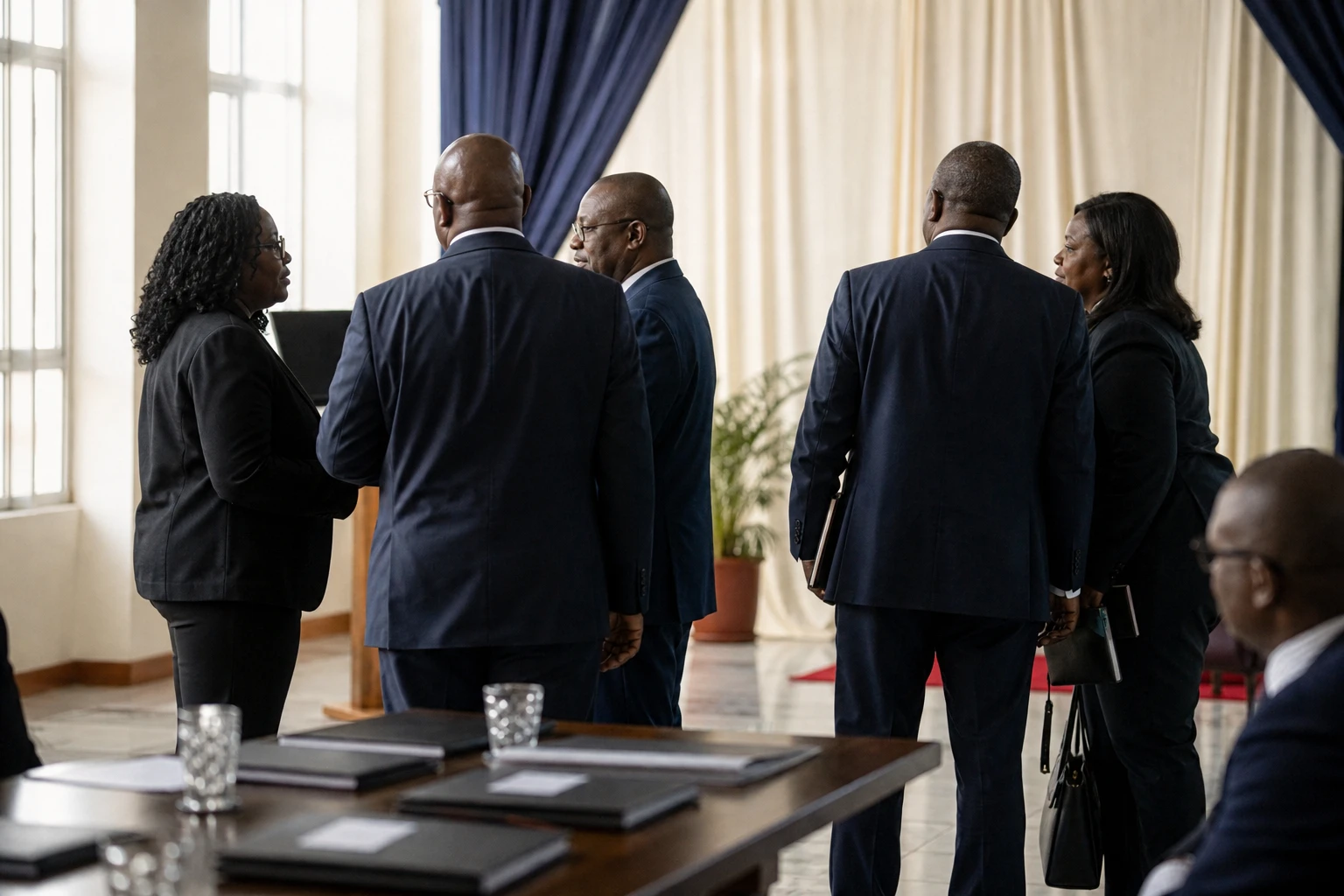
Monrovia faces a consequential decision
For Liberia, the stakes go far beyond migration alone. In Monrovia, the decision touches on diplomacy, domestic security and the image of a country seeking to consolidate its place in West Africa after years of institutional fragility.
As West African capitals increasingly negotiate with Washington on migration issues, Liberia’s choice also bears on how ECOWAS, the Economic Community of West African States, defends regional free movement while managing pressure from outside. The issue is sensitive because it concerns sovereignty, the rights of people transferred and the administrative capacity of a state with limited room for manoeuvre.
What the deal announced in Monrovia provides for
The Liberian government announced on 18 August 2026 that it would accept up to 1,200 people deported from the United States over a one-year period, with the first group of 20 expected to arrive on 21 August. Information Minister Jerolinmek Piah said in Monrovia that those concerned could be nationals of African countries, as well as North or South American countries or the Caribbean, provided they were deemed fit to travel.
Liberian authorities also said that people transferred could apply for asylum in Liberia or leave the country at any time. Justice Minister Natu Oswald Tweh said that the migrants’ list had been reviewed before their arrival. The government also said Washington would provide support to manage the programme and strengthen Liberia’s migration management system.
According to the Associated Press and Reuters, cited by several media outlets, this is one of the largest such deals struck by the Trump administration as part of its policy of sending people to third countries. The same sources note that the mechanism has already been used with several African states and has drawn criticism over its lack of transparency.
A West African country under diplomatic pressure
Liberia has not entered this issue by chance. The country has long-standing and close ties with the United States, rooted in its political history as well as very strong economic, migration and security links. This proximity carries weight in current negotiations. It also helps explain why Monrovia is proceeding cautiously, seeking to present the deal as a humanitarian gesture and an opportunity to strengthen its administrative capacity.
In the region, the movement of people is already governed by the 1979 ECOWAS Protocol on Free Movement. This framework aims to facilitate the movement, residence and establishment of community citizens. But it does not cover transfers imposed by external states. The Liberia case therefore highlights a simple reality: West Africa remains open to regional mobility, while rejecting the conflation of such mobility with deportations negotiated elsewhere.
This distinction matters to the Liberian authorities. It also matters to ECOWAS, which is seeking to strengthen common migration governance without undermining trust among member states. In Abidjan in April 2026, West African ministers responsible for internal affairs, immigration and border control stressed the need for harmonised migration management and secure borders. The Monrovia case is therefore part of a regional debate already under way.
Practical implications for the state and the people concerned
On the ground, the most sensitive question concerns the deportees’ actual status. US authorities sometimes send people to third countries after they have secured protection before an immigration judge, particularly when returning to their country of origin could expose them to risks. Human rights organisations have for months criticised these transfers to states that are not the countries of birth of the people concerned.
The Liberian government has not publicly detailed the safeguards offered to these people. This is a central issue. Without a clear framework, a deal of this kind can create uncertainty over length of stay, access to asylum, legal assistance and the conditions for leaving the country. For a state such as Liberia, whose administrations remain under severe budgetary pressure, the burden could quickly become heavy if arrivals are spread over an entire year.
There are also public order and public perception concerns. The country already faces challenges in governance, security and justice. The authorities have recently highlighted their cooperation with international partners to combat trafficking and strengthen institutions. In this context, the reception of people deported from the United States will be closely watched by the public, as well as by diplomatic circles and human rights organisations.
Implications beyond Monrovia
The issue extends beyond Liberia. It is part of a continental trend in which several African states are being approached by Washington to host people deported from third countries. Amnesty International recently noted that at least nine African states had received or agreed to receive such nationals under these kinds of arrangements. Other cases, in Ghana, Eswatini and Equatorial Guinea, have already sparked legal and political challenges.
For Africa, the issue raises a broader question: how far can a state go, in the name of bilateral cooperation, in accepting transfers of migrants that sometimes reflect a policy of outsourcing migration controls? Governments’ responses vary, but the debate is now continental. It involves ECOWAS in the west, the African Union at continental level, and national institutions responsible for immigration, justice and foreign affairs.
In the coming days, the expected arrival of the first group of 20 people will serve as a test. It will show whether Liberia can turn a sensitive diplomatic issue into a well-managed administrative arrangement. It will also show whether the deal remains limited, regulated and transparent, or opens the way to further, larger transfers. For Monrovia, the stakes are clear: to prevent an external decision from becoming a domestic ordeal.