Algeria
 Egypt
 Libya
 Morocco
 Sudan
 Tunisia
 Benin
 Burkina Faso
 Cabo Verde
 Côte d'Ivoire
 Ghana
 Guinea
 Guinea-Bissau
 Mali
 Mauritania
 Niger
 Nigeria
 Senegal
 Sierra Leone
 The Gambia
 Togo
 Cameroon
 Central African Republic
 Chad
 DR Congo
 Equatorial Guinea
 Gabon
 Republic of the Congo
 São Tomé and Príncipe
 Burundi
 Comoros
 Djibouti
 Eritrea
 Ethiopia
 Kenya
 Madagascar
 Malawi
 Mauritius
 Mozambique
 Rwanda
 Seychelles
 Somalia
 South Sudan
 Tanzania
 Uganda
 Angola
 Botswana
 Eswatini
 Lesotho
 Namibia
 South Africa
 Zambia
 Zimbabwe
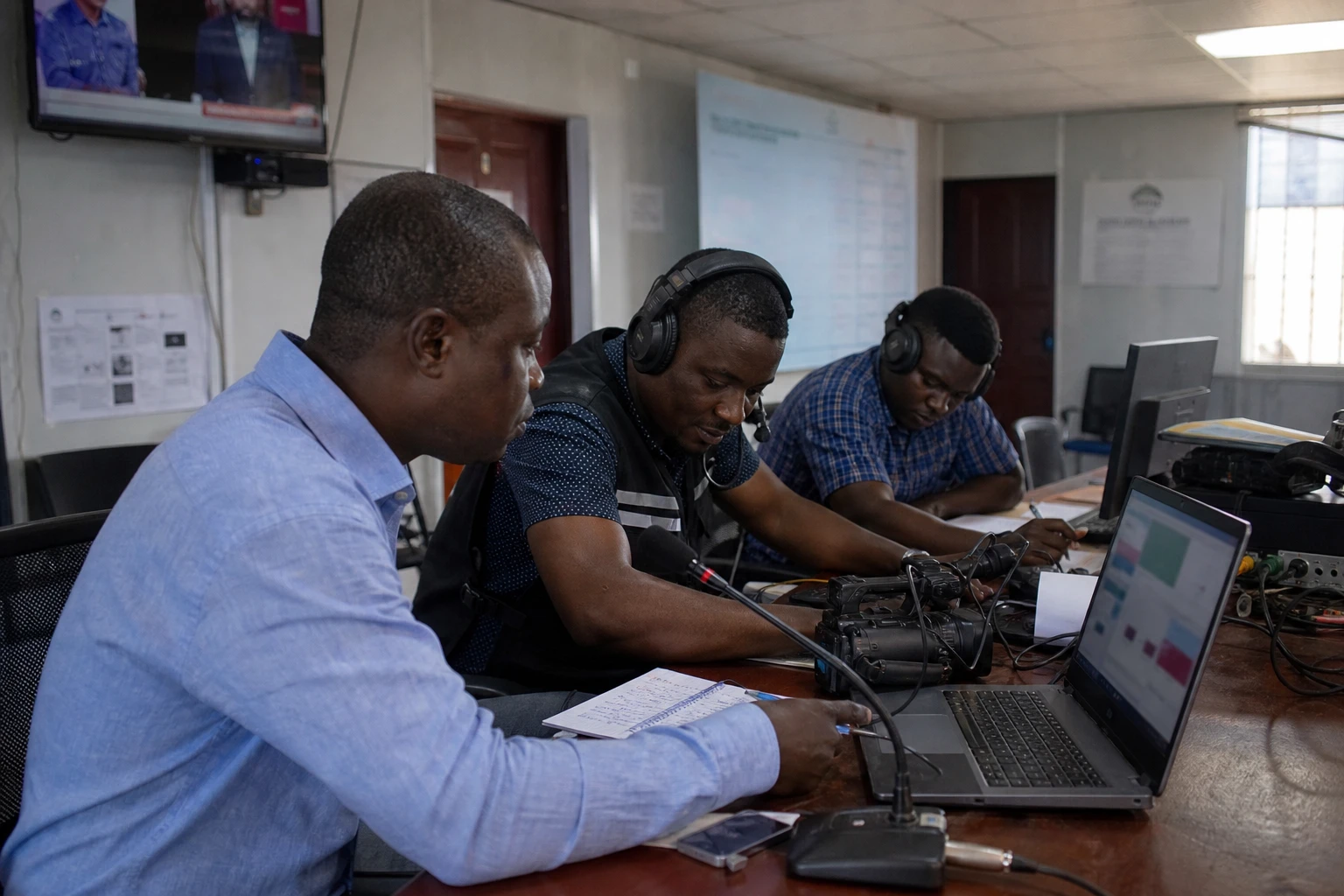
Monrovia at the centre of a migration issue extending far beyond Liberia
The arrival in Monrovia of twenty people from the United States was no ordinary flight landing at Roberts International Airport. For Liberia, the case raises a very practical question: how can it receive foreign nationals transferred from a third country without putting further pressure on an already stretched migration system or clouding a tradition of asylum the country has long championed?
The issue also extends beyond Liberia’s borders. Liberia is a member of ECOWAS, the West African organisation that brings the region’s states together around free movement and political cooperation. At the same time, the country must manage its own constraints: a narrow economic base, limited public services and an administration seeking to strengthen its capacity to manage migration and asylum.
What the Liberian authorities have agreed to
On Thursday 20 August 2026, twenty migrants deported from the United States landed at Roberts International Airport, about 30 kilometres from Monrovia, before being taken into the care of officials from the Liberian Commission for Repatriation, Resettlement and Reintegration. The Liberian government had announced two days earlier that it would accept up to 1,200 people over a period of one year.
The authorities say these people are “third-country nationals”, meaning they are not Liberian and Washington cannot send them directly back to their countries of origin. Liberia’s information minister said the scheme was part of a bilateral agreement concluded in 2025 and that those transferred would be free to leave Liberia whenever they wished or to seek asylum there.
The government also says it neither requested nor received compensation or a promise of reward in exchange for the agreement, while acknowledging that US support is expected to accompany the programme’s management and efforts to strengthen Liberia’s migration system. This clarification matters because it shows the debate is not only humanitarian. It also concerns the Liberian state’s practical resources and its capacity to register, monitor and support those transferred.
A deal forming part of the US strategy of transfers to third countries
The case is part of a broader policy by the Trump administration, which is seeking to deport to third countries people the United States cannot easily return to their countries of origin. AP reports that agreements of this kind have already been concluded or initiated with several African countries, while press investigations have cited financial offers and diplomatic pressure to persuade some governments to accept these transfers.
Liberia is thus becoming one of the most visible African countries in the scheme. According to Reuters, the first group was expected to comprise twenty people, and the agreement could cover up to 1,200 transfers over 12 months. Other countries on the continent have already been cited in connection with this “third-country” approach, including Ghana, Sierra Leone, Rwanda, South Sudan, Eswatini, Cameroon, the Democratic Republic of the Congo and Equatorial Guinea.
The political implications are clear. Washington is outsourcing part of its migration policy. Monrovia, for its part, is seeking to preserve its bilateral relationship with the United States, a major long-standing partner and economic power. In this equation, Liberia is speaking not only for its sovereignty but also for its limited budgetary room for manoeuvre, its need for technical support and its international standing.
The stakes for Liberia: reception, security, asylum rights and public perception
Legally, Liberia is not entering uncharted territory. The country has a Refugee Act adopted in 1993, and the available legislation provides a framework for protection claims. UNHCR notes that it works with the Liberian authorities to strengthen the asylum system and protect displaced and stateless people. This gives the government a legal basis for handling some claims, but not an unlimited capacity to receive people.
In practice, the issue is more complicated. Liberia is not only receiving people in transit; it must also ensure registration, administrative monitoring, assessment of asylum claims and, if necessary, referral to durable solutions. For a state whose public resources remain constrained, every new international scheme requires staff, clear procedures and effective co-ordination between immigration, security and social affairs.
Public perception matters just as much. In Monrovia, initial comments have mixed caution and questions with criticism of the possibility of turning Liberia into a destination for transfers decided elsewhere. The authorities, for their part, defend a humanitarian interpretation. But in a country emerging from years of institutional fragility and seeking to consolidate its public services, any ambiguity over control of the scheme could quickly become a domestic political issue.
A Liberian case, but also a signal for West Africa
The arrival in Monrovia says something broader about West Africa. The region remains shaped by migration, the movement of people and increasingly outsourced migration policies. In this context, ECOWAS and its member states face a familiar tension: protecting regional free movement while responding to bilateral agreements concluded with outside powers.
For Liberia, the next test will be implementation. It remains to be seen how those transferred will be registered, where they will be referred, what legal guarantees they will receive and whether the authorities will uphold their stated position on voluntary choice, asylum and freedom to leave. In Monrovia, the issue is now concrete. At the regional level, it raises a question of approach: how far can an African state agree to absorb a migration policy designed elsewhere without losing control of its own institutional framework?