Algeria
 Egypt
 Libya
 Morocco
 Sudan
 Tunisia
 Benin
 Burkina Faso
 Cabo Verde
 Côte d'Ivoire
 Ghana
 Guinea
 Guinea-Bissau
 Mali
 Mauritania
 Niger
 Nigeria
 Senegal
 Sierra Leone
 The Gambia
 Togo
 Cameroon
 Central African Republic
 Chad
 DR Congo
 Equatorial Guinea
 Gabon
 Republic of the Congo
 São Tomé and Príncipe
 Burundi
 Comoros
 Djibouti
 Eritrea
 Ethiopia
 Kenya
 Madagascar
 Malawi
 Mauritius
 Mozambique
 Rwanda
 Seychelles
 Somalia
 South Sudan
 Tanzania
 Uganda
 Angola
 Botswana
 Eswatini
 Lesotho
 Namibia
 South Africa
 Zambia
 Zimbabwe
In Monrovia, record seizure highlights fragile chains of oversight
In Liberia, a dramatic operation is measured not only by the weight of the cargo destroyed. It also has to be read in light of the question it poses to the Liberian state: who really controls the roads, ports, warehouses and uniforms meant to monitor them? In Monrovia, the incineration of several tonnes of cocaine has brought this tension back to the fore.
The context goes far beyond Liberia alone. For years, cocaine trafficking in West Africa has used maritime, air and land corridors to reach Europe. The United Nations Office on Drugs and Crime (UNODC) describes the region as a major transit area, where the movement of narcotics fuels corruption, violence and institutional fragility. ECOWAS has been following the issue for a long time through its regional plan against illicit drug trafficking and abuse.
A drug case, but also a matter of public governance
On Thursday 31 July 2026, Liberian authorities burned 4.2 tonnes of cocaine, valued at an estimated $336 million, according to information made public by the authorities and reported by several international media outlets. The destruction follows the largest drug seizure ever announced in the country. Reuters had reported a few days earlier that a shipment of around 3,971 kilos, worth an estimated $317 million, had been intercepted near Monrovia, confirming the exceptional scale of the operation, even if estimates vary slightly at different stages of the process.
The location of the seizure matters. The interception took place near Monrovia, Liberia’s administrative heart and a key hub for commercial flows. In a country where security and customs services operate with limited resources, a shipment of this size does not move on its own. It implies intermediaries, complicity or, at the very least, failures at several levels. That is precisely what the investigation is now examining.
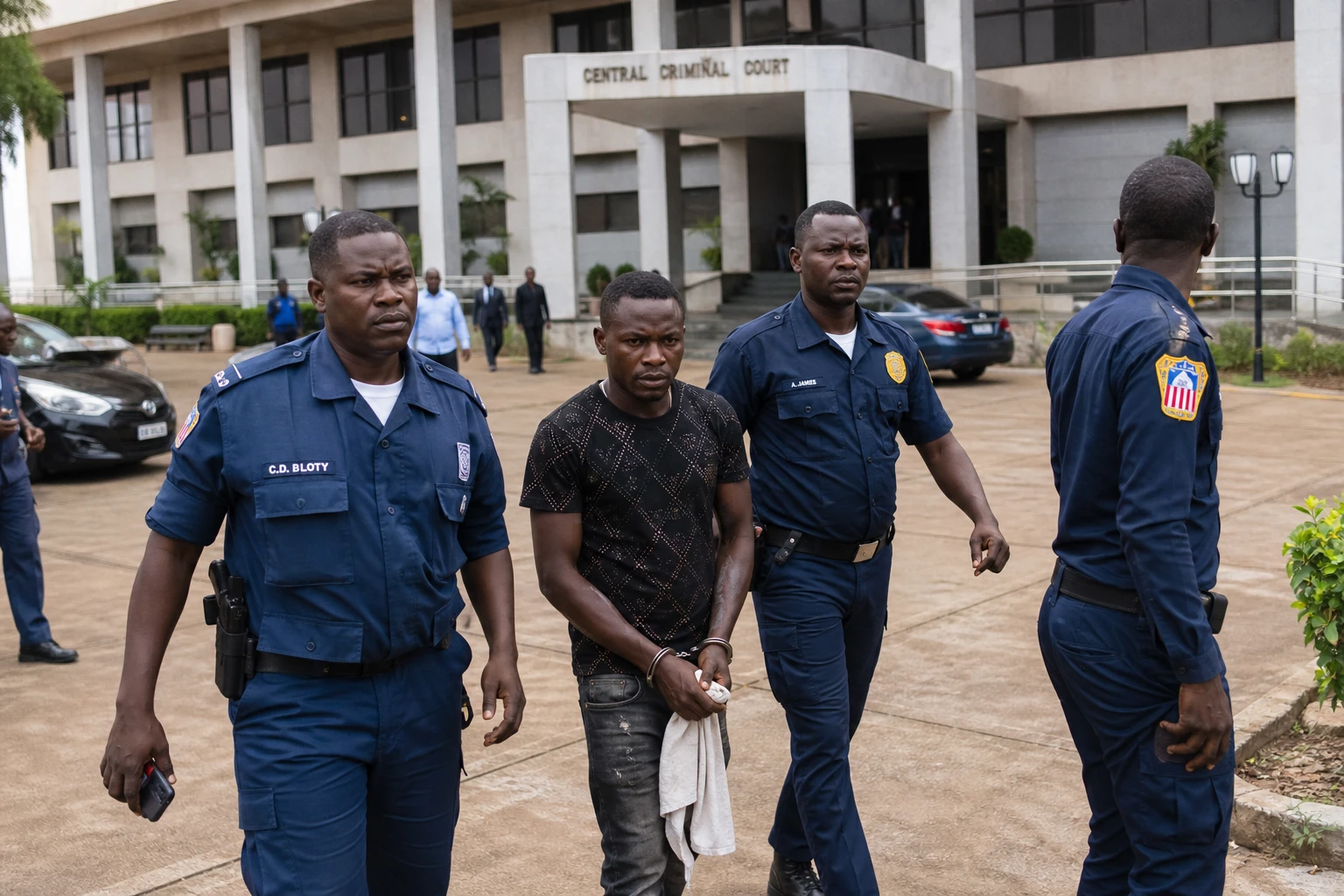
Authorities say several senior security officials are implicated. The head of the traffic police and the director of major crimes have been charged, while a deputy police commander is also under suspicion. According to Liberian authorities, police officers allegedly facilitated the shipment’s escort. At this stage, these are judicial allegations made as part of the investigation; they should therefore be treated as such until the court reaches its conclusions.
Liberia has faced warning signs before. In June 2026, authorities had already announced the destruction of another significant quantity of cocaine, and several recent cases have shown that the security chain may be vulnerable from within. Officers from the Liberia Drug Enforcement Agency were also prosecuted in an earlier case involving the mishandling of evidence. This accumulation points to the same conclusion: the fight against drugs depends not only on seizures, but also on the integrity of the institutions responsible for holding them.
What this case means for Liberians and beyond
For the authorities, burning the drugs is intended to show that no shipment will be reintroduced to the market. The political message is clear. But for ordinary Liberians, the stakes are broader: cocaine trafficking fuels criminal networks, undermines trust in the police and exposes young people to an increasingly visible local market. Last year, civil society had already raised the alarm about the scale of drug use and the existence of numerous sales points in Monrovia.
The case also touches on the country’s political economy. When trafficking on this scale crosses a territory, it creates quick gains for a few, but lasting collective costs: corruption, declining trust in the administration, pressure on ports and borders, and a damaged reputation among regional partners. Liberia is nevertheless seeking to strengthen its institutional credibility, including through its recent commitments within ECOWAS on stability, regional integration and shared security.
The issue ultimately goes beyond Liberia. UNODC and ECOWAS both point out that cocaine has become a cross-border problem in West Africa. Routes change, ports specialise, and networks adapt. When a record seizure takes place in Monrovia, it therefore signals both a law-enforcement success and a shift in criminal flows across the sub-region. In short, the pressure is not confined to Liberia. It concerns the entire West African arc, from the Atlantic coast to the logistics hubs that serve as gateways to Europe.
The next stage will play out in court and through the investigative process. If the charges are upheld, they will show how far the system has been penetrated. If they are not, the case will instead underline the difficulty of proving complicity in drug-trafficking cases when it lies at the heart of the security apparatus itself. Either way, the episode leaves a clear lesson: in Liberia, the battle against cocaine is now being fought as much in warehouses as in institutions.