Algeria
 Egypt
 Libya
 Morocco
 Sudan
 Tunisia
 Benin
 Burkina Faso
 Cabo Verde
 Côte d'Ivoire
 Ghana
 Guinea
 Guinea-Bissau
 Mali
 Mauritania
 Niger
 Nigeria
 Senegal
 Sierra Leone
 The Gambia
 Togo
 Cameroon
 Central African Republic
 Chad
 DR Congo
 Equatorial Guinea
 Gabon
 Republic of the Congo
 São Tomé and Príncipe
 Burundi
 Comoros
 Djibouti
 Eritrea
 Ethiopia
 Kenya
 Madagascar
 Malawi
 Mauritius
 Mozambique
 Rwanda
 Seychelles
 Somalia
 South Sudan
 Tanzania
 Uganda
 Angola
 Botswana
 Eswatini
 Lesotho
 Namibia
 South Africa
 Zambia
 Zimbabwe
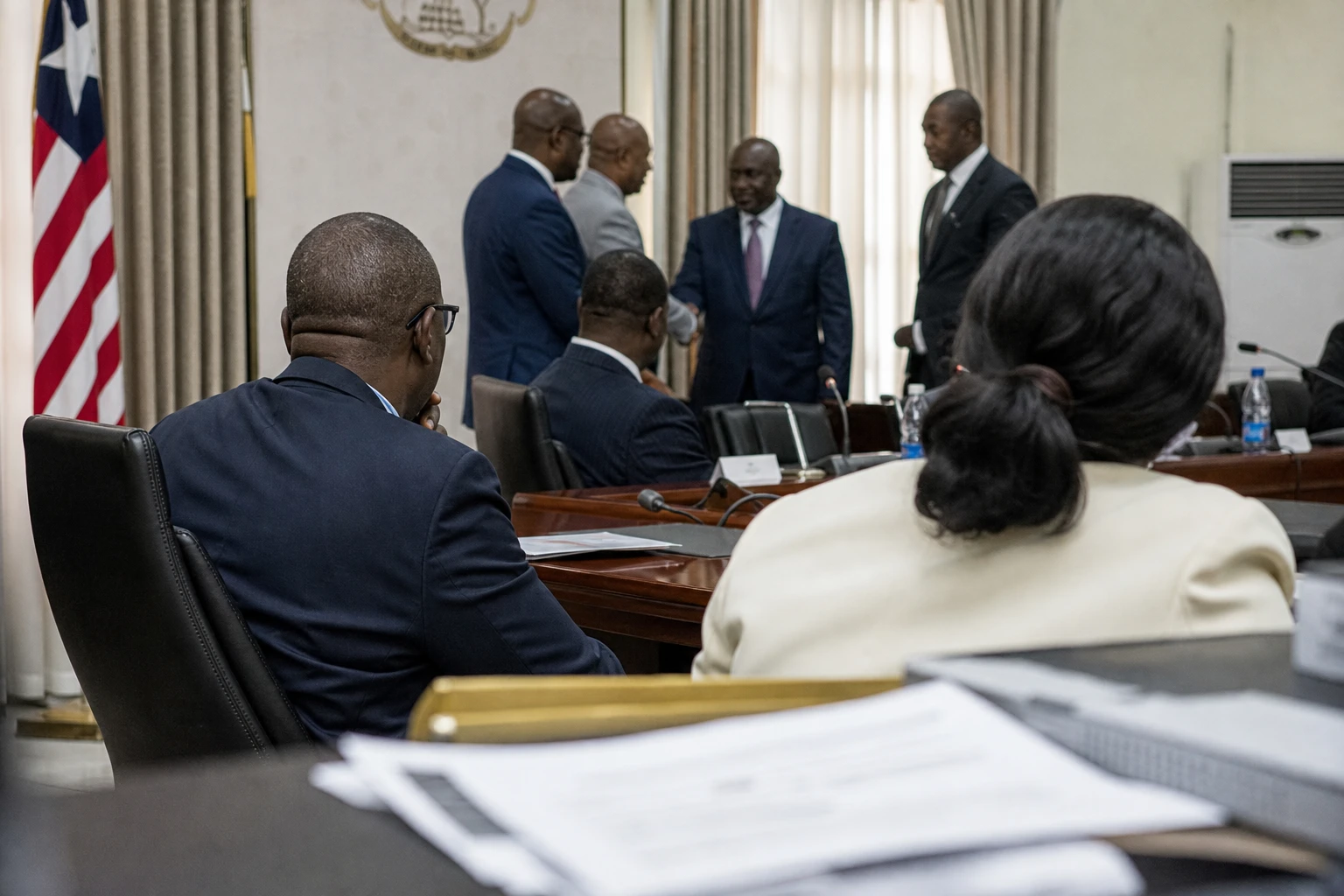
In Monrovia, external financing remains a test of credibility
For a country such as Liberia, the stakes go beyond the disbursement of funds. They also concern the state’s ability in Monrovia to maintain a stable budgetary course while financing roads, public services and social safety nets. In a West African context where room for manoeuvre is often limited, every IMF review that is approved serves as both a political signal and financial support.
Liberia belongs to ECOWAS, the Economic Community of West African States, and is therefore part of a region where macroeconomic stability directly affects trade, investment and regional movement. The country also remains markedly dependent on a handful of external and domestic drivers, with a productive base that is still fragile beyond mining, construction and urban services.
A technical agreement, but with real effects
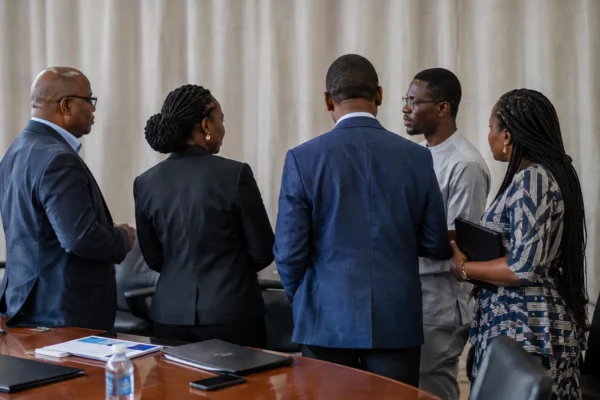
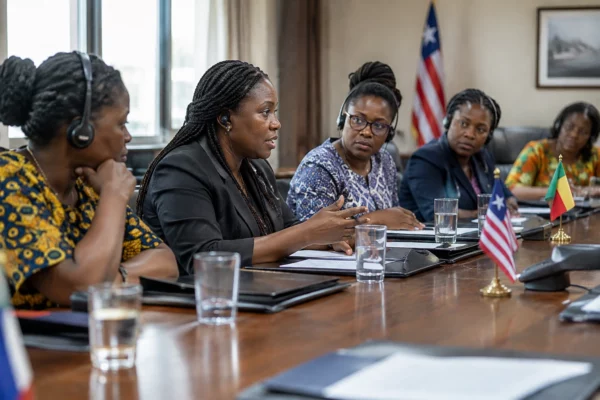
On 28 July 2026, IMF staff and the Liberian government reached an agreement on the fourth review of the programme supported by the Extended Credit Facility, as well as the first review of the Resilience and Sustainability Facility. The agreement must still be considered by the institution’s Executive Board, which is expected to meet in late September 2026, before any disbursement can be made. If confirmed, it will unlock access to $26.1 million under the ECF and $23.9 million under the RSF, totalling $50 million.
The sequence matters to the Liberian authorities because it validates the course set since September 2024. At that time, the country secured a 40-month ECF arrangement worth about $210 million to consolidate macroeconomic stability, reduce debt vulnerabilities and preserve financial stability. In April 2026, the IMF Executive Board also approved an RSF arrangement worth about $266 million to strengthen climate resilience and pandemic preparedness.
The Fund’s message is nuanced but clearly favourable. It considers that Liberia has maintained robust performance against the programme’s quantitative targets. It also judges that fiscal outcomes remain better than expected, thanks to improved revenue mobilisation and tighter spending discipline. At this stage, the primary surplus excluding grants is projected to reach 2.4% of GDP in 2026, according to the institution’s forecasts.
Growth holds, but relies on few drivers
The IMF now projects real growth of 5.5% in 2026. This momentum is expected to be driven by mining, particularly iron ore, as well as construction and manufacturing. The Liberian government shares the same assessment: the economy is advancing, but mainly in areas where investment is already concentrated.
The question, then, is not just about the figure. It is about how widely the gains are shared. When mines perform better and major construction projects move forward, the effects are first felt in revenues, imports of capital goods and urban activity. By contrast, households in the interior, small businesses and the informal economy do not automatically benefit from this improvement. Liberia’s challenge remains to link growth with lasting jobs and purchasing power.
Inflation, meanwhile, remains contained in the short term, but is not entirely under control. The IMF says it stood at 5.3% in May 2026, up from 4% at the end of 2025, following a rise in global energy prices. The institution expects it to rise to around 6% in the short term, driven by pressure on fuel prices. In other words, the cost of living remains a concern, particularly for urban households reliant on transport, imported food and daily paid services.
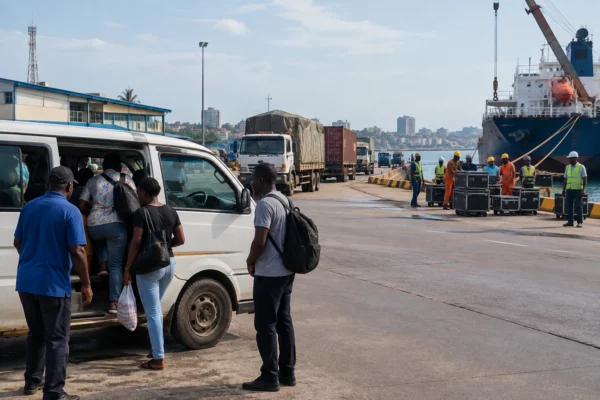
The external account reflects the same tension. The current account deficit is expected to widen in 2026 to around 18% of GDP, according to the IMF, compared with 7% in 2025, owing to fuel imports and capital goods linked to mining expansion and construction projects. This is no minor development. It is a reminder that growth driven by import-intensive sectors can support economic activity while weighing on the balance of payments.
Tax, banking and climate reforms: the real task
Beyond the disbursement, reform remains at the heart of the matter. The IMF is urging the Liberian authorities to introduce value-added tax in 2027, review mining taxation, rationalise exemptions and maintain prudent monetary policy. The aim is simple: broaden the tax base without derailing the recovery, and fund public priorities without deepening vulnerabilities.
The banking sector is also part of the equation. The Fund stresses the need to reduce non-performing loans, strengthen regulation and encourage lending to the private sector. For Liberian businesses, particularly small and medium-sized enterprises, this could make the difference between an economy driven by a handful of major projects and one capable of spreading investment more widely.
The Resilience and Sustainability Facility adds another dimension. Liberia has already established a national database that continuously records the budgetary costs associated with natural disasters. This is a technical but important step. In a country exposed to climate and health shocks, better risk measurement makes it possible to prepare budgets rather than simply absorb the impact. The IMF sees this as a useful first reform because it links public financial management with prevention.
What this means for Liberia in the region
The Liberian case extends beyond the national framework. In West Africa, macroeconomic credibility often serves as a bridge to donors, markets and regional partners. For ECOWAS, a member state’s ability to maintain a clear budgetary course matters as much as its diplomatic choices. It also shapes the stability of trade with neighbouring countries and private-sector confidence.
Liberia is therefore entering a delicate but useful phase. The figures show an economy performing better than before. The reforms point to a state seeking to broaden its tax base and modernise its tools. But the real impact of this improvement will depend on how it is translated into practice: more revenue, certainly, but also more jobs, more accessible credit and more visible public protection for Liberians, in Monrovia and beyond the capital.
The next phase will depend on the programme’s upcoming steps, starting with the IMF Executive Board’s expected review in late September 2026. Until then, Liberia will have to show that budgetary discipline, tax reform and climate risk management are not merely external requirements, but tools for stability in its own development.