Algeria
 Egypt
 Libya
 Morocco
 Sudan
 Tunisia
 Benin
 Burkina Faso
 Cabo Verde
 Côte d'Ivoire
 Ghana
 Guinea
 Guinea-Bissau
 Mali
 Mauritania
 Niger
 Nigeria
 Senegal
 Sierra Leone
 The Gambia
 Togo
 Cameroon
 Central African Republic
 Chad
 DR Congo
 Equatorial Guinea
 Gabon
 Republic of the Congo
 São Tomé and Príncipe
 Burundi
 Comoros
 Djibouti
 Eritrea
 Ethiopia
 Kenya
 Madagascar
 Malawi
 Mauritius
 Mozambique
 Rwanda
 Seychelles
 Somalia
 South Sudan
 Tanzania
 Uganda
 Angola
 Botswana
 Eswatini
 Lesotho
 Namibia
 South Africa
 Zambia
 Zimbabwe
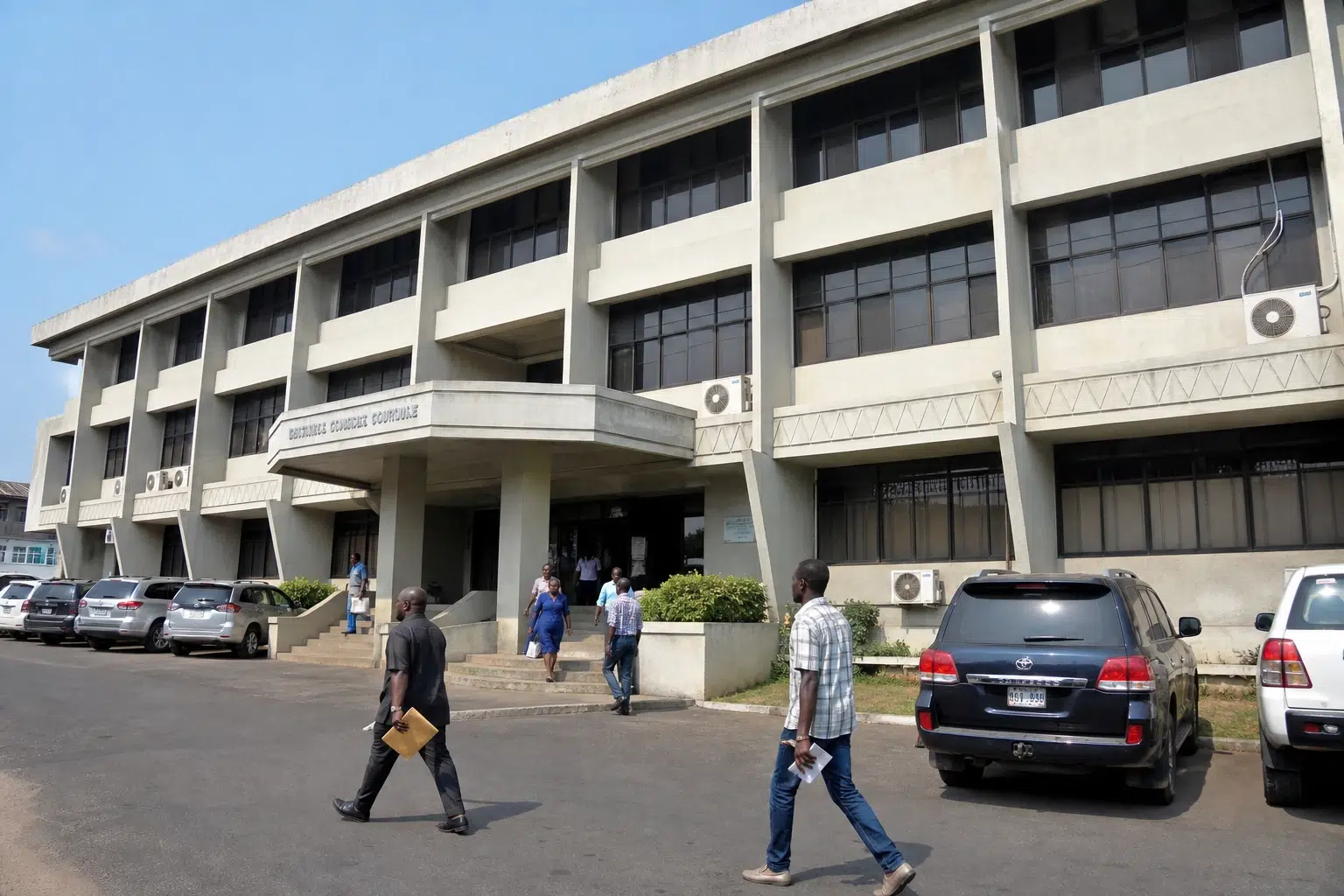
A symbolic trial in a country under pressure
In Monrovia, the fight against drugs is no longer just a matter for the police. It now reaches the highest levels of the state, affecting the image of its institutions and Liberians’ trust in the justice system. The indictment of Jewel Howard-Taylor, Liberia’s former vice-president, gives the crackdown immediate political significance. It comes at a time when the authorities want to show that no one, even someone once close to power, is beyond prosecution.
The case is unfolding in a West African country that has served for years as a transit zone for cocaine moving between South America and Europe. The United Nations Office on Drugs and Crime has long described the subregion as vulnerable to transnational trafficking, while ECOWAS regards organised crime as a regional security and governance issue.
What the facts say
On Wednesday 19 August 2026, Liberia’s Ministry of Justice announced the indictment of Jewel Howard-Taylor in an investigation targeting a suspected international drug-trafficking network operating in Liberia and beyond. According to the announcement, reported by the Associated Press, the former vice-president faces several charges, including the unauthorised import, sale, distribution and transport of controlled substances, as well as offences related to money laundering. The authorities say she was arrested at Roberts International Airport, outside Monrovia, and then taken to the national police headquarters.
Three other people have also been indicted in absentia: two Croatians, Nikolai Ivancic and Mihovil Vrovac, and a Ukrainian, Tara Zaderieko. The Ministry of Justice said these individuals are wanted. At this stage, the authorities describe the network as suspected and transnational. Publicly available information does not yet specify the precise role each person is alleged to have played, making caution over individual responsibility essential.
Jewel Howard-Taylor is no bit player in Liberian public life. Aged 63, she served as vice-president from 2018 to 2024 alongside President George Weah, after spending 12 years in the Senate. She is also the former wife of Charles Taylor, a former warlord who became president and was convicted by an international tribunal for his role in the war in Sierra Leone. This background explains why her indictment goes beyond a routine criminal case. It touches on the country’s political memory.
An intensifying anti-drug crackdown
This case has not emerged in a vacuum. Since July 2026, Liberia has toughened its rhetoric and methods against trafficking. The authorities first announced the country’s largest-ever seizure: nearly four tonnes of cocaine, valued at about $317 million, found on a route leading to Roberts International Airport. A few days later, law enforcement officers burned about 4.2 tonnes of drugs, with an estimated value of $336 million, after saying that several senior police officers were involved. The AP confirmed both developments and specified that the investigations concerned separate cases, even though both formed part of the same security crackdown.
On 7 June 2026, the authorities had already seized 237.6 kilograms of cocaine concealed in a commercial shipment said to be destined for export from Roberts International Airport. A joint investigation was launched at the time. On 8 August, President Joseph Boakai ordered an immediate investigation into another case involving the anti-drug agency. On 11 August, he appointed retired General Daniel Dee Ziankahn Jr. to head the Liberia Drug Enforcement Agency, with a mandate to step up the fight against the networks.
These decisions reflect a clear line: the executive wants to regain control of a security apparatus weakened by suspicions of internal involvement. The Ministry of Justice also points out that the Liberia Drug Enforcement Agency falls under its authority and is tasked with dismantling trafficking operations and recovering criminal proceeds. President Boakai has also insisted that no one is above the law, including officials, security personnel and business operators.
What this case changes in Liberia and West Africa
Domestically, there are two main issues. First, young people, the primary targets of local drug markets, must be protected. Second, the credibility of institutions responsible for monitoring borders, roads and Monrovia airport must be restored. When police officers or administrative officials are named in cases of this gravity, the issue is no longer limited to trafficking. It becomes a question of the integrity of the state.
For families and working-class neighbourhoods, the issue is tangible. Trafficking fuels local drug use, petty crime and violence, which weigh most heavily on urban areas, bus stations, suburbs and border regions. For the formal economy, it disrupts logistics, undermines port security and increases the cost of checks. For the informal economy, it heightens the risks of extortion, corruption and dependence on networks that use the same routes as legitimate trade. This pressure is felt well beyond the capital, even though Monrovia is home to most of the country’s institutional levers.
At regional level, Liberia is joining a broader concern shared by ECOWAS and the African Union: the movement of drugs is not an isolated phenomenon, but part of transnational trafficking networks that exploit weaknesses in judicial co-operation, porous borders and vulnerabilities at ports and airports. West Africa remains a strategic transit zone, and at times a storage and redistribution hub. That is why an indictment targeting a former vice-president matters beyond Monrovia: it signals that the anti-drug fight is entering a more sensitive phase, in which proximity to power no longer offers the same political protection.
The next test will be judicial and institutional. It remains to be seen whether the prosecutions proceed, whether the indicted foreign nationals are located, and whether the announced investigations into internal complicity lead to well-founded charges. In a country seeking to consolidate its authority after years of instability and reconstruction, what happens next will show whether the anti-drug crackdown is merely a political signal or becomes a lasting public security reform.