Algeria
 Egypt
 Libya
 Morocco
 Sudan
 Tunisia
 Benin
 Burkina Faso
 Cabo Verde
 Côte d'Ivoire
 Ghana
 Guinea
 Guinea-Bissau
 Mali
 Mauritania
 Niger
 Nigeria
 Senegal
 Sierra Leone
 The Gambia
 Togo
 Cameroon
 Central African Republic
 Chad
 DR Congo
 Equatorial Guinea
 Gabon
 Republic of the Congo
 São Tomé and Príncipe
 Burundi
 Comoros
 Djibouti
 Eritrea
 Ethiopia
 Kenya
 Madagascar
 Malawi
 Mauritius
 Mozambique
 Rwanda
 Seychelles
 Somalia
 South Sudan
 Tanzania
 Uganda
 Angola
 Botswana
 Eswatini
 Lesotho
 Namibia
 South Africa
 Zambia
 Zimbabwe
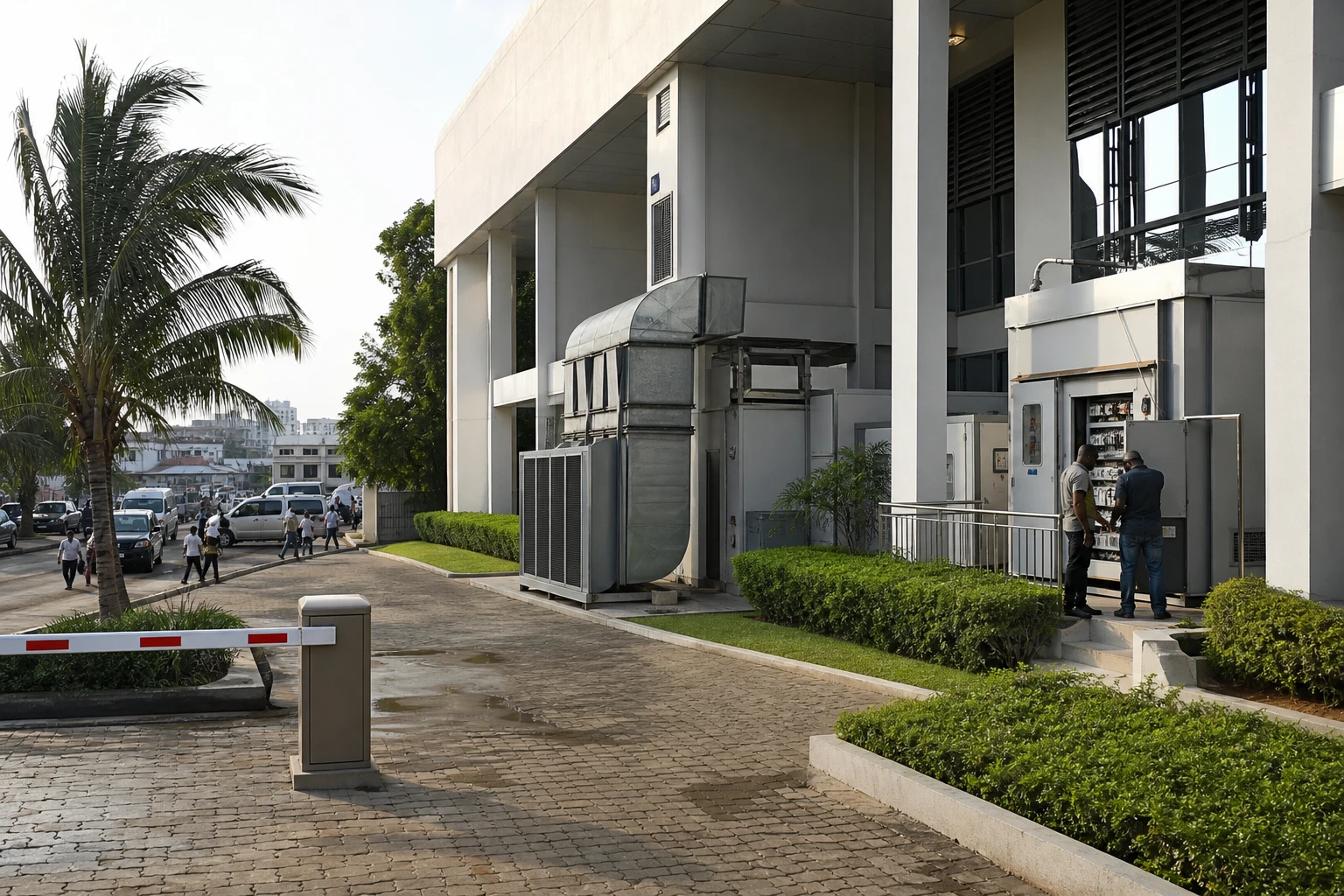
In Monrovia, the national data centre project faces a very practical question: where can it find a stable electricity supply to run strategic digital infrastructure, when Liberia’s grid remains limited and vulnerable to seasonal fluctuations?
The issue goes beyond the construction of a technical building. A data centre must operate continuously. It hosts public information, administrative services, financial platforms and applications used by businesses. Even the slightest interruption can affect essential services and sharply increase operating costs.
A digital project still taking shape
The Liberian government is seeking private partners to develop a national data centre. The project was presented on 21 September 2026 in New York, at a meeting focused on investment in Liberia. Discussions covered the mining, energy, digital and financial sectors.
Liberia’s Ministry of Mines and Energy said investors had, among other things, questioned the authorities about electricity availability. The Minister of Posts and Telecommunications, Sekou M. Kromah, also presented digital infrastructure as an emerging investment sector.
At this stage, the site of the future centre and its business model have not been decided. Technical and financial studies must still determine the size of the infrastructure, its level of redundancy and the conditions for connecting it to the grid.
This caution is important. A national data centre has different requirements from a conventional computer room. It needs a continuous power supply, backup systems, permanent cooling and telecommunications connections capable of maintaining exchanges with government departments, banks and private operators.
The electricity grid, the main pressure point
Liberia has made progress since rebuilding its electricity sector, but access remains uneven. According to data cited in Liberia’s National Energy Compact, about 32.7% of the population had access to electricity. Coverage remains considerably higher in Monrovia than in rural areas.
Installed capacity stands at 126 megawatts. It includes the 88-megawatt Mount Coffee hydroelectric power plant and about 38 megawatts from heavy fuel oil-fired units. However, not all theoretical capacity is necessarily available at any given time.
The 2024 report of the Liberia Electricity Regulatory Commission states that only 93 megawatts of the 126 megawatts installed were available. The authority attributes this to generation shortfalls, as well as continuing constraints in transmission and distribution networks.
Mount Coffee is the main pillar of local electricity generation. Like any run-of-river hydroelectric facility, however, it depends on hydrological conditions. During the dry season, lower flows can reduce output and increase pressure on thermal power plants.
Liberia is seeking to reduce this vulnerability. The government has highlighted, among other projects, a 20-megawatt solar power plant at Mount Coffee, as well as projects to strengthen storage and existing equipment. These investments could improve power availability, but they are not yet enough to guarantee a dedicated supply for large-scale digital infrastructure.
A digital priority amid several urgent needs
The question facing the authorities is therefore one of trade-offs. Available electricity must meet the needs of households, hospitals, schools, businesses, mines and digital infrastructure. In a country where access remains low, a data centre cannot be presented as an isolated priority.
The mining sector, in particular, could require large and steady volumes of power. Electrifying secondary cities and rural areas also requires investment in lines, substations and decentralised solutions. The national centre will therefore need to fit within a broader strategy for developing the electricity system.
For the authorities, the challenge is also to show that the infrastructure will bring benefits beyond the site where it is located. A national centre can secure public data, reduce dependence on servers based abroad and support the roll-out of online administrative services. It can also support banks, telecommunications operators, technology start-ups and payment platforms.
But the benefits will depend on how the project is governed. Investors will want to know electricity tariffs, connection guarantees, the tax regime, data protection rules and the terms for access to international networks. Liberian users, meanwhile, will need to know whether this infrastructure will genuinely improve the quality and cost of digital services.
A challenge shared across Africa
Liberia’s case reflects a continent-wide trend. Africa still accounts for a very small share of global data centre capacity. The 2026 report of the Africa Data Centres Association puts that share at about 0.6%. It identifies electricity availability as one of the main constraints on the sector’s expansion.
The challenge also affects larger economies. In Kenya, the data centre project led by Microsoft and G42 highlighted tensions between digital ambitions and grid capacity. The planned facility was to rely on geothermal energy, but its scale prompted questions about the power actually available.
For the countries of the Economic Community of West African States, ECOWAS, this issue also speaks to regional integration. Electricity exchanges between states can improve security of supply, but they do not replace national investment in grids and generation capacity.
Liberia also has a regional advantage: its position on the West African coast and access to submarine cables can support a digital strategy geared towards businesses and government departments. However, international connectivity will not be enough if the local electricity supply remains unstable.
The next step, then, will be less about announcing an investor than publishing a credible feasibility study. It will need to specify the power required, the cost of connection, the energy sources to be used and continuity guarantees. For Liberia, the project’s success will depend on bringing together digital sovereignty, access to electricity and the public interest.