Algeria
 Egypt
 Libya
 Morocco
 Sudan
 Tunisia
 Burkina Faso
 Cabo Verde
 Côte d'Ivoire
 Ghana
 Guinea
 Guinea-Bissau
 Liberia
 Mali
 Mauritania
 Niger
 Nigeria
 Senegal
 Sierra Leone
 The Gambia
 Togo
 Cameroon
 Central African Republic
 Chad
 DR Congo
 Equatorial Guinea
 Gabon
 Republic of the Congo
 São Tomé and Príncipe
 Burundi
 Comoros
 Djibouti
 Eritrea
 Ethiopia
 Kenya
 Madagascar
 Malawi
 Mauritius
 Mozambique
 Rwanda
 Seychelles
 Somalia
 South Sudan
 Tanzania
 Uganda
 Angola
 Botswana
 Eswatini
 Lesotho
 Namibia
 South Africa
 Zambia
 Zimbabwe
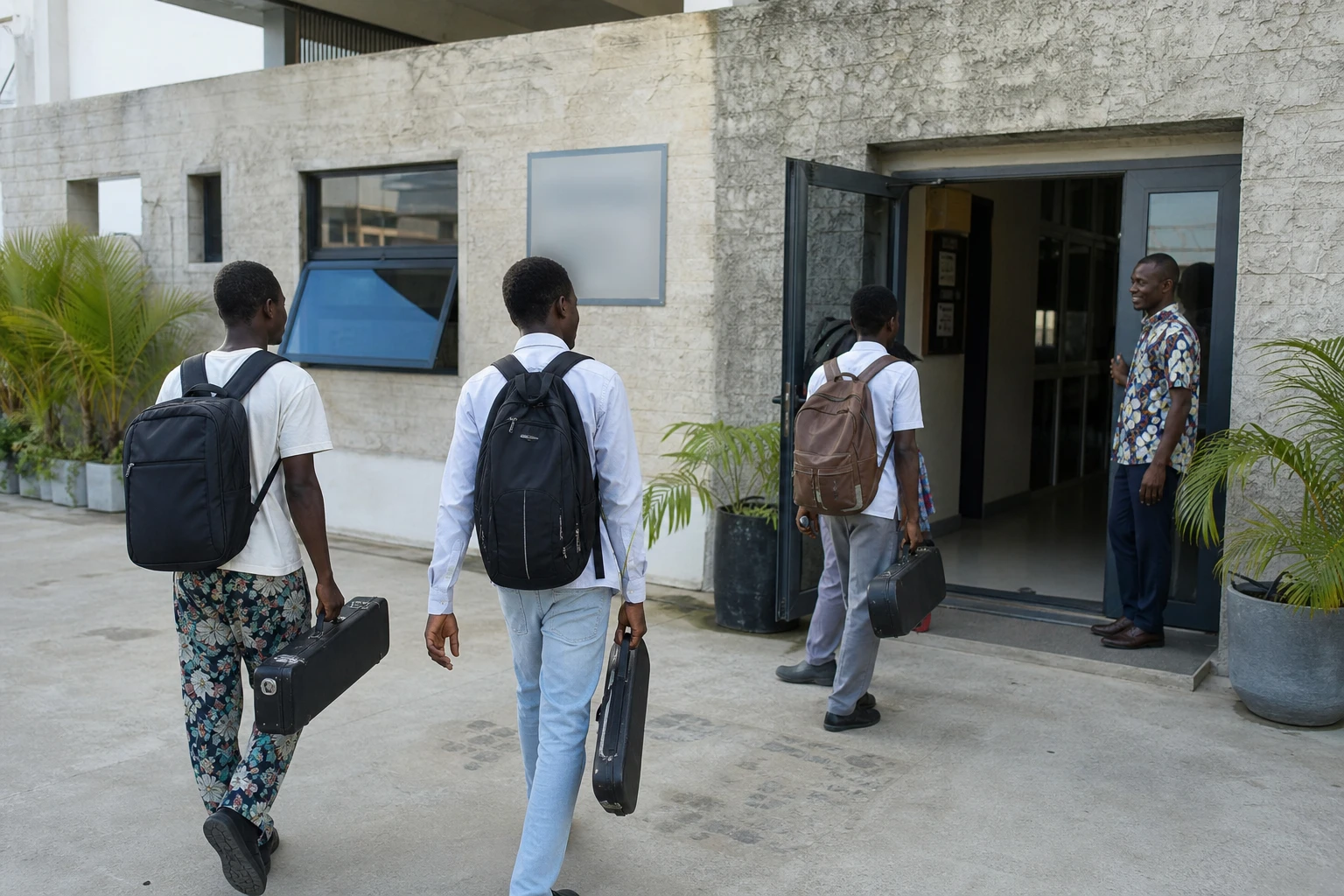
When a Beninese clarinettist finds himself at the heart of a world record
In music, too, visibility is often won far from the usual spotlight. On 30 August 2026, in Châtellerault, France, Beninese musician Landry Padonou took part in a gathering of 1,381 clarinettists that was recognised as a world record, a collective feat organised under the direction of Emmanuel Boulanger. The previous record, certified by Guinness World Records, stood at 448 musicians in Hong Kong.
For the Beninese musician, the event went far beyond the numerical feat. He says he saw in it a lesson in collective discipline, listening and adaptation. This view is shared by other participants and the media that covered the performance: the record was achieved through a complex process involving rehearsals, precise supervision and validation by the Guinness World Records jury.
The detail also matters. Landry Padonou was presented as the only Black and African musician in the ensemble, giving his presence particular symbolic significance. In a music industry where European stages often remain more visible than African ones, his singular position says something about the unequal circulation of talent, but also about the ability of Beninese artists to make their mark in international settings.
A Beninese career, a European stage and tangible effects
Landry Padonou is no newcomer in his field. He is part of the duo Landry+, formed with guitarist and singer Landry Magnidet Dannon, a project born in Benin and built around an acoustic repertoire blending French, Fon and contemporary influences. This is important because it places the record within an established artistic career, rather than a one-off appearance.
In Benin, music is a space for cultural expression, a field of work for professionals who often receive little media attention, and a lever for symbolic diplomacy. When a Beninese artist appears in an internationally certified performance, the gain is not solely individual. It also affects the image of a country whose creators increasingly move between Cotonou, African capitals and European stages.
This visibility nevertheless comes with a downside: it is a reminder of how precarious artistic careers can be. A world record can open doors, but it cannot replace studios, residencies, distribution networks or public policies capable of supporting musicians over the long term. In Benin, where creative work also circulates through diaspora networks and cultural institutes, international recognition serves above all as a springboard if it is accompanied by solid local projects.
The Beninese context gives this story additional resonance. In recent years, the country has seen artists and female chefs emerge in formats where individual achievement also becomes a national showcase. Benin TV and the Benin Broadcasting and Television Corporation have also widely reported Landry Padonou’s entry into the record, a sign that these careers are finding an echo in Benin’s public sphere.
What the record says about Benin, and what to watch next
At the regional level, the episode is a reminder that West African artists do not circulate only through the continent’s major capitals. Their movements also take place through Francophone networks, between local stages, the diaspora and European festivals. For a Beninese musician, the significance is clear: to show that African musical excellence is not limited to the most widely covered genres, and that a classical instrument such as the clarinet can also project a strong African presence.
The story also sheds light on a broader phenomenon in West Africa: the growing visibility of creators working in artistic niches. In a region shaped by mobility, the informal cultural economy and the search for opportunities beyond national circuits, every international breakthrough becomes a signal. It shows that a career built in Benin can reach beyond its borders without losing its local roots.
One more practical question remains: what will Landry Padonou do with this recognition? He himself stresses the importance of passing on his knowledge and continuing his work with Landry+. This is probably where the key issue lies. A world record, however spectacular, is only valuable if it supports artistic continuity, new collaborations and a stronger place for Beninese music in African and international cultural exchanges.
In this story, the number is impressive. But the substance matters more: a Beninese musician, whose artistic journey took him from Porto-Novo and Cotonou, found himself in a global collective performance. And he has come away with a simple but decisive idea: international recognition is not an end point. It is a springboard.