Algeria
 Egypt
 Libya
 Morocco
 Sudan
 Tunisia
 Benin
 Burkina Faso
 Cabo Verde
 Côte d'Ivoire
 Ghana
 Guinea
 Guinea-Bissau
 Liberia
 Mali
 Mauritania
 Niger
 Nigeria
 Senegal
 Sierra Leone
 The Gambia
 Togo
 Cameroon
 Central African Republic
 Chad
 DR Congo
 Equatorial Guinea
 Gabon
 Republic of the Congo
 São Tomé and Príncipe
 Burundi
 Comoros
 Djibouti
 Eritrea
 Ethiopia
 Madagascar
 Malawi
 Mauritius
 Mozambique
 Rwanda
 Seychelles
 Somalia
 South Sudan
 Tanzania
 Uganda
 Angola
 Botswana
 Eswatini
 Lesotho
 Namibia
 South Africa
 Zambia
 Zimbabwe
When a lake’s rising level upsets the balance between people and wildlife
On the shores of Lake Baringo in central Kenya, living alongside wildlife has changed. What was once a matter of daily vigilance has become an immediate safety concern for many families. As the water advances, paths narrow, boats move closer to homes, and crocodiles follow.
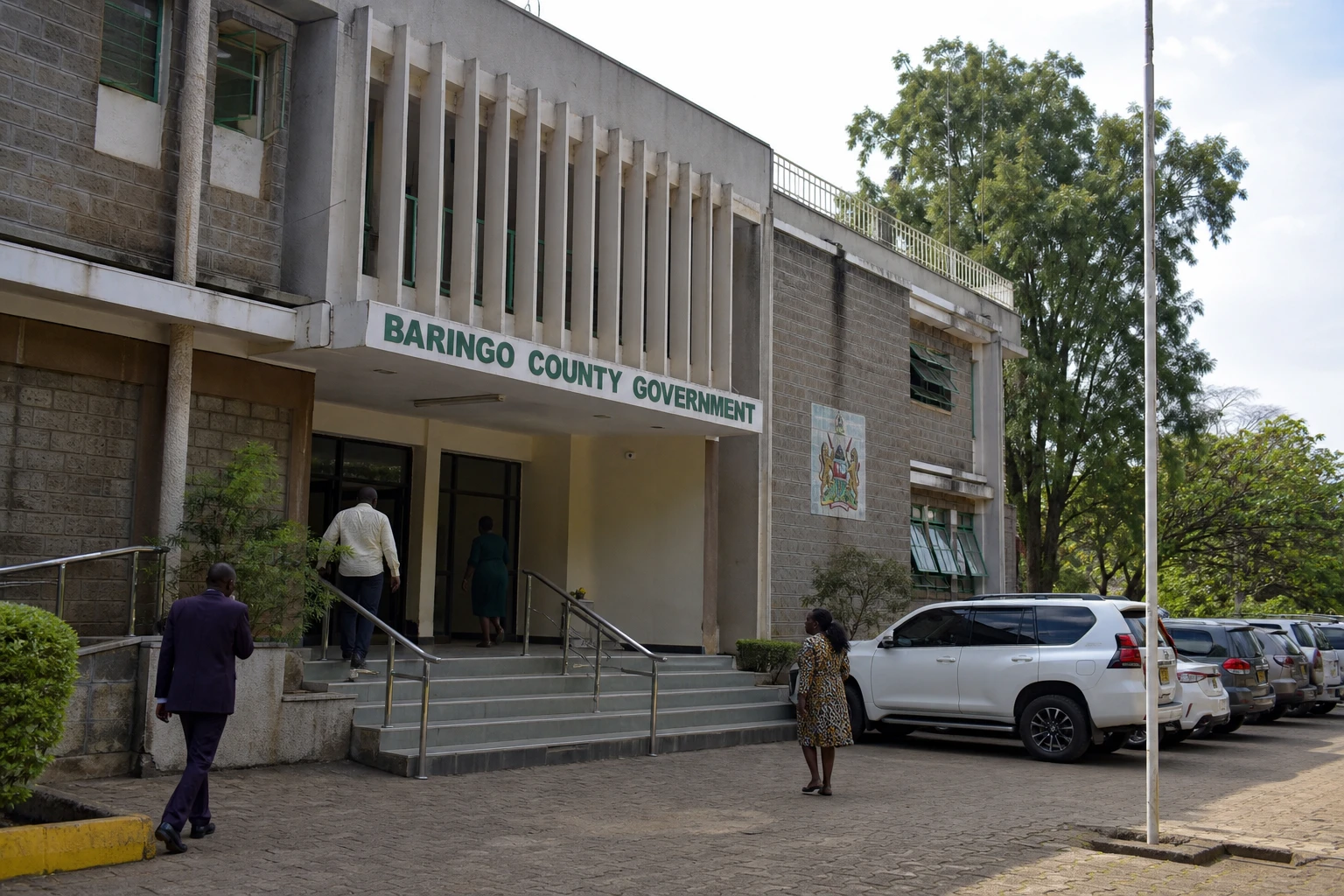
The case of Lake Baringo says more than simply that reptiles are present. It shows how climate change, pressure on the shores and human settlement in lakeside areas intersect in rural Kenya. In Baringo County, between Lake Baringo and Lake Bogoria, the issue is not only how to protect wildlife. It is also how to preserve the activities that sustain residents: fishing, small-scale trade, local transport and tourism. The county government includes this in its development plans, alongside road works, site security and tourism-related facilities.
A translocation operation to reduce risks
The Kenya Wildlife Service has launched an operation to capture and relocate crocodiles around Kampi ya Samaki, on the western shore of Lake Baringo. The reptiles are being transferred to parks and reserves managed by the agency, where their presence is considered less likely, in order to reduce dangerous encounters with local residents. The stated aim is twofold: to protect communities and maintain a conservation approach.
The intervention is not improvised. Kenyan authorities describe rising water levels that have reduced the space between inhabited areas and wildlife corridors. At the same time, Kenyan media have reported that capture teams were targeting large specimens and that the operation formed part of a broader response to human-wildlife conflict linked to the flooding of the shores.
Around Baringo, crocodiles are not the only animals affected. The same dynamics also affect hippos and, more broadly, the entire lake ecosystem. Residents have to contend with longer journeys, less safe water points and a local economy weakened by uncertainty. For lakeside families, every trip to the lake can become a calculation of risk.
Rising water levels: an ecological and social issue
Data collected in recent months point to the same conclusion: the lakes of Kenya’s Rift Valley have reached levels rarely seen in decades. Scientists and observers link the rise to extreme rainfall and the effects of climate change. In Baringo, water is therefore not just a resource. It is becoming a driver of displacement, tension and territorial change.
The problem goes beyond the environmental sphere. It affects local governance, infrastructure and the state’s ability to respond quickly to crises that unfold in waves. In an area such as Baringo, where the county is responsible for some local infrastructure and the Kenya Wildlife Service manages wildlife, coordination between Nairobi, the county level and communities is crucial. Without it, species protection can seem remote, while human safety becomes a constant emergency.
The economic dimension is just as clear. Lake Baringo and Lake Bogoria attract tourists, support restaurants, accommodation and services, and underpin some local incomes. When the shorelines recede or animals approach homes, tourist seasons, small businesses and transport routes are disrupted. At county level, this quickly affects households with little financial security to fall back on.
What Baringo tells Kenya and beyond
For several years, Kenya has faced a growing number of conflicts between people and wild animals, in a country where conservation remains a pillar of the economy and national image. But the Baringo case adds an important nuance: the issue here is not limited to human encroachment on natural areas. Water is also reshuffling the landscape, pushing wildlife towards inhabited areas and forcing the state to weigh species protection against public safety.
For East Africa, the Kenyan case is a warning signal. In the region’s lake basins and semi-arid areas, climate variability, demographic pressure and inadequate development along the shores are creating comparable tensions. Kenya’s response, combining capture, translocation and water infrastructure, will therefore be watched far beyond Baringo. It will show whether the region can still treat climate change as a sectoral issue, or whether it must now be seen as a matter of human security, local economies and coexistence with wildlife.
What happens next will also depend on the coming months, as rainfall, lake levels and population movements reshape the shoreline. In Baringo, the challenge is not only to relocate crocodiles. It is to reorganise a space where water, land and human activities no longer overlap as they once did.