Algeria
 Egypt
 Libya
 Morocco
 Sudan
 Tunisia
 Benin
 Burkina Faso
 Cabo Verde
 Côte d'Ivoire
 Guinea
 Guinea-Bissau
 Liberia
 Mali
 Mauritania
 Niger
 Nigeria
 Senegal
 Sierra Leone
 The Gambia
 Togo
 Cameroon
 Central African Republic
 Chad
 DR Congo
 Equatorial Guinea
 Gabon
 Republic of the Congo
 São Tomé and Príncipe
 Burundi
 Comoros
 Djibouti
 Eritrea
 Ethiopia
 Kenya
 Madagascar
 Malawi
 Mauritius
 Mozambique
 Rwanda
 Seychelles
 Somalia
 South Sudan
 Tanzania
 Uganda
 Angola
 Botswana
 Eswatini
 Lesotho
 Namibia
 South Africa
 Zambia
 Zimbabwe
In Mali, Bougouni is turning lithium into an industrial activity. In neighbouring Ghana, Kodal Minerals now wants to establish whether another licence can follow the same path. But between promising samples and a profitable mine lie several years of work, public-sector decisions and financing.
From a Malian site to a new Ghanaian bet
The Asamankese project is in eastern Ghana, about 75 kilometres by road from Accra. Its licence covers 156 km². The area lies within the Birimian geological formation, which extends across several West African countries and is known for its mineral resources. Kodal is searching there in particular for spodumene, a mineral that contains lithium.
This expansion comes as countries in the region seek to make better use of their resources while attracting capital and expertise. Ghana already has an advanced project at Ewoyaa. In March 2026, its Parliament approved the corresponding mining agreement, following discussions about revenue-sharing terms and the state’s role. The debate also concerns how communities and the national economy will benefit from exploitation.
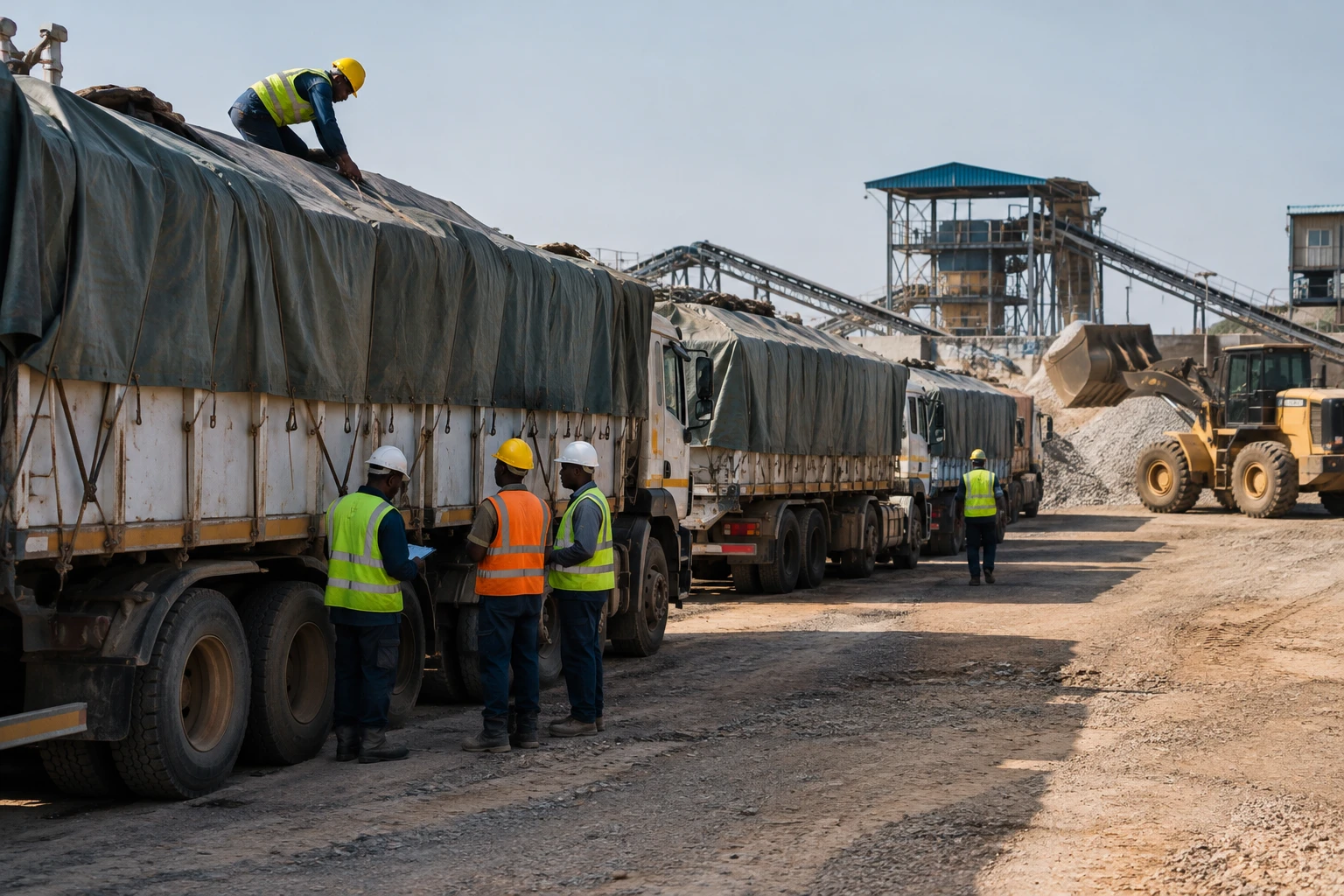
In Mali, Bougouni is Kodal’s operational precedent. The mine began producing concentrate in 2025. The company reported production of 80,429 tonnes during the first nine months of 2026. The concentrate is transported to the Ivorian port of San Pedro before being exported. The project brings together Kodal, Chinese group Hainan Mining and the Malian state, which holds a stake in the operating company.
A phased agreement, not yet a mine
On 19 October 2026, Kodal announced an agreement with Ghanaian company GH Geo-Consult. The British company acquired an initial 10% stake in the project for $300,000. Its partner must still apply to the Ghanaian authorities to transfer the licence to the joint venture set up to carry out the work.
Kodal can increase its stake to as much as 80% over five years, provided it funds the agreed stages. A minimum investment of $1.25 million would allow it to target a 30% stake. To reach 60%, the company will have to complete an initial resource estimate, among other requirements. The final stage provides for a definitive feasibility study, a document assessing the technical, economic and environmental conditions for exploitation.
Initial field results provide grounds for continuing exploration, but do not establish that an economically viable deposit exists. According to data published by Kodal, 95 of the 164 rock samples analysed contain more than 1% lithium oxide. The highest reported grade is 2.49%. Two areas, Amantra and Nfranta, have been identified as priorities. Initial diamond drilling is planned before the end of 2026.
These figures describe samples collected at the surface. They do not measure the total volume of ore underground or the consistency of its grade. They will need to be tested against drilling results, after which a resource estimate can be prepared. Even then, a feasibility study and the necessary permits will remain essential before any construction decision.
Value addition and benefits remain to be established
Bougouni’s experience could help Kodal organise the work and better understand the constraints of a West African mining project. But each site has its own geology, infrastructure and public-sector stakeholders. Success at a mine in Mali therefore does not guarantee success at Asamankese. Under the announced terms, the company can also suspend exploration spending while retaining the stakes it has already acquired.
For Ghana, the stakes go beyond the arrival of a new investor. The question is how much of the value created will remain in the country: public revenue, skilled jobs, contracts awarded to local businesses or mineral processing. The debate around Ewoyaa shows that ownership arrangements and revenue-sharing are already central to national discussions. Asamankese enters this context, but its exploration agreement does not predetermine the terms of any future mine.
In Mali, Bougouni shows that commercial production is possible, but also that it depends on an arrangement involving a foreign partner and public participation. The concentrate is exported through Côte d’Ivoire, linking the project to regional transport infrastructure and corridors. For workers, suppliers and communities near the site, the benefits will depend in particular on recruitment, local procurement, public revenue and the management of environmental impacts.
Regional competition is still in its early stages
The two projects represent different stages of the mining chain: Bougouni is already producing, while Asamankese remains at the exploration stage. For Kodal, the agreement opens up the possibility of growth in Ghana. For authorities and communities, it chiefly marks the start of a process in which geological data, mining rules and local commitments will need to be examined at each stage.
The next milestones are clear: transfer of the licence to the joint venture, the start of the drilling announced for before the end of 2026, and then publication of the results. Across West Africa, comparisons between Mali and Ghana will concern not only the discovery of resources but also the ability to negotiate partnerships, regulate projects and distribute their benefits. At Asamankese, the first unknown is simply the size and quality of any potential deposit.