Algeria
 Egypt
 Libya
 Morocco
 Sudan
 Tunisia
 Benin
 Burkina Faso
 Cabo Verde
 Côte d'Ivoire
 Ghana
 Guinea
 Guinea-Bissau
 Liberia
 Mali
 Mauritania
 Niger
 Nigeria
 Senegal
 Sierra Leone
 The Gambia
 Togo
 Cameroon
 Central African Republic
 Chad
 DR Congo
 Equatorial Guinea
 Gabon
 Republic of the Congo
 São Tomé and Príncipe
 Burundi
 Comoros
 Djibouti
 Eritrea
 Ethiopia
 Kenya
 Madagascar
 Malawi
 Mauritius
 Mozambique
 Seychelles
 Somalia
 South Sudan
 Tanzania
 Uganda
 Angola
 Botswana
 Eswatini
 Lesotho
 Namibia
 South Africa
 Zambia
 Zimbabwe
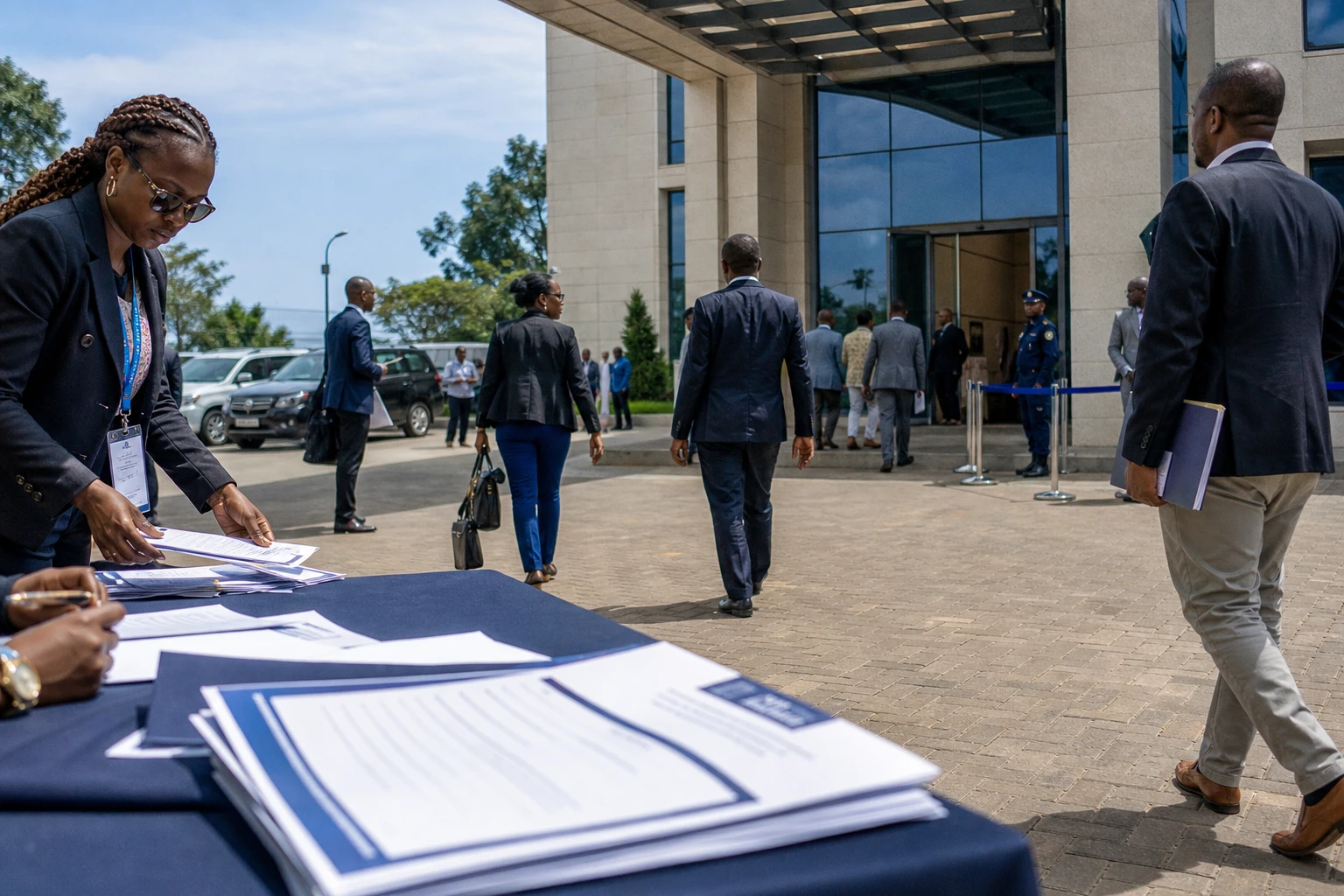
In Kigali, drones are no longer just a tool for intelligence
In African armed forces, the status of the drone has changed. It is no longer just an eye in the sky. It is becoming an instrument of surveillance, tactical support and, at times, strikes, with direct effects on the conduct of operations and the protection of civilians. In Kigali, defence specialists put this shift at the centre of discussions, at a time when the continent’s states are seeking to modernise their forces without losing political and legal control of these technologies.
The choice of Kigali is no coincidence. For several years, Rwanda has established itself as a venue for military and technology conferences of continental importance, whether on military education, national security or the use of emerging technologies. The Rwandan capital regularly hosts regional meetings on air capabilities, security and innovation, in a country that is a member of the East African Community, where defence cooperation is also taking on a technical and doctrinal dimension.
Between tactical advantage and the risk of abuse
The fundamental debate is easy to state but difficult to resolve. Drones make operations faster, more precise and often less costly than conventional air power. They can help monitor hard-to-reach areas, support surveillance missions, respond to disasters or assist cross-border operations. But they also lower the threshold for entering modern warfare. A state, armed group or externally backed actor can now project power at lower cost. The continent is already seeing this in several conflict theatres.
In Rwanda, this tension between civilian and military use is well known. The country has established a regulatory framework for civilian drones, with registration, permits and operator oversight. This approach is a reminder that aerial technology is never neutral: it requires rules, supervisory authorities and clearly assigned responsibility. In an African context where technical capabilities are advancing rapidly, the question is therefore not only how to fly higher. It is who authorises, who oversees and who is held accountable in the event of an error.
Legal issues have been central to discussions held in Kigali in recent years on emerging military technologies. In 2024, a workshop held in Rwanda with the participation of several national institutions and the International Committee of the Red Cross addressed autonomous weapons, artificial intelligence and international humanitarian law. The message was clear: military innovation is advancing, but it does not suspend human responsibility or the rules protecting civilians.
This is where the African stakes lie. The continent is not merely a testing ground for drone adoption; it is also becoming a place where acceptable uses are defined. The debate is no longer limited to major arms producers. It concerns national armies, regional bodies, training centres and African experts seeking to prevent technological autonomy from translating into a loss of political autonomy. Rwanda, which is hosting an increasing number of defence forums in Kigali, is also seeking to establish itself as a venue for framing these discussions.
What the continent needs to watch
The scope of this discussion extends far beyond Rwanda. In the Great Lakes region, the Sahel, the Horn of Africa and Mozambique, drones have already changed military calculations. They are used to observe, target and deter, but also fuel arms races and fears of escalation. Their rapid spread is forcing regional organisations, such as the East African Community, and African security mechanisms to consider common rules on their use, maintenance, traceability and accountability.
The issue is all the more sensitive because international discussions on autonomous weapons systems are progressing slowly. The ICRC is calling for binding legal limits on unpredictable autonomous weapons and on those designed to use force against people. This position reflects a concern shared by many African states: preserving meaningful human control, especially in decisions that can cost lives.
For armed forces, drones promise greater responsiveness and better knowledge of the terrain. For populations, they raise a different question: who guarantees that these capabilities will not intensify violence at a distance, opaque surveillance or poorly targeted strikes? In rural, border or disputed areas, a drone’s impact is not limited to its payload. It also affects perceptions of security, the movement of people and the already fragile relationship between institutions and residents.
The conference held in Kigali is also a reminder of a broader reality: Africa cannot simply import technologies of war without defining its own safeguards. The continent has a rare advantage. It can still write its standards as it adopts these tools. The question now is not whether military drones will proliferate. It is under what rules, subject to what oversight and within what regional framework.