Algeria
 Egypt
 Libya
 Morocco
 Sudan
 Tunisia
 Benin
 Burkina Faso
 Cabo Verde
 Côte d'Ivoire
 Ghana
 Guinea
 Guinea-Bissau
 Liberia
 Mali
 Mauritania
 Niger
 Nigeria
 Senegal
 Sierra Leone
 The Gambia
 Togo
 Cameroon
 Central African Republic
 Chad
 DR Congo
 Equatorial Guinea
 Gabon
 Republic of the Congo
 São Tomé and Príncipe
 Burundi
 Comoros
 Djibouti
 Eritrea
 Ethiopia
 Madagascar
 Malawi
 Mauritius
 Mozambique
 Rwanda
 Seychelles
 Somalia
 South Sudan
 Tanzania
 Uganda
 Angola
 Botswana
 Eswatini
 Lesotho
 Namibia
 South Africa
 Zambia
 Zimbabwe
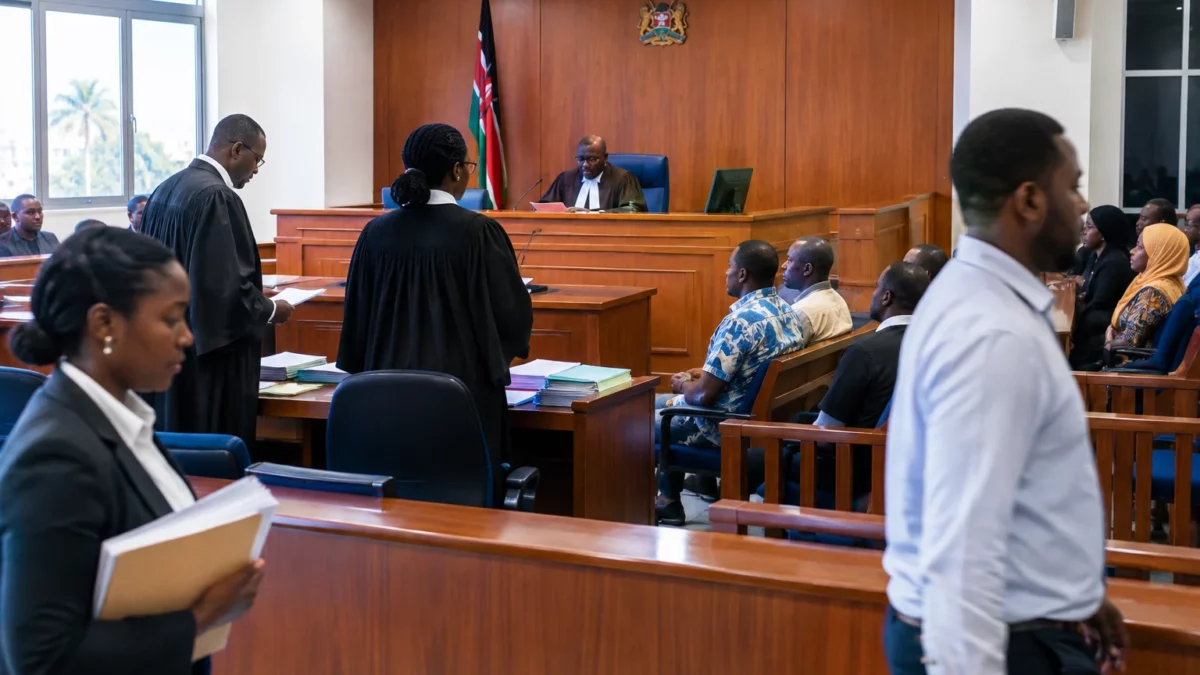
In Shakahola, criminal verdicts have been delivered, but the question remains: how could hundreds of people die in an isolated place when relatives and authorities had raised concerns? The ruling handed down in Mombasa on 27 November 2026 closes the latest major case linked to deaths in the coastal county of Kilifi.
A final trial after several proceedings
The court found Paul Nthenge Mackenzie guilty of manslaughter in a trial concerning 238 deaths. The ruling held him responsible for 123 deaths. Other defendants were convicted of offences linked to 104 victims, while several co-defendants received separate verdicts. The figures therefore vary according to the individuals and charges involved: they should not be confused with the total number of victims found in Shakahola.
A total of 29 other people were convicted in this case and 60 acquitted. Four defendants who died in custody could no longer be tried. Kenya’s Citizen news agency reports that the court also issued separate rulings concerning co-defendants, including Mackenzie’s wife. These distinctions matter: a collective verdict does not mean that each person was found responsible for the same deaths.
Judge Alex Ithuku found that Mackenzie and some of his followers had organised a fast leading to death, presenting the practice as a way to meet Jesus. The evidence examined included testimony and forensic reports. According to the case presented in court, 129 of the 238 people covered by this proceeding are believed to have died of starvation. The condition of 86 other bodies made it impossible to establish the cause of death. These figures relate to this trial, not to everyone found in the forest.
Hundreds of bodies and earlier warnings
The case came to public attention in April 2023, when Kenyan authorities began searching for missing members of the Good News International Church. Operations in Shakahola forest, near Malindi, led to the exhumation of hundreds of bodies. Published figures changed as searches continued; sources consulted refer to 429 bodies found. Survivors said Mackenzie had urged his followers to fast until death. He denied the accusations and said he had not forced them to fast.
The court case forms part of a wider debate in Kenya: how can freedom of religion be protected without allowing abuses to continue under the cover of belief? A special committee of the Kenyan parliament investigated the role of religious leaders and local authorities. A report by the Office of the Ombudsman also identified failures by state agencies and said warnings had been passed on before the discoveries in 2023. Criminal justice addresses individual responsibility; these inquiries also examine the institutional response.
This distinction is essential. The responsibility of a religious leader or his associates does not remove that of public services tasked with receiving reports and protecting people at risk. At the same time, the case does not justify conflating an entire religious community with the actions of the defendants. The court ruled on specific individuals and facts, on the basis of the evidence presented at trial.
Sentences already handed down, families still in mourning
The 27 November ruling adds to several other decisions in cases linked to Shakahola. On 6 November 2026, Mackenzie was sentenced to 200 years in prison for the murder of 191 people, including 190 children. On 25 November, another court found him guilty of assaulting and treating children cruelly. Terrorism- and radicalisation-related charges were also dealt with in separate proceedings.
These convictions should not be presented as a single verdict or one sentence. They stem from separate trials, involving victims, charges and evidence that do not fully overlap. They nevertheless show the scale of the judicial work: several proceedings were needed to examine different aspects of the case and determine the responsibilities identified by the courts.
For families, court decisions can establish responsibility, but they cannot undo their loss. Steven Mwiti, who lost his wife and six children, said he felt relieved that Mackenzie could no longer cause harm, while stressing that the convictions would not bring his family back. His testimony highlights a reality that the figures in a judgment cannot capture: the lasting consequences for relatives and survivors.
The acquittals, too, prompted opposing reactions. Lawyer Lawrence Obonyo questioned the impartiality of some decisions and raised the possibility of political influence, an allegation not established by the verdict. Conversely, human rights defender Redempta Mwikali said that people who, in her view, had contributed to the fasts were acquitted despite the testimony heard. These criticisms reflect different interpretations of the trial; they do not replace the grounds for the judgment or the avenues of appeal.
A Kenyan issue that extends beyond the courtroom
In Nairobi and the coastal regions, the case raises a concrete institutional question: how can warnings be better shared between communities, police, local administration and authorities responsible for monitoring organisations? Parliament had already examined the regulation of religious groups after the first exhumations. Any reform will need to balance the protection of people with constitutional guarantees of freedom of conscience, without treating religious practices as inherently suspect.
The case also concerns East Africa, where Kenya works with its neighbours through the East African Community (EAC), a regional cooperation framework. This is not a case brought by that organisation, but issues of child protection, the movement of people and police cooperation can extend beyond national borders. For the African Union, the broader issue is access to justice and the prevention of violations of fundamental rights.
The latest verdict closes an important stage in the criminal proceedings, but not all the questions raised by Shakahola. Any appeals, support for survivors and the follow-up to inquiries into earlier warnings will help show whether the proceedings have also brought changes to the protection of people. In Kenya, the case’s legacy will therefore be measured in courtrooms as well as by institutions’ ability to identify dangerous situations sooner.