Algeria
 Egypt
 Libya
 Morocco
 Sudan
 Tunisia
 Benin
 Burkina Faso
 Cabo Verde
 Côte d'Ivoire
 Ghana
 Guinea
 Guinea-Bissau
 Liberia
 Mali
 Mauritania
 Niger
 Nigeria
 Senegal
 Sierra Leone
 The Gambia
 Togo
 Cameroon
 Central African Republic
 Chad
 DR Congo
 Equatorial Guinea
 Gabon
 Republic of the Congo
 São Tomé and Príncipe
 Burundi
 Comoros
 Djibouti
 Eritrea
 Ethiopia
 Madagascar
 Malawi
 Mauritius
 Mozambique
 Rwanda
 Seychelles
 Somalia
 South Sudan
 Tanzania
 Uganda
 Angola
 Botswana
 Eswatini
 Lesotho
 Namibia
 South Africa
 Zambia
 Zimbabwe
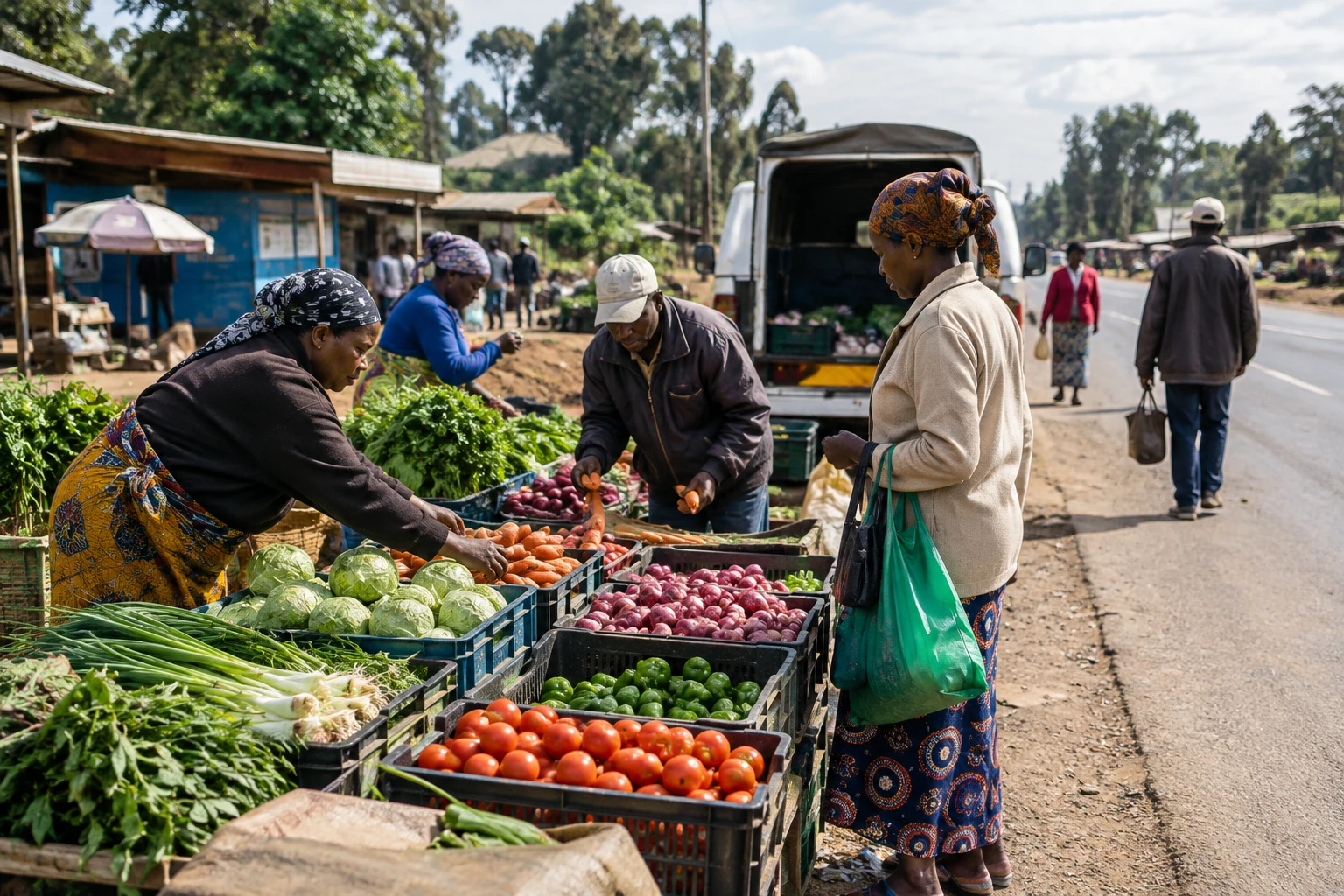
For a farm several kilometres from a market, the condition of the road can determine the sale price, journey time and access to services. In Kenya, a programme announced to improve rural links promises to address some of these challenges. But its funding has yet to be secured: work has not started.
A project still in the planning stage
On 20 October 2026, the Kenya National Highways Authority (KeNHA), the public agency responsible for national roads, published a general procurement notice for the Roads for Rural Economic Development Project (RREDP). The government intends to seek $600 million from the International Development Association, the World Bank’s fund for low- and middle-income countries. This is a proposed funding request, not money already disbursed or a construction contract already awarded. KeNHA’s official notice on the rural roads programme sets out the next steps in its preparation.
The project aims to cover about 536 kilometres of roads in seven counties: Elgeyo-Marakwet, Uasin Gishu, Kericho, Bomet, Nandi, Narok and Nakuru. The programme also includes bridges in the Lower Eastern region, community facilities and work related to rural transport infrastructure. An independent source, the Kenyan daily The Eastleigh Voice, has also reported the funding request and the 536 kilometres targeted.
Publishing a general notice opens a procurement process; it does not guarantee loan approval or a construction timetable. The project builds on preparatory work already under way: World Bank documents refer to a grant for studies and programme design. They shed light on the preparation phase, but do not amount to approval of the proposed $600 million. The RREDP environmental and social preparation document sets out the framework for this first stage.
Connecting agricultural areas to markets
The seven counties are in western Kenya and the Rift Valley, areas where agricultural output supplies local markets and national trade. More passable roads can reduce delays and losses during transport, particularly for perishable goods. They can also make it easier to travel to schools, health centres and shops. These are expected benefits, not outcomes that have already been measured.
The benefits will not automatically be shared equally. Farmers near upgraded roads could gain easier access to buyers and inputs. Small farms far from the targeted roads, however, risk being left out. Likewise, a road that is passable year-round can help traders and transporters, but the effect on incomes will depend on fares, competition and the reliability of services.
The design of the works will therefore matter as much as their length. The programme includes climate-resilience requirements. Drainage, bridges and maintenance are essential in a region where heavy rainfall can damage roads and cut links. KeNHA will also need to co-ordinate the works with county administrations, which manage a significant share of the local road network. Without co-ordination, an upgraded road could lead to a deteriorated or poorly maintained stretch.
Debt, public procurement and local benefits
A $600 million allocation also raises a budgetary question. If the funding takes the form of a concessional loan, its terms and repayment schedule will matter for public finances. The procurement notice alone does not establish the final funding arrangements. The World Bank’s decision, the Kenyan government’s contribution and the documents detailing financial commitments will therefore need to be monitored.
The quality of the public procurement process will be just as important. Tender documents will need to specify selection criteria, deadlines, oversight measures and complaints procedures. For affected communities, land issues, compensation and environmental impacts could alter the route or pace of the works. Transparent consultations and publication of contracts will make it possible to assess whether the promised benefits actually reach rural areas.
The project could also create opportunities for local businesses and jobs, but that will depend on procurement rules and Kenyan companies’ ability to compete. Announcing an overall allocation is not enough: the division of contracts, technical requirements and access to information will determine who benefits from public spending.
A stake in East African trade
Kenya is an important transport hub for East Africa. Its roads link production areas to cities, borders and regional trade corridors. Improving rural routes could strengthen these connections, but the RREDP is distinct from major cross-border projects such as the LAPSSET corridor, which links the port of Lamu with planned routes towards Ethiopia and South Sudan.
At regional level, the issue also concerns the East African Community (EAC), an organisation bringing together several countries in the region to promote trade and co-operation. Effective rural links can feed into wider trade networks, provided main roads, border posts and logistics services keep pace. For the African Union, the project illustrates a shared challenge: connecting producing communities to national and regional markets without allowing maintenance and debt to lag behind investment announcements.
The next steps will therefore be decisive: confirmation of funding, publication of studies, local consultations and a timetable for tenders. Until these decisions are known, the 536 kilometres remain a project target. For residents of the counties concerned, the difference will ultimately be measured by whether roads are passable, how well they are maintained and the real cost of travel.