Algeria
 Egypt
 Libya
 Morocco
 Sudan
 Tunisia
 Benin
 Burkina Faso
 Cabo Verde
 Côte d'Ivoire
 Ghana
 Guinea
 Guinea-Bissau
 Liberia
 Mali
 Mauritania
 Niger
 Nigeria
 Senegal
 Sierra Leone
 The Gambia
 Togo
 Cameroon
 Central African Republic
 Chad
 DR Congo
 Equatorial Guinea
 Gabon
 Republic of the Congo
 São Tomé and Príncipe
 Burundi
 Comoros
 Djibouti
 Eritrea
 Ethiopia
 Madagascar
 Malawi
 Mauritius
 Mozambique
 Rwanda
 Seychelles
 Somalia
 South Sudan
 Tanzania
 Uganda
 Angola
 Botswana
 Eswatini
 Lesotho
 Namibia
 South Africa
 Zambia
 Zimbabwe
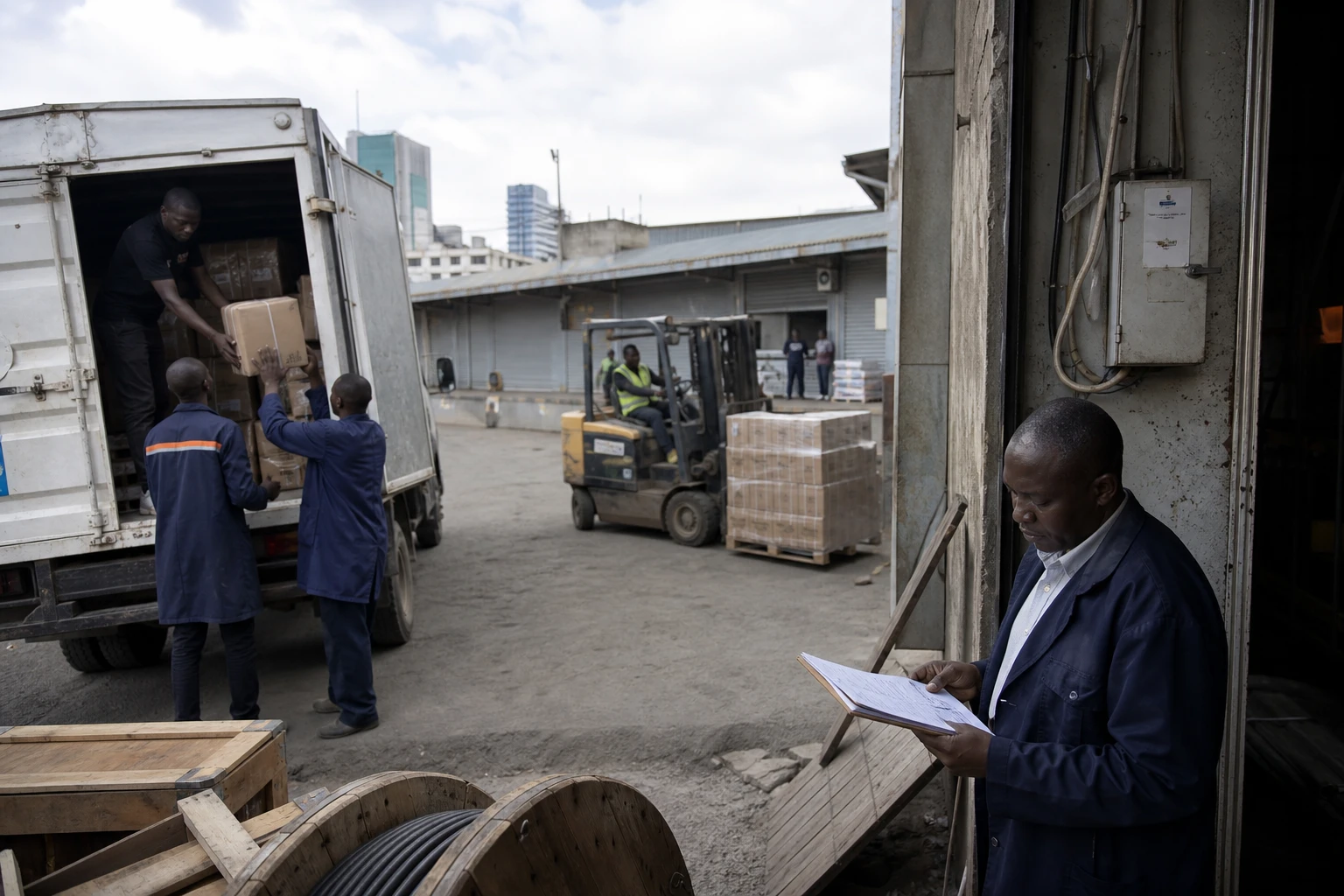
As the lights come back on, one question remains: why did the grid fail?
In Kenya, a power outage is never just an inconvenience. It affects households, slows small shops, disrupts hospitals and is a reminder that grid stability is an economic as well as a social issue. On Thursday, Kenya Power announced that electricity had been restored in several areas after an outage the previous evening.
The message was clear: supply had been restored in Mount Kenya, the North Rift, the West, South Nyanza and parts of Nairobi, the Kenyan capital. The geography of the outage says much about how an interconnected system works: when an incident occurs on the national grid, its effects do not stop at a county’s borders or those of the capital.
A grid under pressure in a country where access is growing but remains fragile
Kenya relies on Kenya Power, the state-owned electricity distributor, to supply almost all customers connected to the grid. In its 2024-2025 annual report, the company says it passed the 10 million customer mark, after a year of growth in the number of connected households and businesses. The Ministry of Energy put the customer base at around 9.66 million in 2023-2024.
This growth is significant. It shows that the country is continuing to expand access to electricity, including through connection programmes supported by African lenders such as the African Development Bank, under the Last Mile Connectivity Project. But it also puts further pressure on an already heavily used grid, where urban demand, industrial growth and rural electrification are not expanding at the same pace as technical capacity.
In Nairobi, the outage hit particularly hard in an area where government offices, financial services, telecommunications and a large share of national consumption are concentrated. In the Mount Kenya, North Rift, West and South Nyanza regions, dependence on electricity is different, but just as tangible: food preservation, water pumping, small businesses, charging devices and keeping private schools, clinics and workshops running.
What happened, and what is known about the gradual restoration of power
According to information released during the day, the outage occurred the previous evening and affected several regions. Kenya Power subsequently said that electricity supply had been restored in stages in the affected areas. The first restorations were in Mount Kenya and several parts of Nairobi, before power returned to other parts of the country. The company referred to a “system disturbance”, an expression commonly used to describe a disruption to the transmission or generation system.
The company did not immediately provide details of the precise cause of the incident in the information reviewed, but recent outages offer context. In August 2024, and again in December 2024, Kenya experienced major blackouts, with power gradually restored in several regions after widespread interruptions. At the time, the authorities and Kenya Power cited grid disruptions and generation failures, indicating that vulnerabilities lie both upstream and downstream of distribution.
This sequence is significant. It is a reminder that in Kenya, the electricity question is not only about installed generation capacity. It also involves transmission, regional interconnections, grid maintenance and the ability to isolate a fault without it spreading. In a country where energy is a key driver of growth, every interruption exposes the gap between modernisation ambitions and the reality of infrastructure that remains vulnerable.
What the outage says about Kenya, and why East Africa is watching
Kenya holds a distinctive position in East Africa. Its economy, Nairobi’s role as a financial centre, its data hubs and services, and its place in the East African Community make it a regional hub. When power falters, the impact often extends beyond Kenya Power’s customers. It affects supply chains, digital services and investor confidence in a country that also presents itself as a platform for business and innovation.
For households, the impact is immediate. For SMEs, it is more costly, as it means relying on generators or batteries, or simply stopping work. For major operators, it becomes a test of resilience. The contrast is stark between areas able to absorb a short outage and those where a few hours without electricity are enough to disrupt cold chains, digital payments or production.
Across the continent, Kenya’s experience is a reminder of a reality shared by many African markets: the challenge is no longer only to install more capacity, but to make the grid more reliable, maintain power lines and better coordinate generation, transmission and distribution. This is also why governments, regulators and African partners are stepping up projects to strengthen interconnections and mini-grids. The next test for Kenya will be whether Kenya Power and the energy authorities can explain the incident, prevent a recurrence and preserve confidence in a system on which an increasing share of economic life depends.