Algeria
 Egypt
 Libya
 Morocco
 Sudan
 Tunisia
 Benin
 Burkina Faso
 Cabo Verde
 Côte d'Ivoire
 Ghana
 Guinea
 Guinea-Bissau
 Liberia
 Mali
 Mauritania
 Niger
 Nigeria
 Senegal
 Sierra Leone
 The Gambia
 Togo
 Cameroon
 Central African Republic
 Chad
 DR Congo
 Equatorial Guinea
 Gabon
 Republic of the Congo
 São Tomé and Príncipe
 Burundi
 Comoros
 Djibouti
 Eritrea
 Ethiopia
 Madagascar
 Malawi
 Mauritius
 Mozambique
 Rwanda
 Seychelles
 Somalia
 South Sudan
 Tanzania
 Uganda
 Angola
 Botswana
 Eswatini
 Lesotho
 Namibia
 South Africa
 Zambia
 Zimbabwe
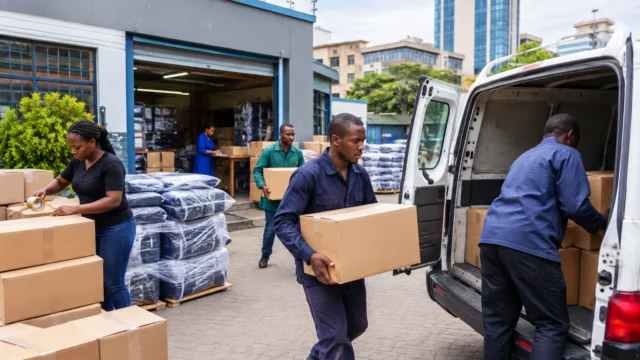
In Nairobi, a container unloaded at Mombasa does not always reach its destination quickly. The journey inland is a key part of Kenya’s commercial supply chain. A new train dedicated to CMA CGM aims to organise part of this journey, but its usefulness will depend on its reliability and demand from shippers.
A weekly train, initially for imports
On 28 October 2026, CMA CGM inaugurated a freight service between the port of Mombasa and the Nairobi-Embakasi inland container terminal. The train has 54 wagons and can carry 108 TEUs, equivalent to 108 twenty-foot containers. The company plans one dedicated departure a week at launch.
The first phase covers imported containers transported from the coast to Nairobi. The company will then assess demand before deciding whether to increase the frequency or add a return journey to Mombasa. A service in both directions is therefore not yet assured.
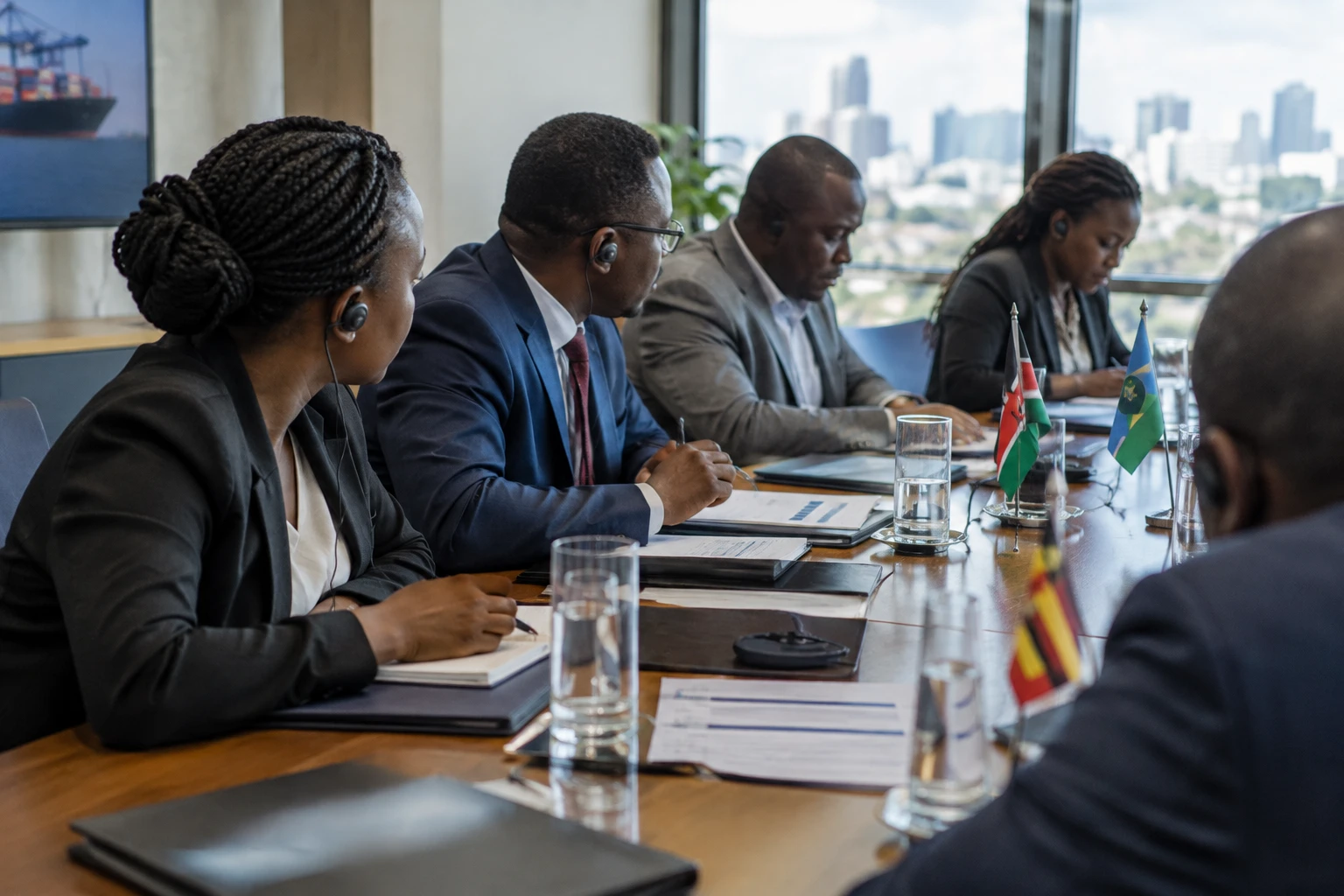
The project brings together CMA CGM, the Kenya Ports Authority (KPA), which administers the ports, and Kenya Railways Corporation (KRC), the state rail operator. Kenyan transport officials and representatives of both organisations attended the inauguration, alongside company representatives and the French ambassador to Kenya.
A new service on an existing corridor
The service uses existing infrastructure. The Embakasi terminal is already connected to the port of Mombasa by both the standard-gauge railway and the metre-gauge line. KPA describes these links as a way of bringing port services closer to inland customers. CMA CGM’s train therefore does not create the rail connection: it adds a dedicated service to an already active freight network.
This distinction matters when assessing what is at stake. The new operator must find its place in a system used by importers, exporters and other carriers. Capacity of 108 TEUs per departure may improve coordination of its clients’ goods, but it does not, by itself, show how many lorries will be taken off the roads or what the effect will be on costs.
The port of Mombasa is also a regional gateway. The Northern Corridor links the Kenyan coast to the markets of Uganda, Rwanda, Burundi, South Sudan and eastern Democratic Republic of the Congo. The East African Community (EAC), which brings together states in the region around economic integration projects, sees improved transport as a means of facilitating the movement of goods.
Reliability is the main economic test
For businesses, the value of a dedicated train lies first and foremost in predictability: coordinating a ship’s arrival with the rail transfer can simplify the journey to Embakasi. Importers could gain greater visibility over delivery times. But the announced service currently serves only Nairobi. Businesses further inland or in neighbouring states will still need additional transport by road or rail.
The question of the return journey is just as important. If the wagons travel back empty, capacity is used less efficiently and logistics costs may remain high. The company says it will consider this possibility after assessing demand. For now, no increase in frequency or direct regional service has been confirmed.
Local benefits will also depend on how the last mile between the terminal, warehouses and business districts is organised. Rail can ease pressure on some roads, but it does not replace the lorries needed for final deliveries. The gains will therefore differ for a large importer near Embakasi and a small business far from rail infrastructure.
Jobs, training and environmental promise
CMA CGM presents the service as an extension of its logistics activities in Kenya. The group also says it is renewing its partnership with the Bandari Maritime Academy, which trains maritime and logistics professionals. These initiatives could strengthen local skills, although the company’s statement does not specify how many people have been trained or how many jobs are directly linked to the new train.
The CMA CGM Foundation also supports Mombasa’s I.O.Me001 innovation centre, developed with the Kenya Red Cross. The group says the centre brought together 15 institutions and more than 1 200 students in 2025. These figures were provided by the company, which also announced seven additional containers to expand the site.
At the inauguration, guests visited the CMA CGM PALMYRE, a liquefied natural gas-powered vessel. The visit illustrates the group’s environmental case, but is not enough to establish the climate impact of the rail service. This will depend in particular on train load factors, return journeys and emissions compared with the road-based options used to transport the same goods.
For Kenya and its EAC neighbours, the issue is therefore less the announcement of another train than its ability to become a lasting part of existing freight flows. Tracking the actual frequency, load factor and possible introduction of a return journey will make it possible to judge whether the initiative brings a tangible improvement to the Northern Corridor.