Algeria
 Egypt
 Libya
 Morocco
 Sudan
 Tunisia
 Benin
 Burkina Faso
 Cabo Verde
 Côte d'Ivoire
 Ghana
 Guinea
 Guinea-Bissau
 Liberia
 Mali
 Mauritania
 Niger
 Nigeria
 Senegal
 Sierra Leone
 The Gambia
 Togo
 Cameroon
 Central African Republic
 Chad
 DR Congo
 Equatorial Guinea
 Gabon
 Republic of the Congo
 São Tomé and Príncipe
 Burundi
 Comoros
 Djibouti
 Eritrea
 Ethiopia
 Madagascar
 Malawi
 Mauritius
 Mozambique
 Rwanda
 Seychelles
 Somalia
 South Sudan
 Tanzania
 Uganda
 Angola
 Botswana
 Eswatini
 Lesotho
 Namibia
 South Africa
 Zambia
 Zimbabwe
In the Rift Valley, water is redrawing the boundary between villages and wildlife
At Baringo, in western Kenya, a rising lake is not visible only on maps. It can also be seen at the doorsteps of homes, near fishing nets and in the movements of wild animals that have come too close to settlements. As the water advances, the dividing line between conservation and public safety becomes fragile.
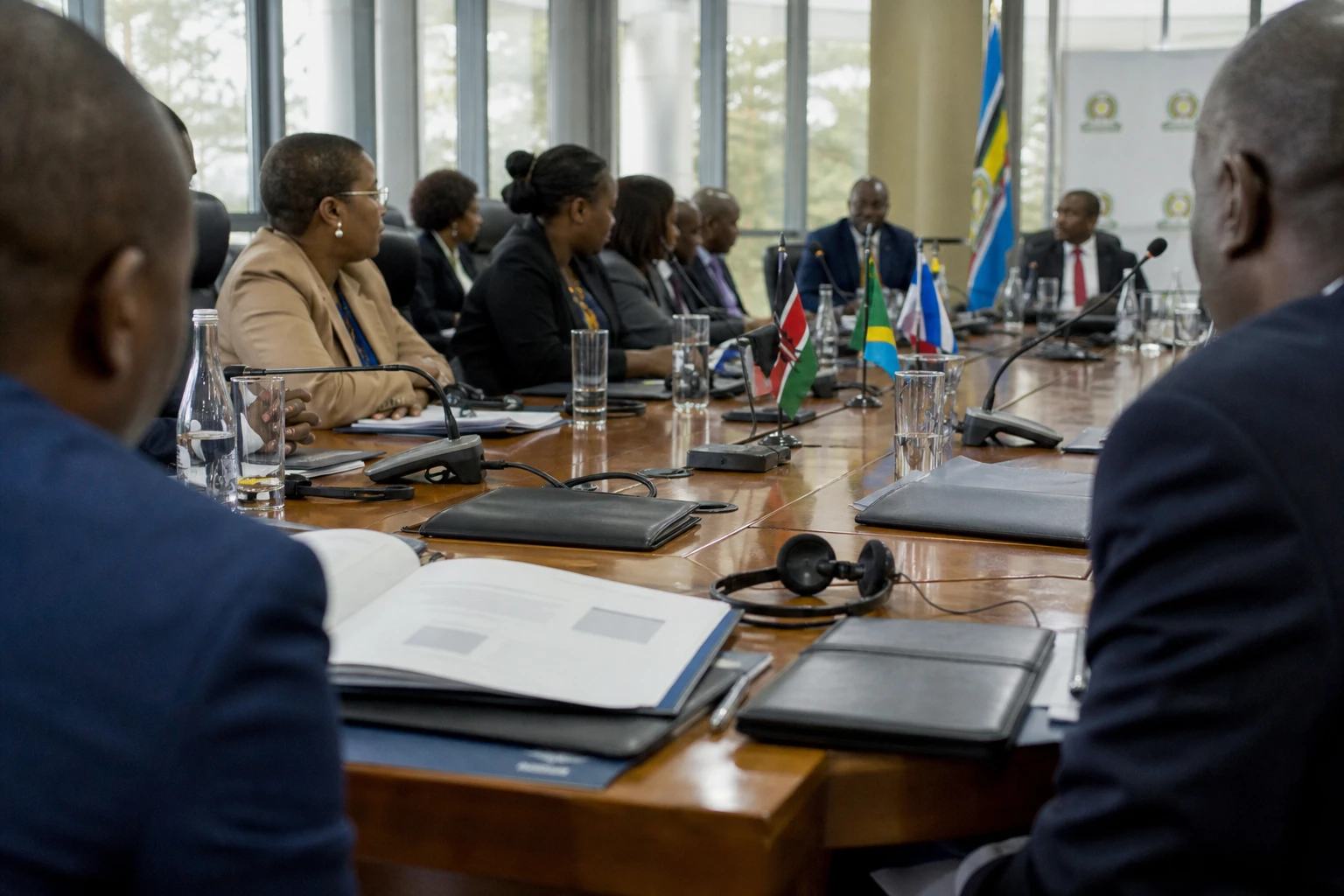
Lake Baringo is part of a broader trend affecting several lakes in Kenya’s Rift Valley. Official and scientific sources indicate that these bodies of water have reached levels rarely seen in decades, driven by extreme rainfall and increased climate variability. Kenya is addressing the issue through its national institutions, but also from the regional perspective of the East African Community, which has made climate adaptation and water-related risk management a key area of work.
A capture operation, but above all an emergency response to a longstanding crisis
On the shores of Lake Baringo, Kenya Wildlife Service officers have launched an operation to capture and relocate crocodiles in a bid to reduce the risk of conflict between people and wildlife. The initiative targets the largest specimens, those that come closest to settlements and fishing grounds. The wildlife agency says the aim is to move the reptiles to protected areas where human pressure is lower.
The operation relies on a makeshift but cautious method. Teams use, among other things, a sound signal intended to lure crocodiles towards a net baited with dead fish. At the scene, officers ask residents to keep quiet so as not to scare the animal away. The capture is delicate, as crocodiles become wary after several successful attempts in the same place. According to KWS, about 13 crocodiles have already been transferred, with more to follow.
This operation is not an isolated incident. It is a visible symptom of a deeper territorial disruption. As the lake expands, crocodiles are moving closer to homes, fishing banks and schools. In other parts of the Rift Valley, the same dynamic has already forced thousands of families to leave their land. Figures cited by Kenyan authorities now point to about 8,000 households affected around Lakes Baringo and Bogoria, while the broader toll across the Rift lakes remains above 75,000 displaced households, according to an earlier government and UN report.
What the figures show: rapid lake expansion and sustained pressure
Satellite images examined by AFP using the Copernicus Sentinel and NASA Landsat programmes show that Lake Baringo’s surface area has grown by about 70% since 2010, reaching around 234 sq km. Other academic studies and institutional reports confirm a marked increase in the area covered by water in this region. The Kenya Water Resources Authority had already warned that intense El Niño-related rainfall could further worsen the situation in several basins, including those of lakes and floodplains.
The phenomenon is not only ecological. It also affects the local economy. Around Baringo, fishing, small-scale trade and tourism depend on an unstable balance between freshwater, places for visitors and their movements. Some fish sellers support the relocation of crocodiles because it makes their daily work safer. Other residents fear, on the contrary, that moving iconic animals could further undermine the tourist appeal of an area already under strain. This is a familiar debate in areas where people and wildlife coexist: protecting communities without erasing the economic and ecological value of species.
The climate dimension remains central. Authorities and researchers link rising water levels to more intense rainfall, as East Africa faces increasingly variable precipitation. The East African Community also says its member states must strengthen adaptation, early-warning systems and the resilience of populations exposed to flooding. In this context, Baringo is becoming a regional case study: a lake overflowing, but also a territory where rural land use, risk prevention and wildlife management must now be considered together.
Kenya faces a climate governance test
For Nairobi, the challenge goes beyond the capture operation. Civil protection, water management, conservation, public health and the authorities in Baringo County must be co-ordinated. The new inter-ministerial work highlighted by Kenya’s climate portal shows that the state now wants to respond in a more integrated way, with joint technical committees and measures addressing infrastructure, irrigation and livelihoods. This is a change in approach, not just in terminology.
The pressure is regional too. Several lakes in the Rift Valley have risen at the same time, making purely local responses more difficult. Wildlife corridors do not stop at administrative boundaries, and nor do lakeside communities. Kenya must therefore balance the immediate needs of people, the continuation of fishing, tourism, conservation and long-term climate adaptation. This is precisely why Kenya’s response matters across East Africa: it is testing a state’s ability to protect its people without disrupting the balance of a shared ecosystem.
On a broader scale, the Baringo case is a reminder of a continental reality: climate shocks do not produce only floods or displacement. They change land use, move wildlife and economic activity, and force African institutions to develop co-ordinated responses. In this case, the question is no longer whether the water will return, but how Kenyan local authorities, the EAC and technical services can adapt without leaving residents to bear the cost of this changing landscape alone.