Algeria
 Egypt
 Libya
 Morocco
 Sudan
 Tunisia
 Benin
 Burkina Faso
 Cabo Verde
 Côte d'Ivoire
 Ghana
 Guinea
 Guinea-Bissau
 Liberia
 Mali
 Mauritania
 Niger
 Nigeria
 Senegal
 Sierra Leone
 The Gambia
 Togo
 Cameroon
 Central African Republic
 Chad
 DR Congo
 Equatorial Guinea
 Gabon
 Republic of the Congo
 São Tomé and Príncipe
 Burundi
 Comoros
 Djibouti
 Eritrea
 Ethiopia
 Madagascar
 Malawi
 Mauritius
 Mozambique
 Rwanda
 Seychelles
 Somalia
 South Sudan
 Tanzania
 Uganda
 Angola
 Botswana
 Eswatini
 Lesotho
 Namibia
 South Africa
 Zambia
 Zimbabwe
When the campaign begins ahead of schedule
In Kenya, the battle for 2027 is already being fought in the streets, not just in speeches. In Homa Bay, in the west of the country, an opposition rally was preceded by blockades, stone-throwing and attacks attributed to men armed with sticks and machetes. Several journalists were also targeted, according to press reports corroborated by human rights organisations.
The warning is stark. Kenya, a founding member of the East African Community, is preparing for general elections amid a climate in which political confrontation is increasingly spilling into public spaces. The stakes go beyond Homa Bay. They affect Nairobi, the counties, markets, campuses and digital spaces, where much of political mobilisation now takes place.
Homa Bay, a flashpoint in broader tensions
Homa Bay is not an incidental backdrop. The county has seen incidents linked to political violence and intimidation at rallies in recent months. In May and June 2026, the local police and county administration publicly denounced the rise of a phenomenon known as “goonism” — the use of gangs of young people to disrupt political life. Religious leaders have also warned about this trend.
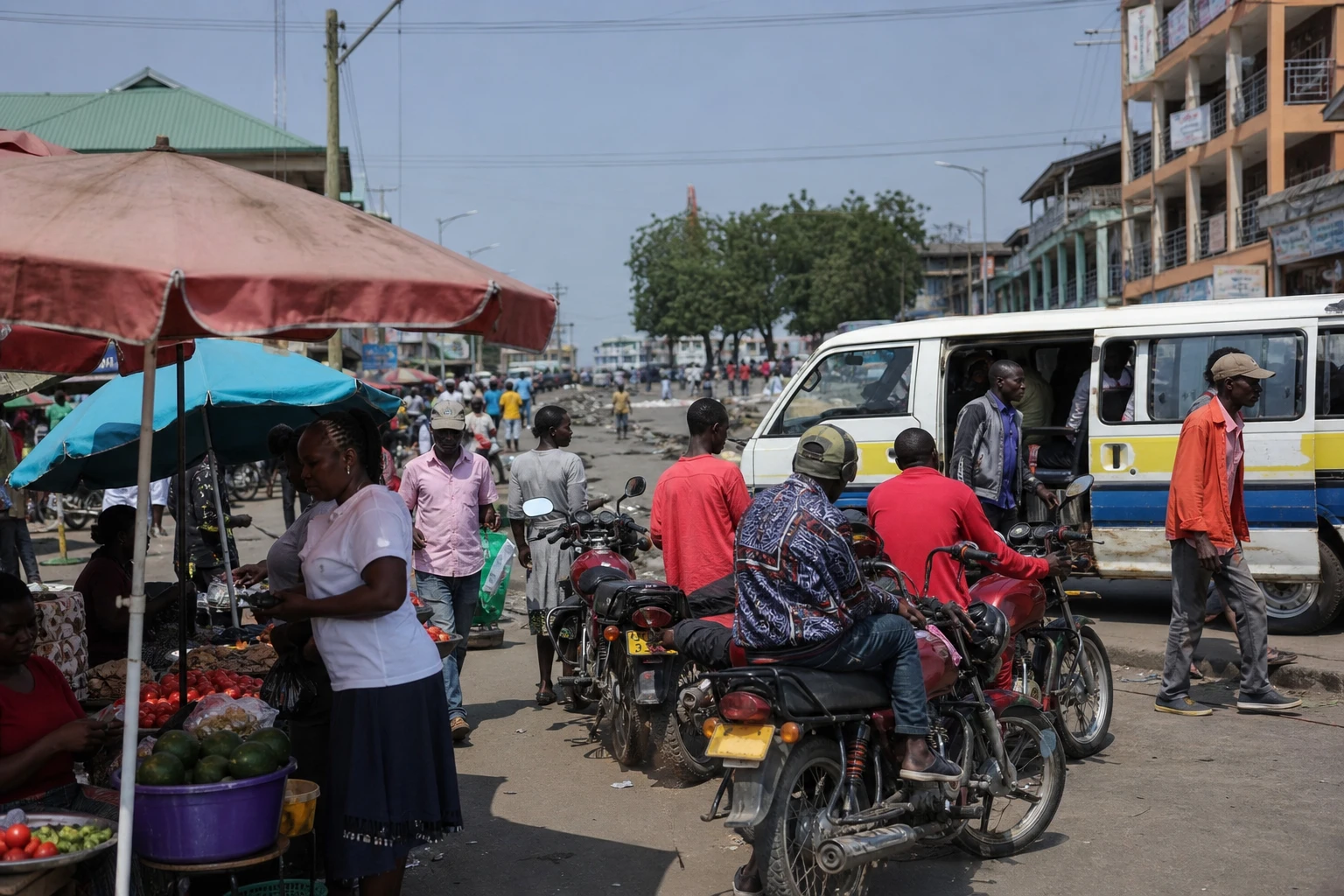
This recurrence matters. It shows that the violence is not emerging in a vacuum. It is part of an increasingly fierce contest between supporters of the government and the opposition, in a context where the movement of crowds and vehicles, and the circulation of political messages, are becoming arenas for displays of strength. Homa Bay, a commercial town in Nyanza, is thus feeling the tension before rallies, processions and speeches. For residents, that means blocked roads, fear of travelling, delayed activities and small losses that mount up for informal businesses and service providers alike.
What happened on 16 August
On 16 August, the opposition convoy was targeted as it entered Homa Bay. Stones were thrown at the vehicles, while obstacles had been placed on some roads. Kenyan media report that roads had already been blocked in the early morning and that men carrying weapons were moving through the streets. According to accounts cited by the international press, passers-by were assaulted and valuables were reportedly snatched.
The police, for their part, said they had arrested 15 people the previous day who were in possession of weapons, describing them as criminals recruited to disrupt political activities. This account echoes a line already taken by local authorities in other recent incidents: identify violent groups, label them criminal elements, then promise prosecutions. But this framing is not enough to dispel political suspicions, especially when violence repeatedly occurs around the same figures and places.
The rally was linked to Linda Mwananchi, a mobilisation movement led by opposition figures and aimed at young people. Its goal is clear: to harness growing discontent with William Ruto’s government and turn that anger into electoral strength ahead of the presidential vote in August 2027. Nairobi Senator Edwin Sifuna was among the officials present in Homa Bay, alongside other elected representatives. The head of state, for his part, has confirmed that he will stand for re-election.
An issue of rights, but also of political balance
The debate is not limited to public order. It concerns the right to assembly, protected by Kenya’s Constitution, and the opposition’s ability to campaign without intimidation. Amnesty International Kenya considers the events in Homa Bay a serious threat to the freedoms guaranteed by the Constitution and has called for an investigation. The organisation places the episode within a broader trend: since the protests of 2024 and 2025, violations of the right to freedom of assembly have remained a recurring concern in Kenya.
For the government, the stated priority is stability. For the opposition, it is political space. Between the two, the public mainly wants to avoid an electoral contest turning into a permanent state of fear. Homa Bay county, like other areas in the west and Nyanza, is a reminder that political violence in Kenya is not confined to the capital, Nairobi. It also affects secondary roads, markets, boda-boda operators, street vendors and families who stay away from rallies to avoid being caught up in clashes.
What this says about Kenya and the region
The timing is delicate. The East African Community, of which Kenya is an economic and political pillar, promotes integration, free movement and regional stability. But when East Africa’s largest economy enters a tense pre-election period, the effects are felt beyond its borders: on trade, mobility and perceptions of the investment climate.
The historical record also matters. Kenya has already paid a heavy price for the 2007-2008 election violence, followed by tensions in subsequent electoral cycles. Oversight bodies such as the Independent Policing Oversight Authority have recently documented the policing of protests and reiterated the need for public accountability. The country is therefore moving forward with a heavy historical burden, but also with more visible checks and balances than before. The next phase will depend on the ability of the authorities, the opposition, the counties and oversight bodies to prevent violent groups from hijacking the coming stages of the campaign.
With less than a year to go before the vote, Homa Bay serves as a warning. If politics is conducted through intimidation, the credibility of the entire 2027 contest will suffer. If the state genuinely upholds public order without taking sides, the debate can return to where it belongs: policies, accountability and the choices of Kenyans.