Algeria
 Egypt
 Libya
 Morocco
 Sudan
 Tunisia
 Benin
 Burkina Faso
 Cabo Verde
 Côte d'Ivoire
 Ghana
 Guinea
 Guinea-Bissau
 Liberia
 Mali
 Mauritania
 Niger
 Nigeria
 Senegal
 Sierra Leone
 The Gambia
 Togo
 Cameroon
 Central African Republic
 Chad
 DR Congo
 Equatorial Guinea
 Gabon
 Republic of the Congo
 São Tomé and Príncipe
 Burundi
 Comoros
 Djibouti
 Eritrea
 Ethiopia
 Madagascar
 Malawi
 Mauritius
 Mozambique
 Rwanda
 Seychelles
 Somalia
 South Sudan
 Tanzania
 Uganda
 Angola
 Botswana
 Eswatini
 Lesotho
 Namibia
 South Africa
 Zambia
 Zimbabwe
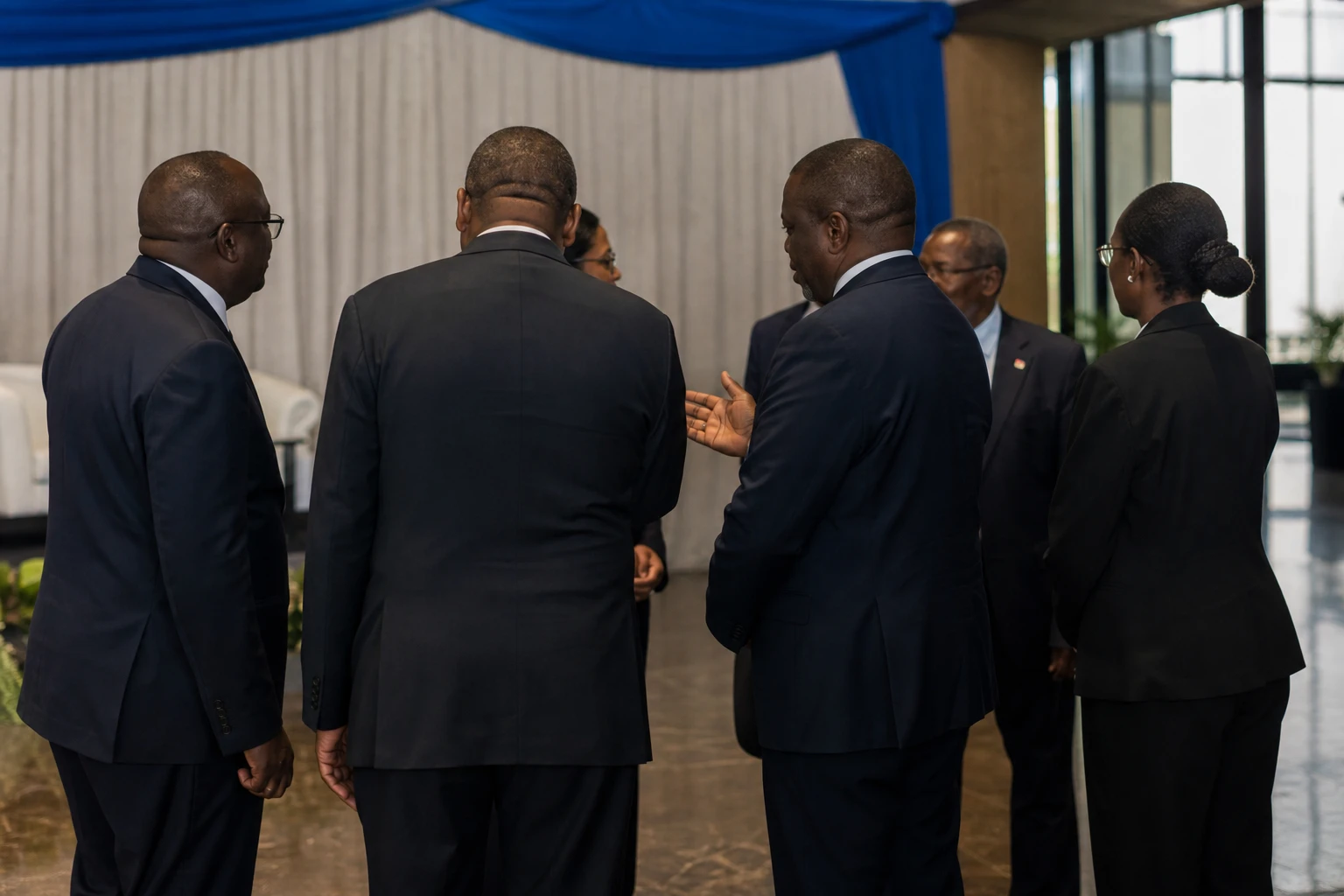
In Nairobi, an announcement on small businesses quickly became about more than trade
In Kenya, the controversy did not begin as a simple debate about street stalls. It touches on a broader question: who has the right to sell, move around and work in a country where the informal economy supports millions of people, and where regional integration is supposed to bring greater mobility in East Africa.
The tension emerged as Kenyan traders complained about tax pressures and what they saw as unfair competition in popular markets. Against this backdrop, President William Ruto announced on 2 September in Nairobi that foreign nationals engaged in small-scale retail and hawking should stop these activities, a statement immediately interpreted as a crackdown targeting people from other African countries.
Kenyan authorities clarify their position, but maintain a firm line on permits
The government then sought to close off the most alarming interpretation of the presidential message. The ministry responsible for trade explained that the issue mainly concerned people using a tourist visa, or another short-term status, to carry out activities that violate the conditions granted. The statement specifies that a visitor visa, or an exemption linked to an electronic travel authorisation, does not confer the right to work or trade without the appropriate permits.
Principal Secretary for Foreign Affairs Korir Sing’Oei also stressed a key point: citizens of the East African Community can live in Kenya, but they must conduct their professional activities within the law. This clarification matters because the East African Community, headquartered in Arusha, is built around a common market that guarantees the movement of workers from partner states and prohibits discrimination based on nationality in employment.
In other words, the heart of the issue is not the presence of foreign nationals in itself. It is the gap between promises of regional mobility and national controls on licences, work permits and retail trade. Kenya remains open to foreign visitors and investors, but distinguishes that openness from the right to engage in informal economic activity without the proper documents.
Burundi, EAC neighbours and informal entrepreneurs are watching closely
The strongest reaction came from Burundi. Bujumbura convened ambassadors from EAC member states to discuss what it described as a concerning situation in Kenya, citing alleged discrimination and mistreatment of some Burundian nationals. Local Burundian media confirmed the diplomatic initiative, and the Kenyan press reported concerns among some foreign nationals living in Nairobi’s commercial neighbourhoods.
This tension is not a minor matter. Across East Africa, Burundians, Ugandans, Tanzanians, South Sudanese and Somalis travel, study, invest or look for work in Kenya, often in sectors requiring little capital: catering, textiles, small services, light construction and street vending. For them, the blurred lines between residence, commercial activity and immigration status can make all the difference. A simple administrative clarification can become, on the ground, a matter of daily income, family mobility or even personal safety.
Human rights NGOs have also warned of the risk that xenophobic profiling could become normalised. Their criticism touches on a sensitive point: when political rhetoric casts foreign small traders as a public problem, it can be taken up locally as implicit permission to sort people by accent, nationality or appearance. In an economy where informal networks often serve as the first safety net, this kind of signal can leave workers vulnerable when they have neither strong unions nor contractual protections.
That is the Kenyan paradox. The country wants to support its micro and small businesses, reassure its vendors and champion a more inclusive economy. But it is also a regional trading hub, open to the Indian Ocean, the EAC and, more broadly, the ambitions of the African Continental Free Trade Area, which aims to facilitate trade across the continent. Cutting off the flow too quickly without legal clarification can fuel anxiety; allowing grey areas to persist also breeds local frustration.
The government is therefore walking a narrow line. On one side, it wants to respond to Kenyan traders seeking greater protection from competition and import costs. On the other, it must avoid a domestic debate being perceived as a challenge to regional free movement, at a time when Kenya regularly presents itself as a driver of East African integration and the continent’s economic diplomacy.
What the affair says about Kenya and East Africa
In Nairobi, the affair has now gone beyond the regulation of retail trade alone. It raises questions about the consistency of economic sovereignty, legal certainty and regional integration. If the Kenyan executive wants to protect small domestic operators without undermining the trust of its neighbours, it will need to clarify what falls under immigration control, commercial permits and the right to move within the EAC.
For East Africa, the episode is a test. The region has made the movement of people and services a pillar of its shared project. But when a social or tax dispute becomes entangled with competition in the informal economy, integration principles collide with national protections. The next point to watch will be how Kenya’s announcements are implemented: targeted administrative checks, tighter permit rules, or simply a warning accompanied by an opportunity to regularise status.