Algeria
 Egypt
 Libya
 Morocco
 Sudan
 Tunisia
 Benin
 Burkina Faso
 Cabo Verde
 Côte d'Ivoire
 Ghana
 Guinea
 Guinea-Bissau
 Liberia
 Mali
 Mauritania
 Niger
 Nigeria
 Senegal
 Sierra Leone
 The Gambia
 Togo
 Cameroon
 Central African Republic
 Chad
 DR Congo
 Equatorial Guinea
 Gabon
 Republic of the Congo
 São Tomé and Príncipe
 Burundi
 Comoros
 Djibouti
 Eritrea
 Ethiopia
 Madagascar
 Malawi
 Mauritius
 Mozambique
 Rwanda
 Seychelles
 Somalia
 South Sudan
 Tanzania
 Uganda
 Angola
 Botswana
 Eswatini
 Lesotho
 Namibia
 South Africa
 Zambia
 Zimbabwe
An agricultural gamble against a more unpredictable climate
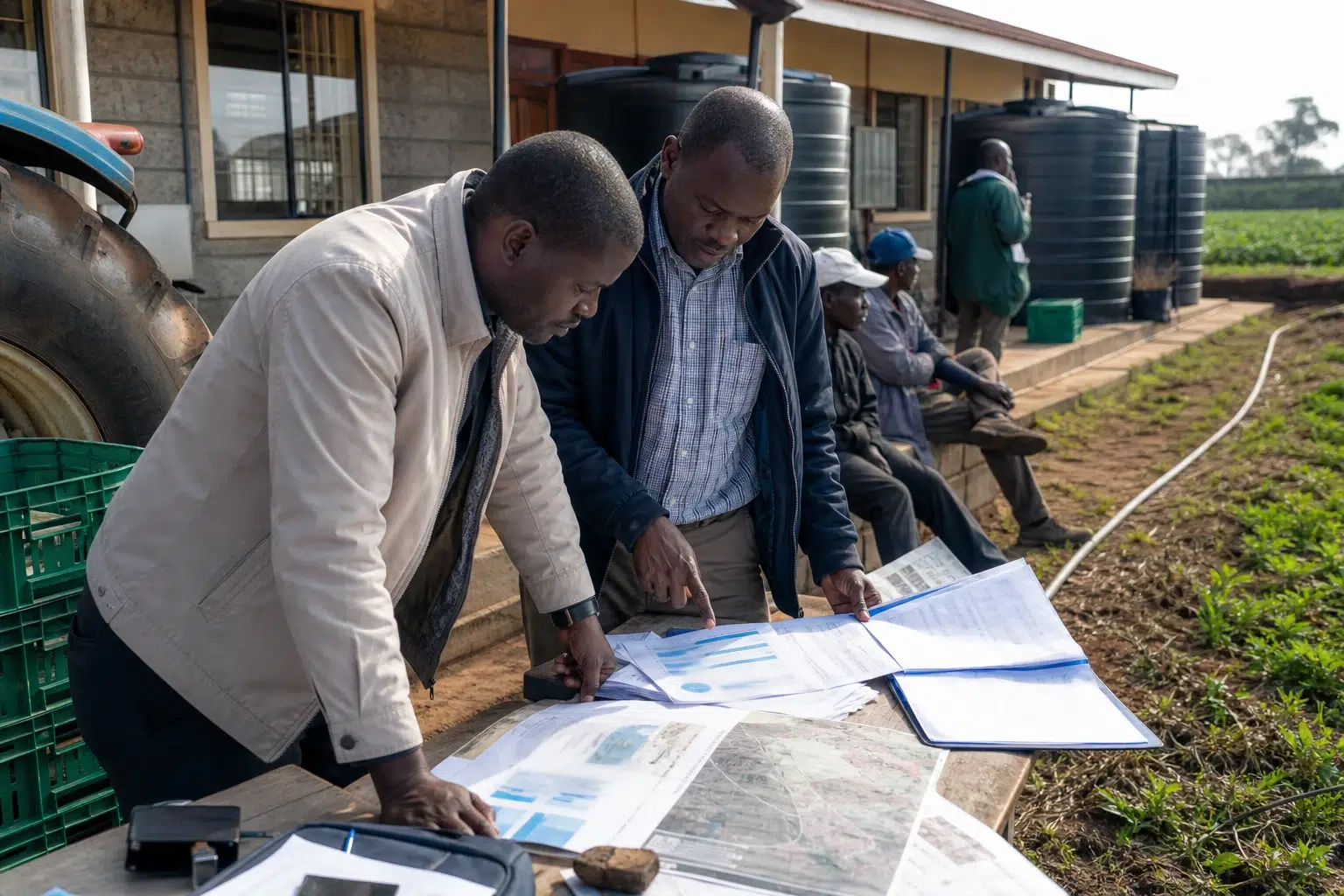
In western Kenya, water often dictates the timing of harvests, rural journeys and incomes. When rainfall becomes erratic, harvests falter, but so do schooling, transport and access to markets. In Nairobi, the issue is measured in billions of shillings; in the counties, it is measured in eroded soils, fragile embankments and fields in need of rescue.
It is against this backdrop that Kenya has launched an integrated natural resource management programme, presented as a tool for climate resilience and food security. The initiative forms part of a national framework that is already more developed than it was a few years ago, including a 2024-2029 anticipatory action roadmap and climate instruments seeking to shift from reaction to anticipation.
A response designed for ten western counties
The INReMP programme covers ten counties in western Kenya and the Lake Victoria Basin: Elgeyo Marakwet, West Pokot, Trans Nzoia, Uasin Gishu, Nandi, Kakamega, Kericho, Kisumu, Homa Bay and Migori. Its aim is to restore degraded ecosystems, better protect water, improve the sustainable management of land and support agricultural productivity. The project is expected to directly benefit 407,176 vulnerable rural households, or about 2,035,880 people, according to the IFAD project document.
The announced financing amounts to 34.1bn Kenyan shillings, or about $263.8m. However, IFAD’s design document puts the project’s total cost at $221.99m, with the main funding from IFAD and national and international co-financing; the discrepancy reflects the conversion methods and funding lines used in the documents consulted.
The public launch was led by the Kenyan authorities in Uasin Gishu, at the heart of an agricultural area of strategic importance for cereals, milk and western supply chains. The political message is clear: link climate adaptation, food production and rural employment in a single response. Kenyan media also reported in March 2026 that the implementation phase was opening around an investment of 34bn shillings.
Heavier rain, more fragile soils
The programme comes as climate risks intensify. In June 2026, the World Meteorological Organization said an El Niño episode was developing and could increase the likelihood of extreme weather. At the same time, the Kenya Meteorological Department described, for the March-May 2026 long-rains season, episodes of above-average rainfall at times in the west, the Rift Valley and the Lake Victoria region, with erratic rain and occasional heavy downpours.
The memory of 2024 remains vivid. Flooding from March to May affected about 410,000 people, killed 315 and caused estimated economic losses of 187bn Kenyan shillings, according to documents cited by the United Nations and risk-monitoring agencies. In a country where droughts hit arid and semi-arid areas while floods threaten farming basins and riverside towns, the challenge is no longer simply to repair the damage, but to plan land use differently.
Kenya’s 2024-2029 anticipatory action roadmap points in this direction. It aims to activate warnings, fund interventions before disaster strikes and improve co-ordination between the state, counties and technical partners. This is a useful shift for rural households, which lose less when assistance arrives before the rain, flood or landslide. It is also a governance test for local administrations, which must turn budgets into drainage, soil conservation, reforestation, water storage and support for agricultural services.
What the project says about Kenya and the region
The initiative forms part of Kenya’s broader trajectory. The country has already incorporated climate resilience into its Climate Change Act, its 2023-2027 action plan and its low-emission development strategy. It is also targeting a 35% reduction in emissions by 2035 compared with the business-as-usual scenario. In other words, INReMP is not a standalone project; it fits into a policy framework seeking to make climate a question of production, water and food security.
Across East Africa, the signal is just as clear. Kenya is relying on the tools of the Intergovernmental Authority on Development, notably the ICPAC climate centre, to anticipate shocks. This approach matters for neighbouring countries in the Lake Victoria Basin, which face the same weather systems and share agricultural and hydrological networks. In the region, climate resilience is becoming an issue of competitiveness, not just emergency relief.
The key issue to watch now is implementation. The ten counties concerned will not face the same risks or have the same priorities. In hilly areas, the focus will be on holding the soil in place. Floodplains will need better drainage and stronger riverbank protection. Farming households will expect tangible results: available water, less eroded fields, more stable yields and more secure incomes. If the programme delivers on its promises, it could become a Kenyan model for applying climate transition to rural areas. If it falters, it will join the long list of well-designed plans that have failed to take root on the ground.