Algeria
 Egypt
 Libya
 Morocco
 Sudan
 Tunisia
 Benin
 Burkina Faso
 Cabo Verde
 Côte d'Ivoire
 Ghana
 Guinea
 Guinea-Bissau
 Liberia
 Mali
 Mauritania
 Niger
 Nigeria
 Senegal
 Sierra Leone
 The Gambia
 Togo
 Cameroon
 Central African Republic
 Chad
 DR Congo
 Equatorial Guinea
 Gabon
 Republic of the Congo
 São Tomé and Príncipe
 Burundi
 Comoros
 Djibouti
 Eritrea
 Ethiopia
 Madagascar
 Malawi
 Mauritius
 Mozambique
 Rwanda
 Seychelles
 Somalia
 South Sudan
 Tanzania
 Uganda
 Angola
 Botswana
 Eswatini
 Lesotho
 Namibia
 South Africa
 Zambia
 Zimbabwe
In southern Kenya, a fragile boundary between farmland and wildlife
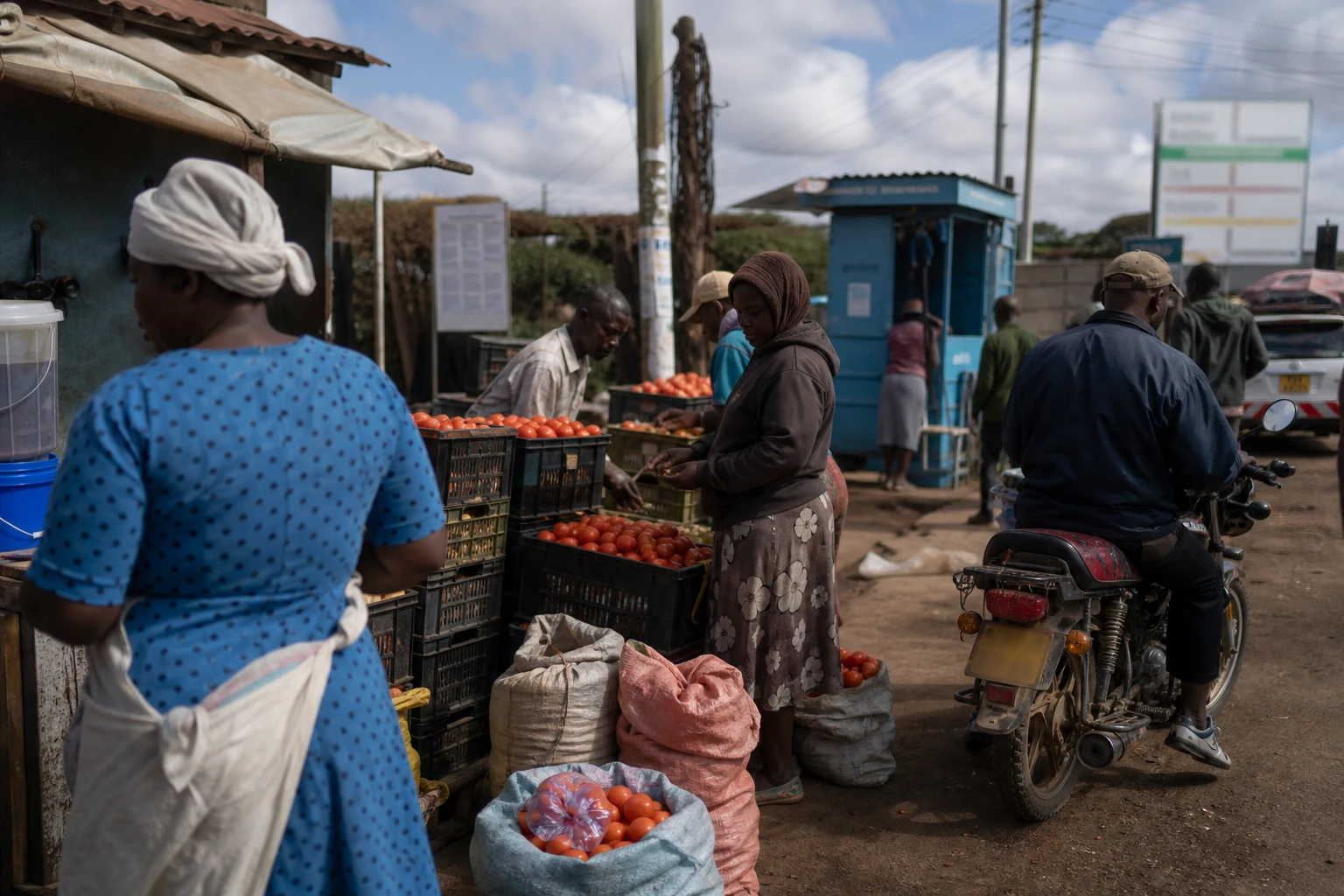
In Amboseli, coexistence between wildlife and crops is never merely theoretical. It plays out metres from fences, tomato fields and tracks used by herds. When elephants die in numbers in this shared space, the issue goes beyond the park itself: it touches on food security, rural incomes and how Kenya protects one of its most visible assets.
The country has already set out the diagnosis in its conservation documents. The Kenya Wildlife Service, or KWS, says that pressure on land, habitat fragmentation, poaching and human-wildlife conflict are weighing on ecosystems. Its national elephant plan for 2023-2032 even shows that, for several years, deaths linked to conflict with rural communities have outnumbered those caused by poaching.
What the initial investigations say
The case concerns 15 elephants found dead in the Amboseli ecosystem, in southern Kenya. Initial laboratory examinations detected cyanide, while post-mortems also found tomatoes in the animals’ stomachs. The KWS veterinary authorities say, however, that these are still preliminary analyses and must be supplemented by quantitative tests to confirm the substance’s actual concentrations.
The agricultural theory remains contested. Farmers living near the park dispute the suggestion that their crops were the source of the poisoning. In fact, no judicial conclusion has been made public at this stage. The authorities therefore describe the investigation as ongoing, with caution essential whenever poisoning is suspected.
One point also matters in understanding the scene: Amboseli is not an isolated sanctuary. It is a shared landscape, with livestock and farming areas on its outskirts. The KWS says on its website that the park is one of the areas it manages within a national network of protected areas that are highly exposed to human settlement around their official boundaries.
Why the case matters as much to villages as to conservationists
In this part of Kenya, the elephant is not just a tourism icon. It can also become a costly neighbour. A single incursion into a field can ruin a season’s work. This has fuelled a tangible tension for years between protecting biodiversity and ensuring the economic survival of farming households. Kenya’s national elephant plan also notes that losses caused by human-elephant conflict have become a major challenge.
This tension also explains why the possibility of poisoning by agricultural products immediately prompts suspicion. On one side, residents fear that producers will be criminalised too quickly. On the other, conservation services know that in East Africa poisoning is sometimes used to protect crops or settle disputes over land use. The KWS says it works with partners, including local communities and scientific organisations, to reduce these risks and improve monitoring of elephant routes.
The sensitive point is this: if cyanide has indeed contaminated the ecosystem, the danger is not limited to elephants. The KWS has warned that livestock grazing in the same area could also be exposed. In a rural economy where herds, market gardens and migration corridors overlap, an incident of this kind can quickly take on broader health and social implications.
What this says about Kenya, and beyond
Kenya occupies a central place in elephant conservation in East Africa. The country has long highlighted its progress in tackling poaching, notably through the destruction of seized ivory and more assertive protection policies. But the new fault line lies elsewhere: in areas of coexistence, where wildlife encounters crops, roads and human settlements.
This is also a regional issue. Elephants cross administrative boundaries, and migration corridors extend beyond national borders. In the East African Community, where the movement of people, livestock and goods is intensifying, conservation can no longer be planned parcel by parcel. The most credible responses combine veterinary monitoring, land-use planning, compensation for damage and local dialogue. This is precisely the mix Kenya is seeking to strengthen in its 2024-2028 strategy.
The continental significance is clear. As several African countries seek to develop their agriculture, road corridors and extractive industries, conflicts between land use and wildlife protection will multiply. The Amboseli case is a reminder that sustainable conservation cannot be decreed from Nairobi alone. It is built with residents, scientists, counties and regional institutions. What happens next will depend on the full laboratory results, but also on the country’s ability to prevent further poisoning in areas where fields meet reserves.