Algeria
 Egypt
 Libya
 Morocco
 Sudan
 Tunisia
 Benin
 Burkina Faso
 Cabo Verde
 Côte d'Ivoire
 Ghana
 Guinea
 Guinea-Bissau
 Liberia
 Mali
 Mauritania
 Niger
 Nigeria
 Senegal
 Sierra Leone
 The Gambia
 Togo
 Central African Republic
 Chad
 DR Congo
 Equatorial Guinea
 Gabon
 Republic of the Congo
 São Tomé and Príncipe
 Burundi
 Comoros
 Djibouti
 Eritrea
 Ethiopia
 Kenya
 Madagascar
 Malawi
 Mauritius
 Mozambique
 Rwanda
 Seychelles
 Somalia
 South Sudan
 Tanzania
 Uganda
 Angola
 Botswana
 Eswatini
 Lesotho
 Namibia
 South Africa
 Zambia
 Zimbabwe
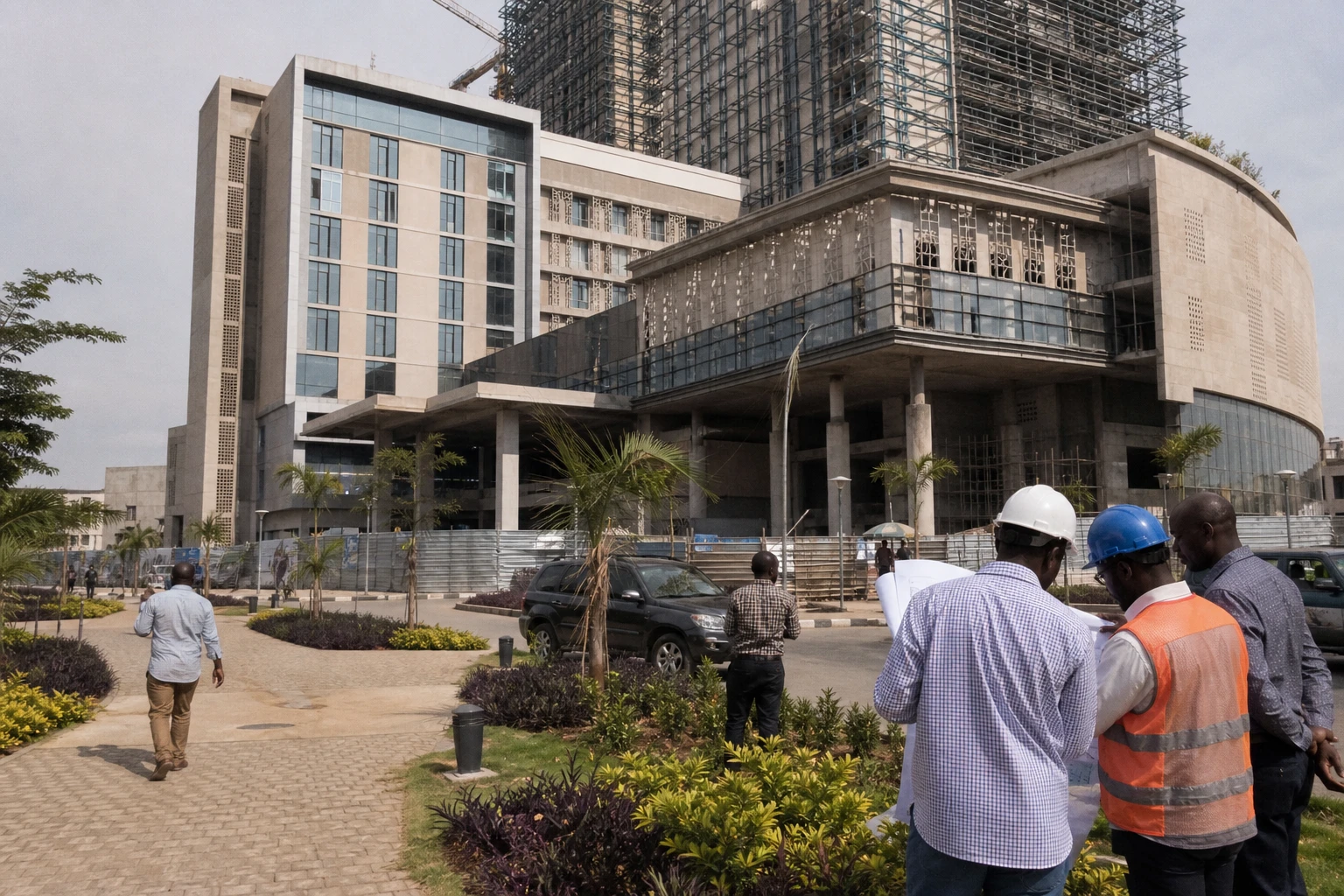
In Douala, the future Kempinski Shekinah Palace aims to do more than add to the high-end hotel offering. The project brings accommodation, offices, shops and events together in one complex in Bonanjo, the main administrative and business district of Cameroon’s economic capital.
The foundation stone was laid on 25 September 2026, in the presence of Prime Minister Joseph Dion Ngute, representing the head of state. The construction project marks a new phase for All Luxury Suites Group, or ALS Group, the Cameroonian developer led by Rodolphe Simo Kam.
A real estate complex designed for business tourism
The development is set to cover nearly two hectares. It will include 214 rooms and suites operated under the Kempinski brand, as well as 35 serviced apartments aimed in particular at longer stays.
The project also includes around 17 000 m² of office space, a 2 000-seat multi-purpose hall, retail areas, five restaurants, five bars, an art gallery and nearly 600 parking spaces. This combination sets the development apart from a conventional hotel.
Expected revenue will therefore not depend solely on room occupancy. The developer is also counting on office rentals, apartments, food and drink, shops and conferences. The aim is to create a hub able to accommodate business travellers, companies, delegations and event organisers at the same time.
Kempinski Hotels will operate the property. The international brand brings its commercial network and hotel expertise. It is not, however, financing the real estate investment, which remains structured by ALS Group and its financial partners.
A financing structure still to be monitored
The overall value of the development is put at around CFAF 220 billion, or approximately €335 million to €339 million, depending on the scope considered. The difference between these figures reflects the presentation of various elements of the financing structure, including financing costs, tax and customs benefits, and additional resources.
The financial package includes senior debt of CFAF 92.3 billion, equivalent to around €140.7 million. The Development Bank of the Central African States, Afreximbank and BGFIBank are among the partners named.
The Development Bank of the Central African States (BDEAC), a financial institution of the Economic and Monetary Community of Central Africa (CEMAC), is said to have approved CFAF 30 billion in financing for the project. BGFIBank Cameroon, for its part, is involved in structuring the financing. The bank also provided more than €20 million in pre-financing for technical studies, or more than CFAF 13.1 billion, according to statements by the developer reported by Business in Cameroon.
The final allocation among the various lenders and the exact level of disbursements have not, however, been made public. This will be a key factor in assessing the true state of financial close.
The financing structure also provides for a substantial equity contribution. The information released indicates that shareholders will contribute €157.5 million, with a further approximately €41.2 million expected to come mainly from property sales and other project resources.
A project in the making for several years
The timeline dates back to June 2019, when initial studies began. Kempinski was selected as hotel operator in August 2020. A building permit was obtained in December 2022, before China Machinery Engineering Corporation, or CMEC, was appointed to carry out the construction work in November 2025.
The announced duration is 36 months, comprising 31 months of construction and five months for the installation of equipment. Commercial opening is targeted for around September 2029, subject to the schedule being met and full mobilisation of the financing.
ALS Group estimates that around 3 000 jobs will be created during construction. The group expects 4 000 direct and indirect jobs during operations. These figures remain the developer’s projections. They will need to be verified as construction progresses and once the jobs have actually been created.
The expected impact will extend beyond jobs on the site. A complex of this size could support Cameroonian suppliers of materials, services, security, catering and maintenance. It could also boost demand for transport, events and cultural activities. However, the share actually captured by local businesses will depend on contracts, procurement standards and available skills.
Douala faces the challenge of demand
The project is coming to a city where economic activity is concentrated around the port, corporate headquarters, government departments and major companies. Bonanjo is therefore a logical location for a strategy focused on business travel and conferences.
But the scale of the investment requires high levels of occupancy. The hotel will need to attract a steady stream of customers, while the offices will need to find tenants able to sustain the costs of high-end real estate. The shops, restaurants and event hall will also need to generate consistent business.
The integrated model reduces dependence on overnight stays alone, but it also increases operational demands. Success will depend on service quality, reliable electricity and water, the district’s accessibility, security and Douala’s ability to host more regional conferences.
The project is also being developed in an environment where other high-end establishments are already operating or have been announced. Competition will therefore not be based on the prestige of the brand alone. It will also hinge on prices, service reliability, the events programme and integration into the local economy.
A stake for Central Africa
At regional level, the future complex is part of CEMAC’s ambitions to diversify the economy. The organisation comprises Cameroon, Congo, Gabon, Equatorial Guinea, the Central African Republic and Chad. It is seeking, in particular, to strengthen trade, investment and services within Central Africa.
Douala occupies a distinctive position in this region. Its port, air links, companies and financial functions make it a gateway for trade and institutional flows. A 2 000-seat conference centre could host gatherings extending beyond Cameroon, provided regional connections and reception facilities keep pace.
The next stage will therefore be less symbolic than financial and operational. Observers will be watching disbursements, construction progress, office marketing and confirmation of the 2029 opening schedule. For ALS Group and Kempinski alike, the real test will begin when the complex has to turn its investment promises into sustainable activity in Douala.