Algeria
 Egypt
 Libya
 Morocco
 Sudan
 Tunisia
 Benin
 Burkina Faso
 Cabo Verde
 Côte d'Ivoire
 Ghana
 Guinea
 Guinea-Bissau
 Liberia
 Mali
 Mauritania
 Niger
 Nigeria
 Senegal
 Sierra Leone
 The Gambia
 Togo
 Cameroon
 Central African Republic
 Chad
 DR Congo
 Equatorial Guinea
 Gabon
 Republic of the Congo
 São Tomé and Príncipe
 Comoros
 Djibouti
 Eritrea
 Ethiopia
 Kenya
 Madagascar
 Malawi
 Mauritius
 Mozambique
 Rwanda
 Seychelles
 Somalia
 South Sudan
 Tanzania
 Uganda
 Angola
 Botswana
 Eswatini
 Lesotho
 Namibia
 South Africa
 Zambia
 Zimbabwe
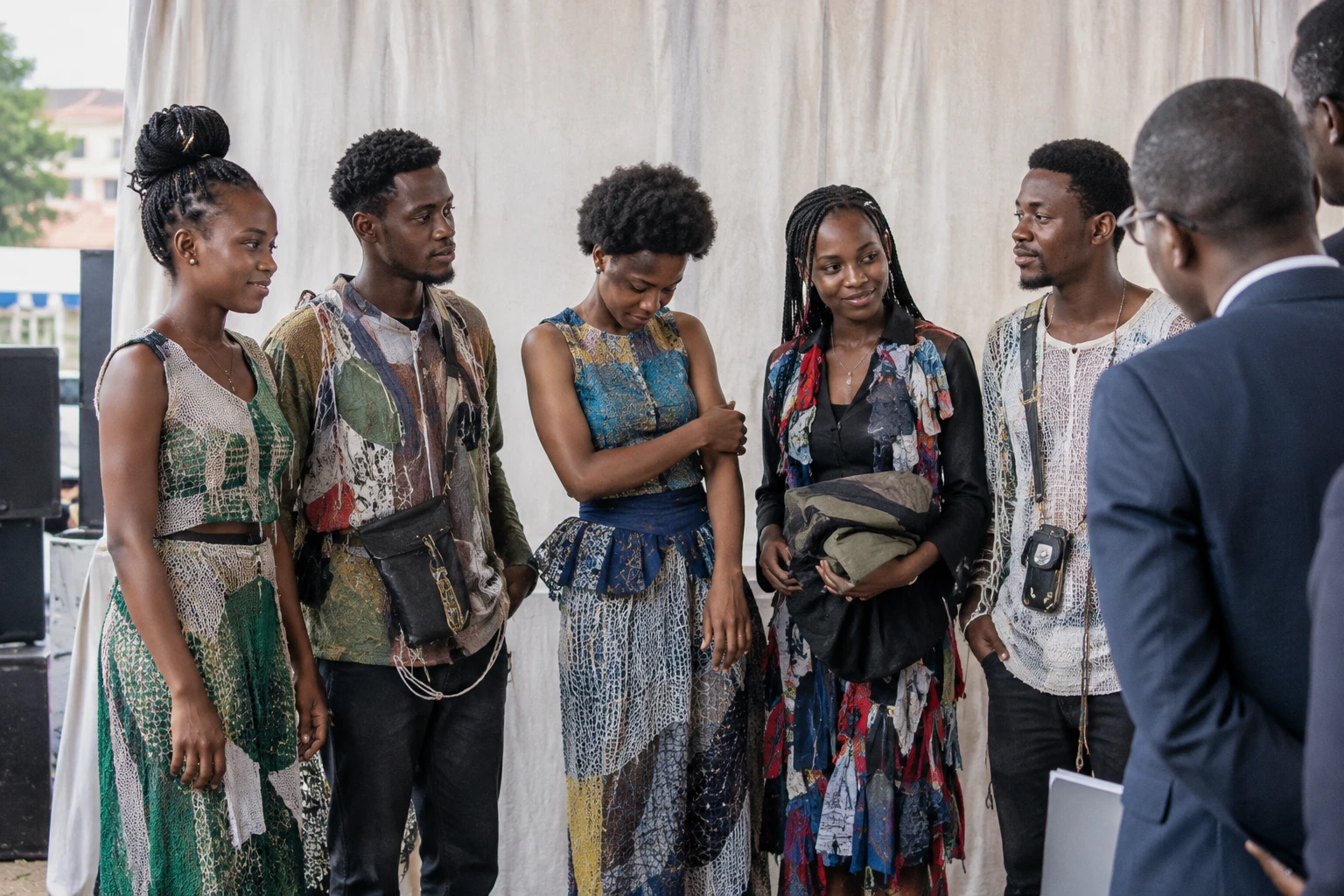
In Kamenge, used mosquito nets and phone accessories have taken on a new purpose: transformed into fashion pieces, they have become a platform for a message about reusing waste. In Burundi, the initiative highlights the talent of young designers, as well as the conditions needed for recycling to go beyond a one-off event.
In Kamenge, creativity as a starting point
The “THE KAMENGE DROP” fashion show took place in northern Bujumbura as part of Green Diplomacy Week 2026. Around ten young designers presented clothes made from reclaimed materials, following training focused on their creative transformation.
The materials used included mosquito nets, bags and phone accessories, according to reports on the event. Burundian artist Manuela Minka, a member of Cabinet de Sciençage, explained that the aim was to encourage the public to see waste differently and consider its potential for transformation.
Arsène Irakoze, who took part in the training, emphasised their potential economic value: some discarded items can become saleable products. Gracia Kezakimana, a resident of Bujumbura, said she was interested in learning this art. These accounts show that the event aimed both to raise environmental awareness and to pass on skills.
An initiative amid an urban challenge
Turning materials into clothes does not replace collection, sorting and treatment services. In Bujumbura, where the organisation of waste collection remains a practical challenge for several neighbourhoods, difficulties can affect households differently depending on their access to services and means of disposal. Burundian outlet Iwacu documented collection delays in some areas in 2024.
A study of cities in the Lake Tanganyika basin highlights the importance of improving waste management in Bujumbura and points to the potential for recovering value from plastics. It also notes that solutions require appropriate collection and sorting systems. The fashion show gives visibility to creative reuse, but cannot, on its own, measure the quantities diverted from dumpsites or whether the activity will continue after the training.
The issue goes beyond household waste. Burundi has also begun work on the management of electrical and electronic equipment, a category requiring specialised channels because of the components it contains. A report published by the Telecommunications Regulation and Control Agency discusses, in particular, the challenges of reusing and recovering value from this equipment. The clothes made for the show do not address these technical issues, but illustrate another approach: extending the use of common materials through design.
From fashion show to sustainable activity
For young designers, the opportunity is not limited to the runway. A circular fashion business can generate income if it finds customers, a regular supply of recoverable materials and affordable means of production. But training and visibility alone do not guarantee markets. Quality, material safety, labour costs and access to markets will also shape its prospects over time.
This question connects with economic initiatives already under way in Burundi. Local outlet Burundi Eco has reported on the efforts of plastic-recovery businesses, while also noting persistent difficulties in waste management in Bujumbura. These activities show that recycling can support jobs, but depends on a broader chain than artisanal processing: collection, sorting, transport, equipment and buyers.
The project’s impact will therefore need to be assessed over time. If the designers can continue their work, access materials and sell their pieces, the artistic exercise could become a small-scale economic activity. For residents, the environmental impact will depend more on the ability of public services, businesses and collectors to organise regular supply chains.
A regional issue too
Burundi is a member of the East African Community (EAC), a regional integration bloc that brings together several countries in the region. Waste treatment, the movement of recyclable materials and the development of markets for processed products extend beyond national borders. They raise questions of standards, trade and co-operation among the region’s cities and businesses.
The “Kamenge Drop” is thus part of a broader movement of Burundian initiatives to recover value from resources, without confusing an artistic showcase with an already established industrial sector. What happens next will depend on the ability to connect creative ideas with training, organised collection and markets. It is on this scale that the economic and environmental value of fashion made from reclaimed materials can be assessed.