Algeria
 Egypt
 Libya
 Morocco
 Sudan
 Tunisia
 Benin
 Burkina Faso
 Cabo Verde
 Côte d'Ivoire
 Ghana
 Guinea
 Guinea-Bissau
 Liberia
 Mali
 Mauritania
 Niger
 Nigeria
 Senegal
 Sierra Leone
 The Gambia
 Togo
 Cameroon
 Central African Republic
 Chad
 DR Congo
 Equatorial Guinea
 Gabon
 Republic of the Congo
 São Tomé and Príncipe
 Comoros
 Djibouti
 Eritrea
 Ethiopia
 Kenya
 Madagascar
 Malawi
 Mauritius
 Mozambique
 Rwanda
 Seychelles
 Somalia
 South Sudan
 Tanzania
 Uganda
 Angola
 Botswana
 Eswatini
 Lesotho
 Namibia
 South Africa
 Zambia
 Zimbabwe
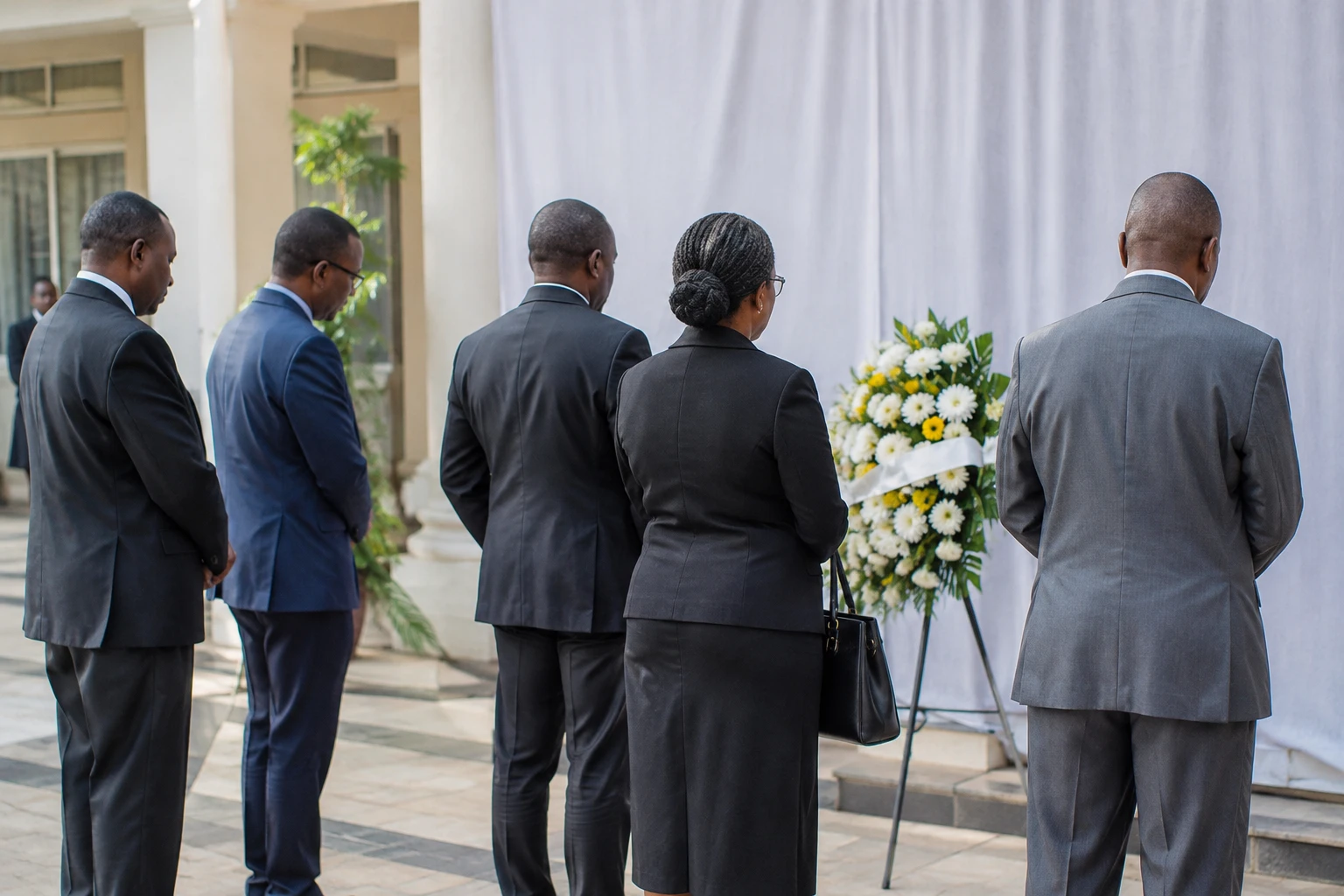
Thirty-three years after the assassination of Melchior Ndadaye, Burundi is commemorating a date that remains central to its political history. But the tribute does not resolve the question it raises: how can pluralism be made to work beyond ceremonies and the ballot box?
A memory tied to the birth of multiparty politics
On 21 October 1993, Melchior Ndadaye, the first Burundian president elected in a multiparty poll, was assassinated during an attempted coup. He had taken office on 10 July, after the Front for Democracy in Burundi (FRODEBU) won the June election. Several aides and political figures were also killed. Burundi’s foreign ministry dates the start of the civil war, which lasted nearly 15 years, to this assassination.
The commemoration on 21 October 2026 therefore marks the 33rd anniversary of his death. According to information released for the ceremony, President Évariste Ndayishimiye laid a wreath in Bujumbura, where a mass and other tributes were also held. These details could not be corroborated by a second independent publication at the time of writing, and are therefore reported with attribution.
The country’s political capital is Gitega, while Bujumbura remains a major centre of national life. Holding the ceremonies in Bujumbura thus places Ndadaye’s memory in a symbolic space where institutions, political parties and civil society intersect.
Pluralism at the centre of a national debate
Political figures quoted at the commemoration disagree on the state of Burundian democracy. Olivier Nkurunziza, president of the Union for National Progress (UPRONA), says peace alone is not enough to guarantee an effective democracy. Gabriel Banzawitonde, head of APDER, acknowledges the elections held since 2005 while denouncing a concentration of political power. Jean De Dieu Mutabazi, president of RADEBU, offers a more nuanced assessment: pluralism exists, but its implementation remains imperfect. These views are reported in the available information on the ceremony and have not been independently confirmed.
This disagreement is not merely a quarrel between political parties. It concerns the place of the opposition, the scope for participating in public decision-making and citizens’ trust in institutions. For leaders, the issue is also one of legitimacy. For voters, it is measured by their ability to choose between competing platforms and make local concerns heard, in cities and rural areas alike.
The June 2025 legislative and local elections offer a recent reference point for this debate. International IDEA’s monitoring indicates that the main opposition party, the National Congress for Liberty (CNL), was unable to contest the elections and that UPRONA won 1.4 per cent of the vote. The organisation also notes differing assessments: the African Union commended the peaceful conduct of the poll, while other observers reported irregularities. These findings illustrate why holding elections, on its own, does not settle the debate over how competitive they are.
From civil war to today’s institutions
After the violence that began in 1993, Burundi endured a civil war and several stages of political transition. The Arusha Peace Accords, concluded in 2000, helped establish power-sharing arrangements and bring the conflict to an end. The period ushered in by the 2005 elections restored elected institutions, but Ndadaye’s memory continues to raise questions about the strength of these mechanisms: political alternation, party representation and protection of public debate.
This history should be discussed without reducing the violence to a simplistic opposition between communities. Rather, it highlights the consequences of an institutional crisis and the collapse of shared rules. The memory of the victims therefore entails not only recognising the past but also preventing future political ruptures.
The 2025 ceremonies, confirmed by Burundi’s presidency and the national news agency ABP, also combined an official tribute with a religious observance. This continuity shows that 21 October has become an institutional occasion. It does not, however, in itself prove that the ideals of justice and pluralism associated with Ndadaye have been fully realised.
An issue extending beyond Burundi’s borders
Burundi is a member of the East African Community (EAC), a regional organisation bringing together several neighbouring countries for economic and political co-operation. The stability of its institutions matters to the region, particularly in an environment where tensions and population displacement can cross borders. Even so, the political paths of East African states differ: Burundi’s experience cannot be generalised to the entire region.
At continental level, the African Union upholds principles of democratic governance and regular constitutional change. The contrasting assessments of the 2025 poll are a reminder that election observation and the opposition’s genuine participation remain sensitive issues. The next milestone to watch will be preparations for Burundi’s presidential elections, scheduled for 2027, as the authorities have begun the initial preparatory steps, according to a United Nations report published in 2026.
Ndadaye’s legacy thus rests on a practical balance: preserving peace, ensuring credible institutions and enabling citizens to participate without political disagreement being treated as a threat. The laying of wreaths recalls the loss; the debate over democratic rules will show what the country makes of that memory.