
 Algeria
 Egypt
 Libya
 Morocco
 Sudan
 Tunisia
 Benin
 Burkina Faso
 Cabo Verde
 Côte d'Ivoire
 Ghana
 Guinea
 Guinea-Bissau
 Liberia
 Mali
 Mauritania
 Niger
 Nigeria
 Senegal
 Sierra Leone
 The Gambia
 Togo
 Cameroon
 Central African Republic
 Chad
 DR Congo
 Equatorial Guinea
 Gabon
 Republic of the Congo
 São Tomé and Príncipe
 Burundi
 Comoros
 Djibouti
 Eritrea
 Ethiopia
 Kenya
 Madagascar
 Malawi
 Mauritius
 Mozambique
 Rwanda
 Seychelles
 Somalia
 South Sudan
 Tanzania
 Uganda
 Angola
 Botswana
 Eswatini
 Lesotho
 Namibia
 Zambia
 Zimbabwe
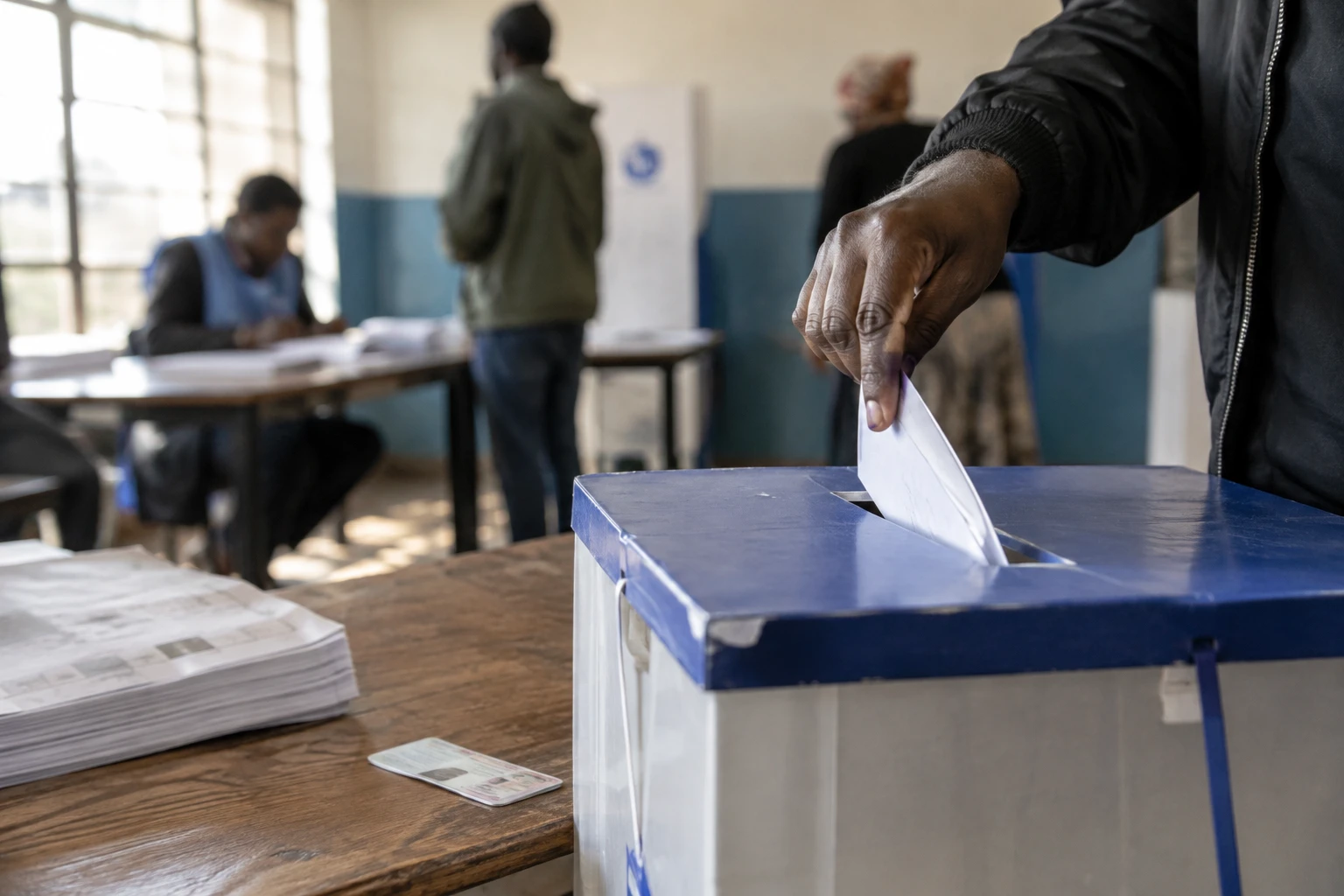
In Johannesburg, a water outage is about more than a closed tap. It reveals budget choices, the state of the networks and a coalition’s ability to honour its commitments. Two days before South Africa’s municipal elections, scheduled for Wednesday 4 November 2026, these issues are weighing directly on the vote.
A metropolis at the centre of a closely contested vote
Johannesburg is South Africa’s largest city and a major economic centre. But its political management has become unstable since the 2016 local elections paved the way for coalitions. No party has since secured a lasting, uncontested majority on the municipal council.
The 2021 vote confirmed this fragmentation. The ANC won 33.6% of the vote in Johannesburg, compared with 26.47% for the Democratic Alliance (DA) and 16.05% for ActionSA, according to results reported by the public agency SAnews. Alliances were subsequently reshuffled, without preventing changes in the city’s leadership.
This instability affects more than the parties. It complicates the adoption of budgets, the continuity of projects and political accountability when a service deteriorates. The municipal council, made up of elected representatives from several parties, must elect the mayor after the vote. The result at the ballot box will therefore not automatically determine the next mayor.
Public services are the campaign’s main yardstick
In several neighbourhoods, residents have denounced repeated water outages. In Melville, a resident quoted in the campaign material provided says she has had no running water since 18 October. This testimony illustrates local anger, but is not enough to establish the duration of outages across the city as a whole.
Comparable problems have been documented in other areas. The Mail & Guardian reports that residents of Parktown West had a reliable water supply for only 29 days out of 319 days monitored by residents between December 2025 and October 2026. The outlet also cites Johannesburg Water, which points to ageing infrastructure, insufficient capacity and increased demand linked to urban growth.
Water is only one source of discontent. Roads, rubbish collection and municipal facilities are also among the concerns reported by residents and civil society organisations. The consequences vary between neighbourhoods: households able to buy water or install backup solutions are better able to withstand outages than those entirely dependent on the public network.
A financial crisis that fuels outages
Service problems and municipal accounts reinforce one another. Unrepaired leaks reduce billable water and drive up costs. Meanwhile, unpaid bills and lost revenue limit the funds available to maintain pipes and pay for repairs. It is a costly cycle for the city and its residents.
Financial warnings have gone beyond the election debate. In July 2026, the National Treasury announced the suspension of transfers to Johannesburg and other municipalities, citing financial management failures, Africanews reports. This public funding is important: a withholding can increase pressure on investment and services, even if its aim is to enforce management improvements.
The stakes also concern municipal companies. City Power and Johannesburg Water must provide essential services, but depend on the metropolis’s budget decisions and internal transfers. An investigation by the Citizen describes, in particular, substantial debts between municipal entities and the use of Johannesburg Water revenue to support City Power. These arrangements can shift one service’s difficulties on to another.
The next mayor will have to govern with a fragmented council
The DA has chosen Helen Zille as its mayoral candidate. ActionSA is putting forward Herman Mashaba, Johannesburg’s former mayor, according to the Associated Press. The ANC is defending the record of the outgoing administration. But whatever the parties’ ranking, forming a majority will probably require negotiations with several partners.
The experience of 2021 shows the limits of such agreements. A DA-led coalition took control before giving way to an ANC-led alliance after splits and changes in the majority. ACCORD, a South African research centre specialising in conflict prevention, tracks the council’s successive reshuffles. Stability will therefore depend as much on the rules for co-operation between parties as on the mayor’s profile.
Financial recovery will not come from a single announcement. It will require better bill collection, reduced network losses, oversight of public procurement and protection of maintenance budgets. These choices can be politically difficult: increasing revenue does not just mean pursuing major debtors, but also ensuring that vulnerable households do not bear a disproportionate burden.
A test for local governance in southern Africa
The vote is part of a national trend: since the 2024 general election, the ANC has governed nationally in a unity coalition with the DA and other parties. Municipal alliances in Johannesburg, however, have their own balance of forces. The national agreement therefore guarantees no local accord.
For southern Africa, the stakes go beyond competition between parties. Johannesburg is home to jobs, corporate headquarters and infrastructure on which millions of residents depend. How its elected representatives fund the networks and stabilise their coalition will be watched across a region where major cities must meet growing demand for services.
On 4 November, voters will choose municipal councillors. Negotiations will then determine who leads the metropolis and with what programme. The first concrete indicator will be not so much the campaign promise as the new council’s ability to adopt a credible budget and fund network maintenance before outages become more costly.



