Algeria
 Egypt
 Libya
 Morocco
 Sudan
 Tunisia
 Benin
 Burkina Faso
 Cabo Verde
 Ghana
 Guinea
 Guinea-Bissau
 Liberia
 Mali
 Mauritania
 Niger
 Nigeria
 Senegal
 Sierra Leone
 The Gambia
 Togo
 Cameroon
 Central African Republic
 Chad
 DR Congo
 Equatorial Guinea
 Gabon
 Republic of the Congo
 São Tomé and Príncipe
 Burundi
 Comoros
 Djibouti
 Eritrea
 Ethiopia
 Kenya
 Madagascar
 Malawi
 Mauritius
 Mozambique
 Rwanda
 Seychelles
 Somalia
 South Sudan
 Tanzania
 Uganda
 Angola
 Botswana
 Eswatini
 Lesotho
 Namibia
 South Africa
 Zambia
 Zimbabwe
A market changing scale
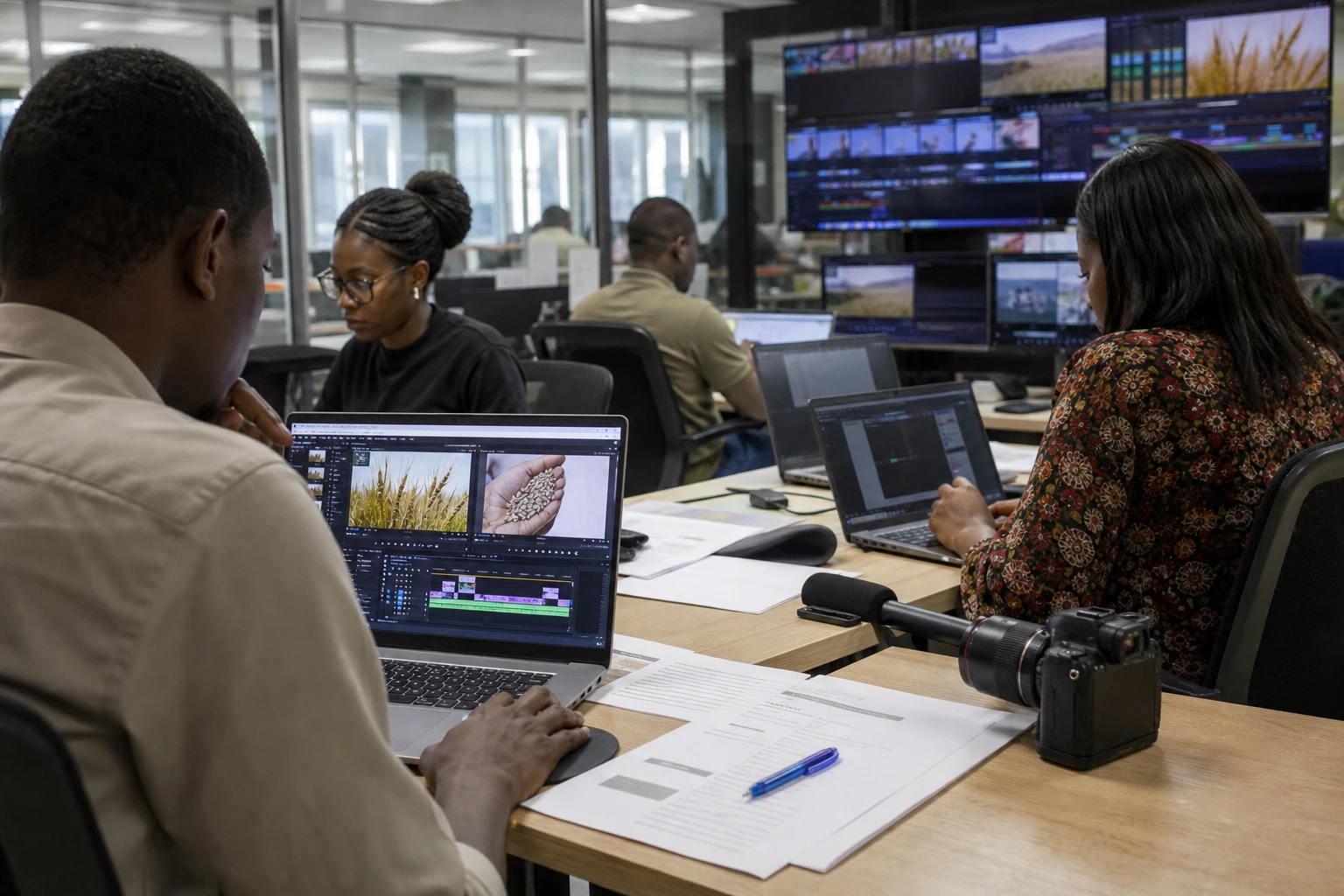
In Yamoussoukro, Côte d’Ivoire’s industrial momentum is visible not only in food processing or packaging. It can also be seen in a very simple but strategic product: flour. In a country where bread, pastries and some biscuit-making depend on imported wheat, every new processing capacity says something broader about urbanisation, consumption and regional flows.
This is no minor shift. Côte d’Ivoire does not produce wheat, but is establishing itself as a consumer market and redistribution hub in West Africa. Within the West African Economic and Monetary Union, or UEMOA, this role is gaining importance as trade intensifies between coastal ports and the landlocked countries of the Sahel. The Ivorian economy is thus a natural entry point for cereal products that then travel inland across the region.
A new facility to capture demand
The main development is industrial. A new milling complex is due to begin operations in 2026 for Moulin Sako, with an integrated line comprising a mill with a stated capacity of 250 tonnes per day and six silos of 2,500 tonnes each, for total storage of 15,000 tonnes. Alapala, a Turkish group specialising in milling facilities, has announced that the design, equipment supply and construction have been completed.
This increase in capacity responds to rapidly growing domestic demand. The US Department of Agriculture estimates that Ivorian wheat consumption rose from 580,000 tonnes in 2022/2023 to 777,000 tonnes in 2025/2026, with a projection of 806,000 tonnes in 2026/2027. The same report notes that the country imports all the wheat it processes. Bakery flour accounts for most of its use, while a smaller share goes to pastries, biscuits and animal feed.
The sector is therefore following urban consumption. The USDA puts annual revenue in the bakery sector at $167 million in 2023, driven by urban growth and changing eating habits. For industry players, the signal is clear: the stronger demand for bread and related products becomes, the more rational it is to invest in milling, storage and logistics.
Abidjan, a logistics hub and gateway to the Sahel
The significance of the project extends beyond the domestic market. The Port of Abidjan has specialised equipment and cargo-handling infrastructure that make it a major logistics hub on West Africa’s Atlantic coast. In practice, the platform serves both Ivorian imports and flows moving inland to domestic markets.
This is where wheat processing takes on a regional dimension. The USDA says Ivorian re-exports of wheat and derived products reached 65,034 tonnes in 2024/2025, up from 55,172 tonnes in 2023/2024. Burkina Faso remains by far the leading destination, with 52,881 tonnes, or 81% of the total. Togo, Ghana, Senegal and Guinea follow. The geography of these flows makes one thing clear: Côte d’Ivoire does not merely import and consume; it also redistributes.
This matters all the more because the landlocked countries of the Sahel depend on coastal corridors for their supplies. When Abidjan improves its storage and milling capacity, an entire distribution system gains flexibility. Conversely, logistical disruptions, transport costs or security tensions along road routes can quickly drive up the final price of flour in inland cities.
What this expansion reveals
For the Ivorian economy, the goal is not simply to add tonnes of flour to the market. It is also to create more value locally, rather than allowing most of the gains to come from importing raw wheat. A modern flour mill does more than process grain: it supports storage, cargo handling, maintenance, packaging and technical employment.
This approach resonates with Ivorian economic policymakers, who see industrialisation as a lever for competitiveness. It also matters to bakers, wholesalers and transporters, for whom reliable supplies are as important as price. In a political capital such as Yamoussoukro, and especially in the economic capital Abidjan, this type of investment illustrates a more dispersed industrialisation, driven by private groups and port infrastructure.
The balance of power is regional too. ECOWAS remains the most natural trading area for these products, even as political and security realignments in the Sahel complicate trade. In this context, stronger processing capacity in Côte d’Ivoire could act as a buffer. It could also strengthen the country’s economic influence over neighbours whose food demand is rising, while local infrastructure does not always keep pace.
An indicator to watch beyond wheat
Ultimately, this story says less about the expansion of a single flour mill than about the broader transformation of West Africa’s coastal economies. Ports, silos, corridors and processing plants are becoming tools of economic sovereignty as well as industrial assets. In Côte d’Ivoire, whose political capital is Yamoussoukro and whose economic centre remains Abidjan, this shift is part of a strategy that relies on agro-industry, logistics and regional integration.
The next phase will depend on several factors: the new facility’s actual start of production, the stability of imports, changes in maritime freight costs, and the country’s ability to maintain flows to Burkina Faso and other markets in the sub-region. If demand continues to rise at the projected rate, wheat processing could become a useful indicator of Côte d’Ivoire’s growing role in West Africa’s staple-goods economy.