Algeria
 Egypt
 Libya
 Morocco
 Sudan
 Tunisia
 Benin
 Burkina Faso
 Cabo Verde
 Côte d'Ivoire
 Ghana
 Guinea
 Guinea-Bissau
 Liberia
 Mali
 Mauritania
 Niger
 Nigeria
 Senegal
 Sierra Leone
 The Gambia
 Togo
 Cameroon
 Central African Republic
 Chad
 DR Congo
 Equatorial Guinea
 Gabon
 Republic of the Congo
 São Tomé and Príncipe
 Burundi
 Comoros
 Djibouti
 Eritrea
 Ethiopia
 Kenya
 Madagascar
 Malawi
 Mauritius
 Mozambique
 Rwanda
 Seychelles
 Somalia
 South Sudan
 Tanzania
 Uganda
 Angola
 Botswana
 Eswatini
 Lesotho
 Namibia
 Zambia
 Zimbabwe
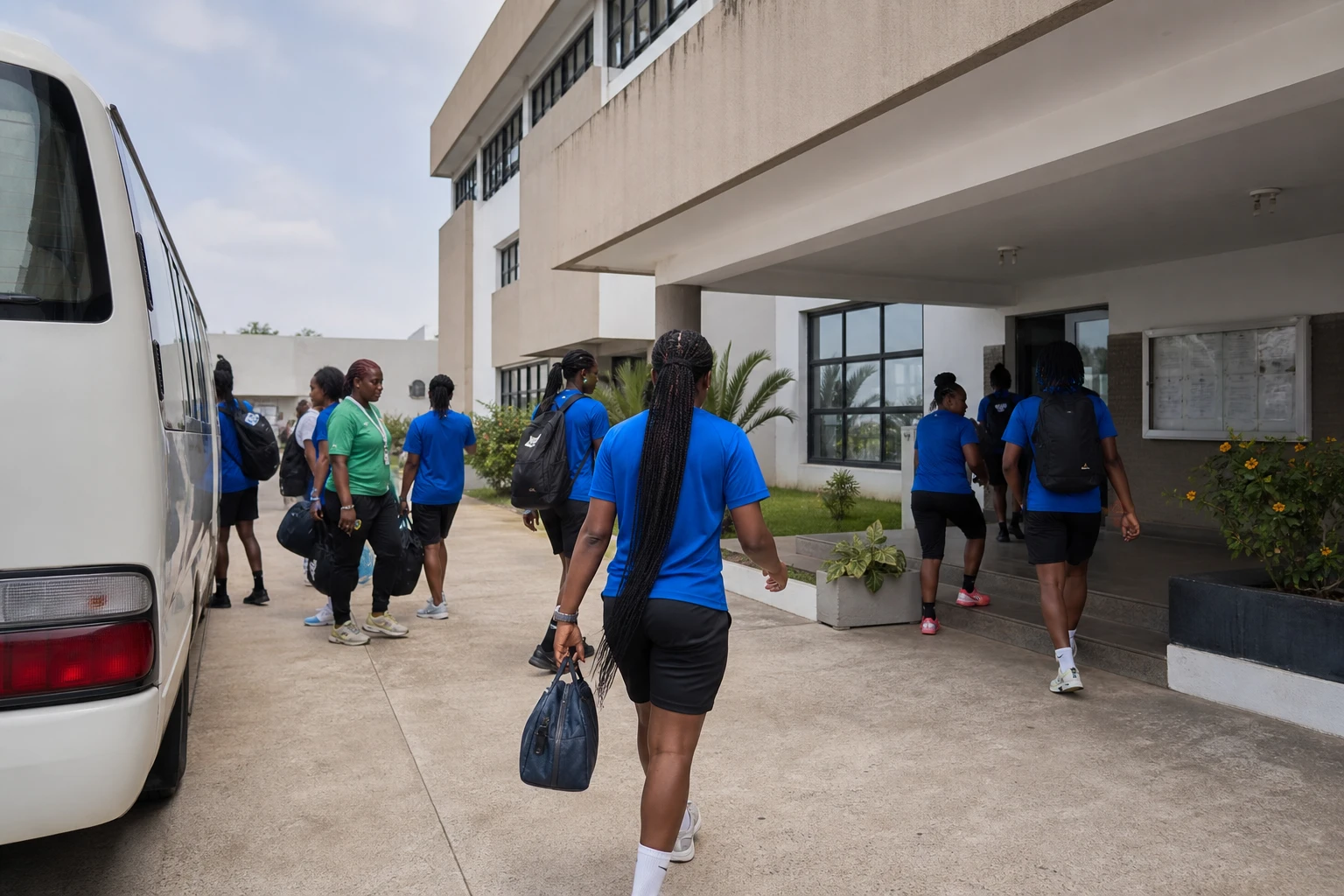
Ivory Coast’s return is about more than an opening match
At the Women’s Africa Cup of Nations, some opening matches carry more weight than three points. Ivory Coast’s match in Casablanca this Monday, 27 July, is one of them. Twelve years after their last appearance in the finals, the Ivorian team return to a tournament that also serves as a qualifier for the 2027 Women’s World Cup, giving every group match a significance far beyond the start of a competition.
The regional context matters as much as the sporting stakes. The 2026 Women’s Africa Cup of Nations is being held in Morocco from 25 July to 16 August, with 16 teams divided into four groups and a format in which the top two in each group, along with the two best third-placed teams, qualify directly. For West African sides, the tournament therefore measures both sporting progress and the ability to go the distance in a system that has become more demanding.
Ivory Coast return to the continental stage as Burkina Faso seek to step up
Group B gets under way with a West African clash between Ivory Coast and Burkina Faso, scheduled at the Larbi Zaouli Stadium. The Ivorian women had not played in the finals for 12 years. Their return follows a lengthy absence that has affected the visibility of women’s football in the country, although the Ivorian federation has continued its work on the women’s age groups and on rebuilding the national team.
This return is no trivial matter. Ivory Coast finished third at the 2014 Women’s Africa Cup of Nations, a result that remains the benchmark for the current generation. Since then, the country has gone through a lean period on the continental stage, while African women’s football has grown more competitive and professional. The team return with a clear expectation: to show they can still compete with the region’s leading nations.
Burkina Faso, by contrast, have a different story to write. The Étalons Dames are playing in the Women’s Africa Cup of Nations finals for only the second time. Their first appearance, in 2022, ended with two defeats and a draw. The Burkinabè team are still seeking their first win in the competition, but have gained experience since joining the ranks of the qualified sides.
The match also has symbolic value for West Africa. ECOWAS, the regional organisation that structures some of the subregion’s political and economic ties, does not oversee football. But sporting rivalries there often reflect a shared reality: federations trying to strengthen their development pathways, improve the training of young players and give women a greater role in structures that remain highly unequal.
South Africa-Tanzania: the team to beat takes the stage
The day’s other match pits South Africa against Tanzania, also in Group B. Banyana Banyana arrive with a special status: they are the defending champions, having lifted the trophy in 2022, and remain one of the leading sides in African women’s football. They are aiming for another strong campaign to reclaim their place at the top of the continent.
Tanzania, meanwhile, want to build on the progress they have shown in recent years. The Tanzanian women have already demonstrated that they can hold their own against strong teams, notably with a draw against South Africa at the 2024 Women’s Africa Cup of Nations. Their presence in Casablanca reflects a broader trend in East Africa, where several countries are investing more in women’s national teams and youth competitions.
The Group B schedule adds immediate pressure. After this opening round, South Africa and Ivory Coast will meet on Friday 31 July in a match that could already influence the group hierarchy. In a short tournament, every detail matters: managing workloads, defensive discipline, finishing in front of goal and the ability not to be overwhelmed by the stakes.
What this Women’s Africa Cup of Nations says about African women’s football
The 2026 tournament confirms an important shift: the leading teams are no longer content simply to take part; they are expected to deliver concrete results. For Ivory Coast, qualifying for the finals is already a turning point. For defending champions South Africa, the aim is to remain among the teams that set the pace. For Burkina Faso and Tanzania, the challenge is to turn participation into lasting development.
The continental significance is clear. The Women’s Africa Cup of Nations is a sporting showcase, but also a test of governance. The format, the quality of the infrastructure in Morocco, travel arrangements and adherence to the schedule all demonstrate the level of demand African teams must now meet. At the same time, the tournament remains a route to the 2027 World Cup: two teams will go into an intercontinental play-off in February 2027, after the finals, giving every group point strategic value.
For West Africa, then, 27 July is about much more than a fixture list. It tells the story of an Ivorian team seeking to reclaim ground after a long absence, a Burkina Faso side still under construction, and the growing place of women’s football in countries where public expectations are rising faster than resources. In Casablanca, the pitch will show whether the Ivorian women’s return opens a new chapter, or whether more time is needed to turn potential into results.