Algeria
 Egypt
 Libya
 Morocco
 Sudan
 Tunisia
 Benin
 Burkina Faso
 Cabo Verde
 Ghana
 Guinea
 Guinea-Bissau
 Liberia
 Mali
 Mauritania
 Niger
 Nigeria
 Senegal
 Sierra Leone
 The Gambia
 Togo
 Cameroon
 Central African Republic
 Chad
 DR Congo
 Equatorial Guinea
 Gabon
 Republic of the Congo
 São Tomé and Príncipe
 Burundi
 Comoros
 Djibouti
 Eritrea
 Ethiopia
 Kenya
 Madagascar
 Malawi
 Mauritius
 Mozambique
 Rwanda
 Seychelles
 Somalia
 South Sudan
 Tanzania
 Uganda
 Angola
 Botswana
 Eswatini
 Lesotho
 Namibia
 South Africa
 Zambia
 Zimbabwe
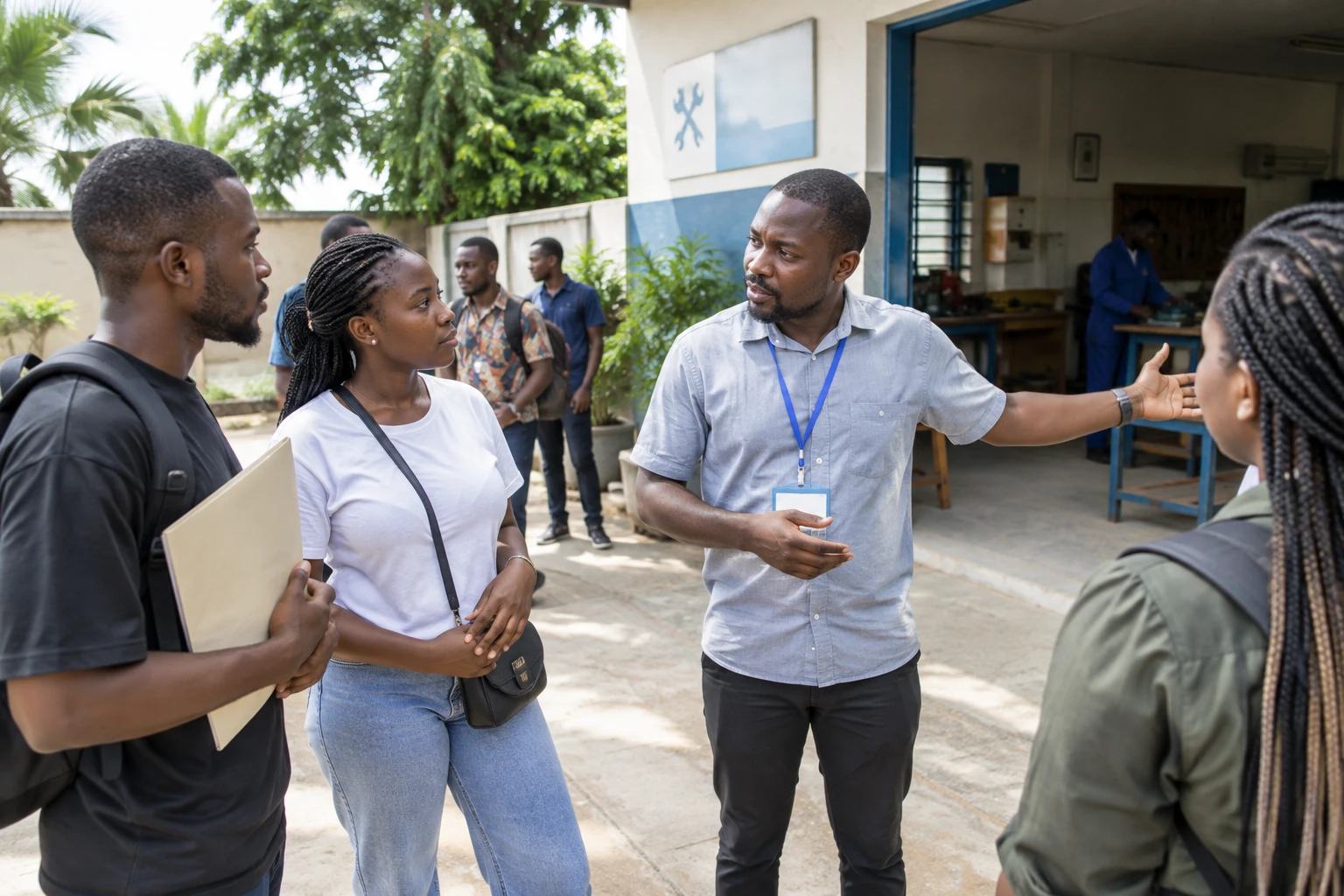
Returning home does not, in itself, guarantee a fresh start. For Ivorian migrants who return, access to training, an income and appropriate support can matter as much as the journey home. Côte d’Ivoire wants to focus on this stage with a new pilot project, whose funding has yet to be secured.
Support designed around local communities
Known as KITLANY, the programme led by the Stay in Africa platform plans to support 300 people for 18 to 24 months. Two hundred would be returning migrants and 100 young people from areas affected by migration. The scheme would combine psychosocial support, practical training, employment assistance and help to develop income-generating activities.
Presented on 29 October 2026 in Abidjan, at the second National Conference on Migrant Reintegration, KITLANY is estimated to cost three million euros, or about two billion CFA francs. Its promoters are also targeting 150 direct jobs and 1,200 indirect beneficiaries. These are stated objectives, not results already achieved.
Funding is therefore central. Two round-table discussions with donors are expected to help raise the money. Adama Dosso, the minister delegate in charge of African integration and Ivorians abroad, said the aim was to secure pledges covering more than half of the budget sought. The conference, held on 29 and 30 October, brings together government departments, local authorities, businesses and technical partners, among others.
Rising figures, but they should be read with caution
By the end of September 2026, 4,125 returning migrants had received support, compared with 2,313 for all of 2025, according to figures provided by Adama Dosso and reported by the Agence Ivoirienne de Presse. The total for the first nine months of 2026 has therefore already exceeded the figure for the previous year. However, the comparison covers periods of different lengths and, on its own, cannot measure changes in all Ivorian migration.
The authorities also reported that 3,853 migrants had received assistance in 2026, compared with 3,463 in 2025. These figures are presented separately from those for people supported; the available information does not specify the extent to which the two groups overlap. They nevertheless point to substantial demand for reception and follow-up services.
Côte d’Ivoire already has support mechanisms in place. A government review covering 2011 to 2025 reports that 860 Ivorian migrants had been reintegrated with support from the International Organization for Migration (IOM). Between 2023 and March 2024, the state also provided, according to figures supplied in the reference material, 242.5 million CFA francs in loans to 246 former migrants. These precedents offer a point of comparison, but are not enough to establish how long the supported activities lasted or whether they were sustainable.
From return to self-reliance: the implementation challenge
Reintegration is about more than one-off funding. It can require social support, skills suited to local opportunities and genuine access to jobs or markets. KITLANY plans to bring together young people from host communities and returning migrants: an approach that links individual employment prospects to local development, rather than treating return as an isolated issue.
However, this approach will need to be tested in practice. Selection criteria, geographical distribution, the sectors chosen and follow-up for beneficiaries will all be decisive. Targets for direct jobs and indirect benefits will also need to be assessed over time. For those concerned, the practical challenge is to build a sustainable livelihood; for local communities, it is to ensure that the skills and resources invested also benefit the local economy.
The conference is part of a national return and reintegration strategy that the Ivorian authorities are developing with various partners. In 2025, the Agence Ivoirienne de Presse reported that a national strategy intended to improve the coordination of these efforts had been approved. KITLANY is therefore joining work already under way: the question will be how the pilot project fits with existing programmes, particularly those run by the state and the IOM.
An Ivorian issue in a region on the move
Côte d’Ivoire is a country of origin, destination and transit for West African migration. ECOWAS, the Economic Community of West African States, provides for the free movement of people between its members. In this context, return and employment policies reach beyond Côte d’Ivoire’s borders: they affect family ties, career paths and exchanges between communities across the region.
The issue also concerns how public authorities view mobility. Sustainable reintegration cannot be measured solely by the number of people received; it also depends on access to economic opportunities and support over time. For KITLANY, the next step will therefore be less its announcement than confirmation of the funding and publication of concrete arrangements. The Abidjan conference has opened this phase; the pledges secured and the pilot’s results will determine its significance.
Sources consulted: Agence Ivoirienne de Presse on support figures, Agence Ivoirienne de Presse on funding and KITLANY, official Ivorian government portal, government review of reintegration support and AIP on the national return and reintegration strategy.