
 Algeria
 Egypt
 Libya
 Morocco
 Sudan
 Tunisia
 Benin
 Burkina Faso
 Cabo Verde
 Ghana
 Guinea
 Guinea-Bissau
 Liberia
 Mali
 Mauritania
 Niger
 Nigeria
 Senegal
 Sierra Leone
 The Gambia
 Togo
 Cameroon
 Central African Republic
 Chad
 DR Congo
 Equatorial Guinea
 Gabon
 Republic of the Congo
 São Tomé and Príncipe
 Burundi
 Comoros
 Djibouti
 Eritrea
 Ethiopia
 Kenya
 Madagascar
 Malawi
 Mauritius
 Mozambique
 Rwanda
 Seychelles
 Somalia
 South Sudan
 Tanzania
 Uganda
 Angola
 Botswana
 Eswatini
 Lesotho
 Namibia
 South Africa
 Zambia
 Zimbabwe
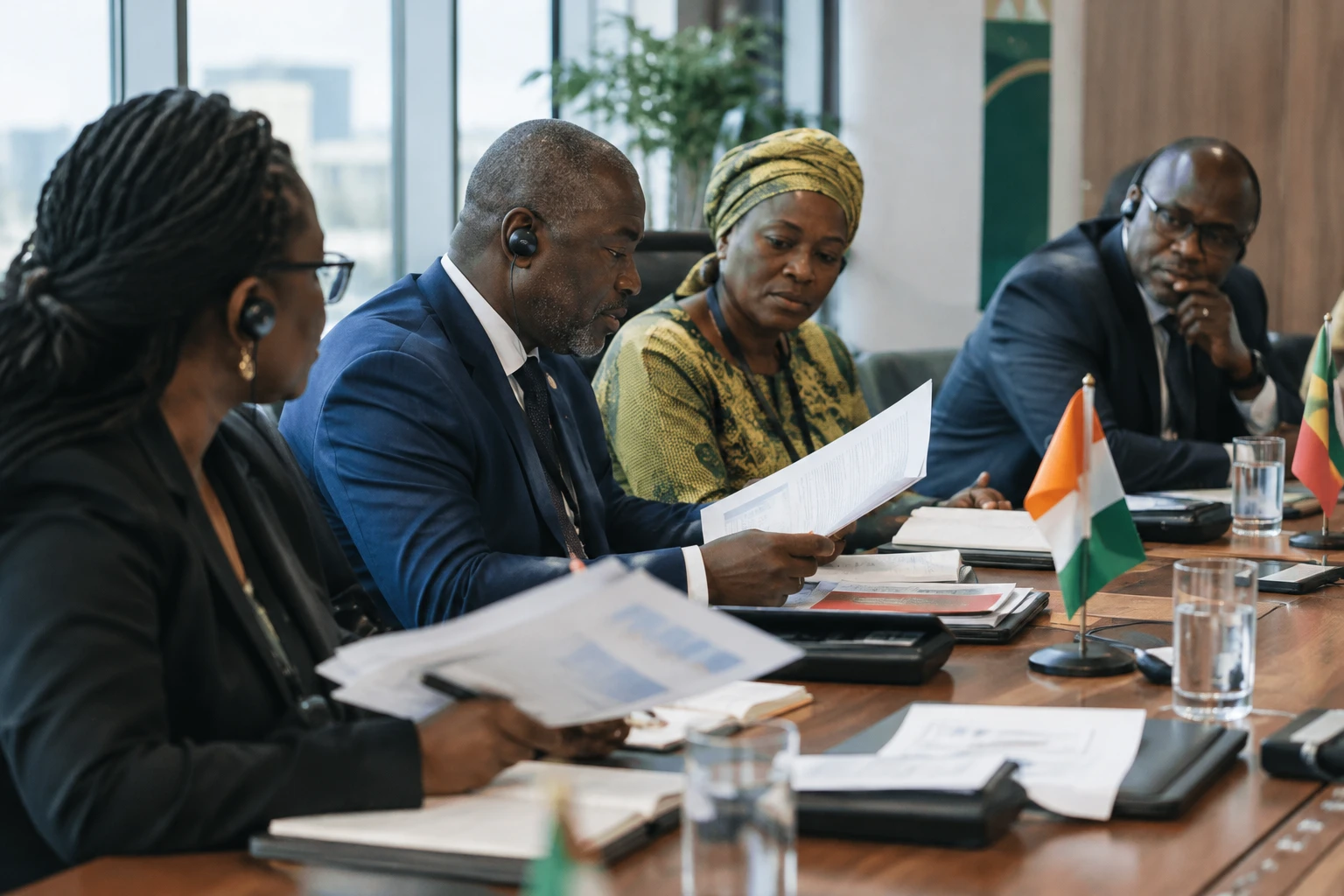
In Abidjan and across Ivory Coast’s cocoa-growing areas, the price announced at the start of a season has a direct bearing on farmers’ incomes. But when neighbouring Ghana announces a different rate, cooperation between the two major West African producers is measured less by declarations than by the impact on bean purchases and cross-border flows.
An alliance formed to influence the market
Ivory Coast and Ghana began moving closer after cocoa prices plunged in 2016–2017. In March 2018, their leaders formalised this ambition with the Abidjan Declaration. The aim was to defend agricultural incomes, coordinate certain trade policies and address sustainability and the health of cocoa plantations.
In 2019, the two countries sought to turn their weight as producers into commercial leverage. After proposing a floor price of $2,600 a tonne, they introduced the Living Income Differential, or LID: a $400-a-tonne premium intended to support producers’ incomes. The mechanism has applied to relevant export contracts since the 2020–2021 season.
The premium marked a turning point: producers and their governments put remuneration at the centre of discussions with traders and chocolate manufacturers. However, its existence does not guarantee that every farmer receives the full benefit. Sales mechanisms, contracts agreed in advance and how value is shared across the sector remain decisive.
Cooperation was subsequently given a permanent structure, the Côte d’Ivoire-Ghana Cocoa Initiative (CIGCI), tasked with facilitating dialogue and information-sharing. In June 2026, a summit in Abidjan revived efforts to harmonise prices and calendars. A joint working group is to examine the arrangements, according to the Côte d’Ivoire-Ghana Cocoa Initiative.
Diverging prices test coordination
The 2026–2027 season offers a concrete measure of the challenge. In Ivory Coast, the guaranteed minimum price for the main crop was set at CFA francs 1,200 a kilogram on 1 September. The government justified the level by citing market instability and the conditions under which beans are marketed. The figure appears in the official Ivorian announcement, also reported by the Ivorian Press Agency.
In Ghana, the producer price announced on 25 September is 42,400 cedis a tonne, or 2,650 cedis for a 64-kilogramme bag. The Ghana News Agency reports that the rate represents 71.18 per cent of the gross export value used by the Ghanaian authorities.
The amounts are not directly comparable: they are expressed in two currencies and reflect different marketing contexts. They nevertheless show that the promise of harmonisation has yet to produce a common price. Differences in remuneration can encourage informal movement of beans across borders, although the scale of this risk must be established through field data rather than assumed.
Ivory Coast sells much of its crop in advance and sets a guaranteed price at the start of the season. Ghana also relies on a regulated system, but its decisions and revision procedures are not identical. Aligning prices therefore means bringing sales rules, calendars, existing contracts and budget constraints closer together. A political announcement alone cannot erase these differences.
Farmers’ incomes remain the central issue
For producers, the fall in Ivory Coast’s price from that of the previous main crop season is an immediate change. It comes after international prices retreated and as production costs, the condition of plantations and climate risks continue to weigh on farms. In Ivory Coast, the Ivorian Platform for Sustainable Cocoa said the CFA francs 1,200 price did not, in its assessment, cover production costs, which it estimates at at least CFA francs 1,322 a kilogram. This estimate is the organisation’s position, not an agreed official figure.
The consequences are not evenly distributed. Family farms depend on the price actually received and the time taken to pay. Cooperatives and licensed buyers must market beans within a regulated framework. The authorities, meanwhile, are seeking to protect agricultural incomes while maintaining the financial balance of the marketing system. Local processors face a different challenge: securing beans and investment to develop activities that capture more value in the country.
The issue therefore extends beyond the farmgate price. In July, Cameroon, Ivory Coast, Ghana and Nigeria took part in a summit in Abuja on adding value to cocoa. The declaration presented by the CIGCI highlights local processing, African trade and broader cooperation among producer countries. These aims could strengthen their negotiating power, but sales systems and national priorities remain different.
Regional reach, results still to be achieved
This coordination is primarily a matter of relations between West African cocoa-producing states, rather than a framework of ECOWAS, the region’s economic community. It also matters to the global market: decisions in Abidjan and Accra affect manufacturers’ supplies, while traceability and sustainability requirements are changing the conditions for accessing some markets.
The Abuja summit broadened the discussion to countries in Central and West Africa. But a coalition of producers does not automatically become a bloc capable of setting prices. To achieve that, it needs shared data, compatible calendars and credible rules for distributing gains. It must also demonstrate that commercial commitments translate into more predictable incomes for farmers.
The next test is practical: whether the CIGCI can turn the working group on prices into workable mechanisms despite the differences between the Ivorian and Ghanaian models. After the LID, the challenge is no longer just to secure a premium from buyers. It is to coordinate sales more effectively, expand processing on the continent and make the benefits for producers visible.



