Algeria
 Egypt
 Libya
 Morocco
 Sudan
 Tunisia
 Benin
 Burkina Faso
 Cabo Verde
 Ghana
 Guinea
 Guinea-Bissau
 Liberia
 Mali
 Mauritania
 Niger
 Nigeria
 Senegal
 Sierra Leone
 The Gambia
 Togo
 Cameroon
 Central African Republic
 Chad
 DR Congo
 Equatorial Guinea
 Gabon
 Republic of the Congo
 São Tomé and Príncipe
 Burundi
 Comoros
 Djibouti
 Eritrea
 Ethiopia
 Kenya
 Madagascar
 Malawi
 Mauritius
 Mozambique
 Rwanda
 Seychelles
 Somalia
 South Sudan
 Tanzania
 Uganda
 Angola
 Botswana
 Eswatini
 Lesotho
 Namibia
 South Africa
 Zambia
 Zimbabwe
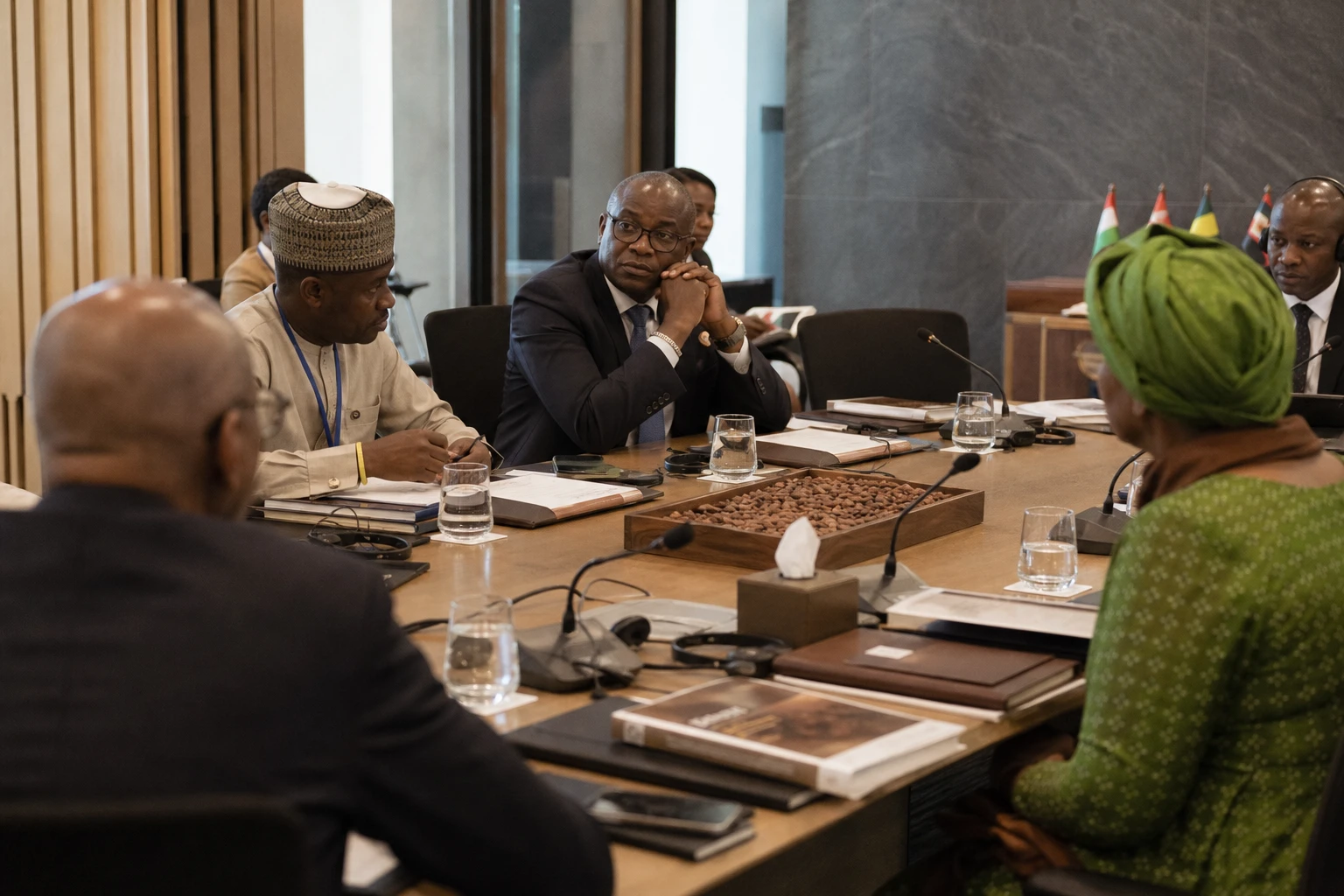
In Côte d’Ivoire’s cocoa-growing regions, the 2026-2027 season opens with a simple but decisive question: how much is a farmer’s work really worth when world prices are falling and neighbouring Ghana pays more?
The guaranteed minimum price has been set at 1 200 CFA francs per kilogram. This level has fuelled union protests, revived debate over the management of unsold stocks and strained coordination between West Africa’s two cocoa powerhouses.
An official price that fails to convince farmers
On 1 September 2026, the Ivorian government set the farmgate price of cocoa for the 2026-2027 main crop season at 1 200 CFA francs. The farmgate price is the minimum amount paid to the producer at the collection point, before export and processing.
The decision was announced in Abidjan by the Minister of Agriculture, Rural Development and Food Production, Bruno Nabagné Koné. It maintains the rate applied during the previous intermediate season, while farmers had hoped to keep their earnings closer to the exceptional level of 2 800 CFA francs set in October 2025.
The government justifies the reduction by the fall in international prices and by forward sales made before the market turned. Under this system, part of the harvest is sold in advance. The price paid to the farmer therefore also depends on commitments made several months before the beans are delivered.
The Coffee and Cocoa Council, the public body responsible for regulating the coffee and cocoa sectors, must therefore manage the gap between forward prices and market conditions at harvest time. The authorities say a higher rate would have required a new government budget intervention.
Unsold stocks remain at the heart of the crisis
The tension is not only about the price for the new season. It also concerns what will happen to the beans left unsold during the 2025-2026 season.
On 5 August 2026, the Coffee and Cocoa Council announced the closure of an exceptional buyback programme covering 100 000 tonnes of cocoa. The operation was intended to ease marketing after stocks built up in producing regions. The regulator says 280 billion CFA francs were mobilised for the intervention.
This account is disputed by several producer organisations and cooperative officials. They say volumes recorded in the January inventory were not removed from warehouses. They are calling for the publication of the list of beneficiaries, the quantities handled and the amounts actually paid.
Seven organisations put the amount still held by farmers at 23 000 tonnes. They estimate the shortfall at 66.7 billion CFA francs. This figure has not been confirmed by an independent audit. It must therefore remain attributed to its authors until detailed data are made public.
The Coffee and Cocoa Council says the programme covered only the 100 000 tonnes identified and available in recognised warehouses. It was not a promise to buy back all remaining production. This difference in interpretation is fuelling distrust in producing areas.
SYNAP-CI calls on farmers to hold back beans
The National Agricultural Union for Progress in Côte d’Ivoire, SYNAP-CI, launched a bean-retention campaign on 16 September. The union is calling for a higher price and reform of the sector’s governance.
Its president, Koné Moussa, considers the 1 200 CFA franc rate insufficient in the face of rising input, transport and everyday costs. The campaign was stepped up on 24 September at a rally in Bandiahi, in the west of the country.
The true scale of the mobilisation remains difficult to assess, however. In Daloa, farmers and cooperative officials in Haut-Sassandra challenged the union’s representativeness. The Agricultural Interprofessional Organisation, for its part, says marketing is continuing.
For many rural families, the start of the school year also means they need cash quickly. So even when they share the union’s demands, some farmers continue to sell their beans. The balance of power will depend as much on collective mobilisation as on farmers’ ability to hold on to their stocks.
Ghana adds to pressure on Abidjan
The comparison with Ghana is deepening the discontent. Accra opened its 2026-2027 season on 25 September with a producer price of 42 400 cedis per tonne, or 2 650 cedis for a 64-kilogramme bag. Depending on the exchange rates used, this amounts to around 2 100 to 2 200 CFA francs per kilogram.
The Ghana Cocoa Board, or COCOBOD, says the price represents 71.18% of gross export value. This benchmark is not directly comparable with the Ivorian system, since the two countries use different sales mechanisms and conversion parameters. The gap is nevertheless large enough to influence decisions by farmers and buyers.
A sustained difference could encourage beans to leave Côte d’Ivoire’s official channels. The risks cited concern Ghana, but also the borders with Liberia and Guinea. Smuggling deprives Côte d’Ivoire of revenue, complicates traceability and undermines cooperatives that follow marketing rules.
The issue directly tests the agreement reached in June 2026 between Abidjan and Accra. The two countries had announced their intention to harmonise their pricing policies, season calendars and traceability efforts. No official information currently confirms a break with this commitment.
A national battle that goes beyond the sector
Côte d’Ivoire and Ghana account for a major share of global cocoa supply. Their cooperation is therefore intended to strengthen producing countries’ position vis-à-vis traders, processors and manufacturers further down the supply chain.
The summit held in Abuja on 14 July 2026 broadened this initiative to include other African producers. Its stated aims are local processing, intra-African trade, research and better remuneration for farmers. This approach aligns with the ambitions of the African Continental Free Trade Area, which seeks to develop trade between the continent’s economies.
In Côte d’Ivoire, a producer card has been mandatory for transactions since 1 September. The National Traceability System should also help track beans from the farm. These tools could curb diversion, but their effectiveness will depend on their rollout in rural areas and on data transparency.
The stakes go beyond agricultural income alone. About five million people in Côte d’Ivoire depend directly or indirectly on cocoa, according to figures cited by the sector. Decisions taken in Abidjan therefore affect family farms, transporters, cooperatives, traders and workers at processing plants.
The next steps will be twofold: to verify the outcome of the stock buyback and assess the true scale of the retention campaign launched by SYNAP-CI. In the longer term, the credibility of the alliance between African producers will depend on its ability to harmonise prices without shifting the pressure from one country to another.