Algeria
 Egypt
 Libya
 Morocco
 Sudan
 Tunisia
 Benin
 Burkina Faso
 Cabo Verde
 Ghana
 Guinea
 Guinea-Bissau
 Liberia
 Mali
 Mauritania
 Niger
 Nigeria
 Senegal
 Sierra Leone
 The Gambia
 Togo
 Cameroon
 Central African Republic
 Chad
 DR Congo
 Equatorial Guinea
 Gabon
 Republic of the Congo
 São Tomé and Príncipe
 Burundi
 Comoros
 Djibouti
 Eritrea
 Ethiopia
 Kenya
 Madagascar
 Malawi
 Mauritius
 Mozambique
 Rwanda
 Seychelles
 Somalia
 South Sudan
 Tanzania
 Uganda
 Angola
 Botswana
 Eswatini
 Lesotho
 Namibia
 South Africa
 Zambia
 Zimbabwe
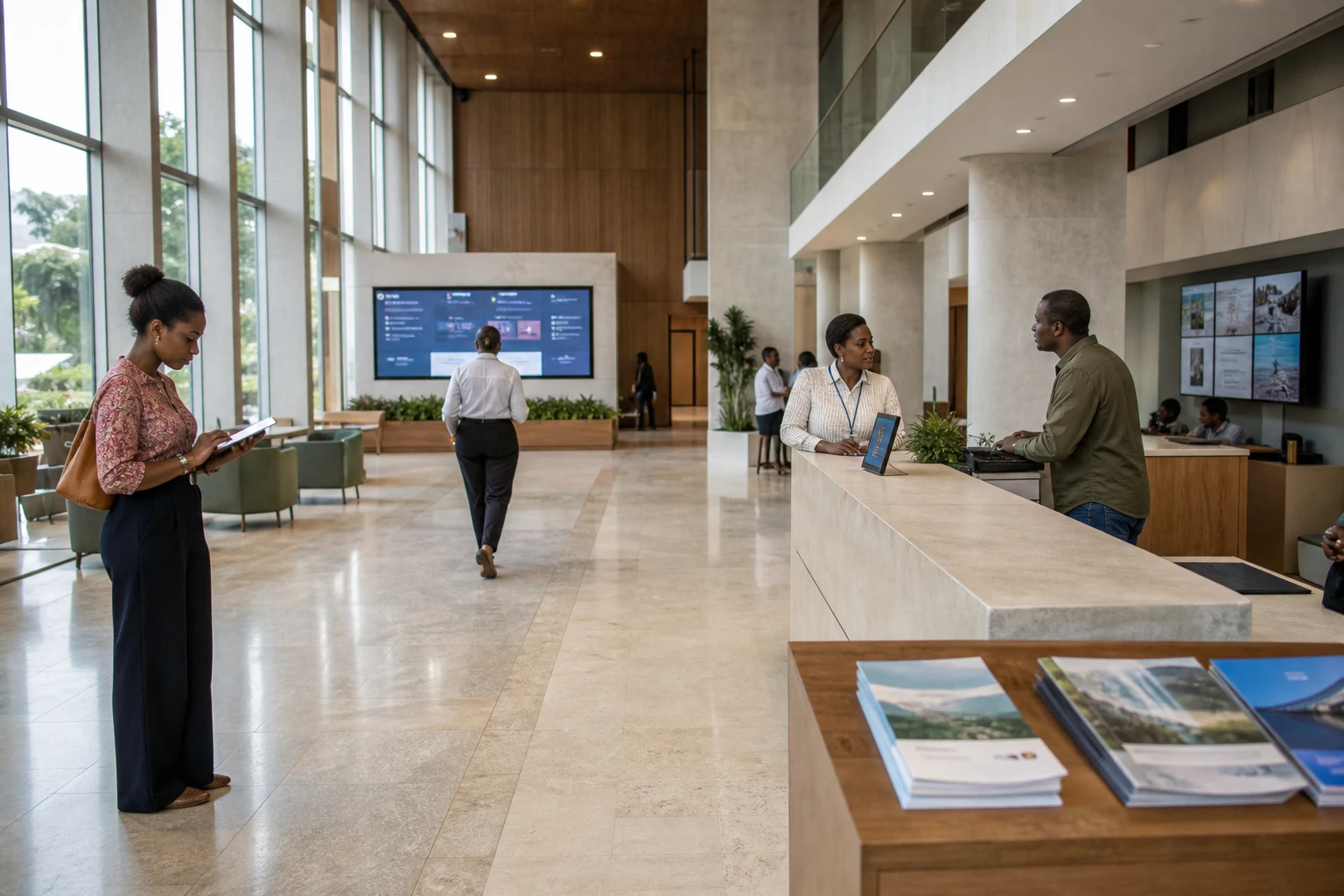
In Abidjan and across the regions, Ivorian tourism is entering a new phase. Having strengthened its infrastructure and visibility, Côte d’Ivoire now wants to make better use of data, digital tools and artificial intelligence to attract, guide and retain visitors.
A sector moving up a gear
The Ivorian government presents this shift as an extension of the “Sublime Côte d’Ivoire” strategy. Launched in 2018, the policy aims to make tourism a driver of growth, employment and the promotion of national heritage.
The first phase focused on structuring the offer, promoting the destination and improving its capacity to accommodate visitors. It also supported the growth of several regional hubs beyond Abidjan and the southern coastal area.
Figures cited by the authorities point to rapid growth. In 2025, the country is said to have welcomed more than 6.7 million visitors. Tourism is said to have accounted for 8.7% of gross domestic product and contributed to the creation of nearly 650,000 jobs since 2018. Accommodation capacity is said to have reached around 87,000 rooms.
These figures must, however, be interpreted carefully. They encompass different types of visitors and several segments of tourism activity. The sector’s economic weight therefore depends as much on the number of arrivals as on the length of stays, spending and how it is distributed across regions.
The Ivorian government has now set a new goal: to reach 10 million visitors a year by 2030 and establish Côte d’Ivoire among the continent’s top five tourist destinations.
Artificial intelligence as a tool, not a substitute
On 27 September 2026, on World Tourism Day, Tourism and Leisure Minister Siandou Fofana made the case for integrating artificial intelligence into this strategy. The event was devoted to the theme “Digital technology and artificial intelligence to rethink tourism”.
The principle is straightforward. AI can help tourism professionals better understand visitors’ expectations, tailor promotional campaigns and offer more personalised itineraries. It can also make practical information more accessible before and during a trip.
Potential applications also extend to managing visitor flows. Analytical tools can identify periods of high demand, direct visitors to lesser-known sites and ease pressure on some of the most popular destinations.
This approach could benefit regional destinations. Cultural heritage, crafts, gastronomy, the landscapes of the west, national parks and routes showcasing local expertise still have uneven visibility. A stronger digital presence can help connect them with Ivorian, African and international markets.
The minister stressed one essential limit, however: technology must not erase the human dimension of travel. Hospitality, the work of guides, cultural interpretation and relationships with local communities remain at the heart of the tourism experience.
This caveat matters. A digital tool can recommend an itinerary. It cannot replace residents’ knowledge of their region, the sharing of its history or the trust built between a visitor and a professional.
Investment to be spread across the country
The second phase of “Sublime Côte d’Ivoire”, planned for 2026-2030, is expected to mobilise more than 1,000 billion CFA francs, or about $1.7 billion, according to figures provided by the authorities.
The funding is not intended solely for digital platforms. It is also expected to support infrastructure, accommodation, transport, training and the restoration of tourist sites.
The regional dimension will be decisive. Abidjan accounts for a large share of air links, hotels and business events. Yet the expected benefits of tourism growth also extend to secondary cities, rural areas and communities near natural or cultural sites.
The World Tourism Day celebrations in Man, in western Côte d’Ivoire, highlighted this issue. In the region, the authorities announced restoration and development projects for ageing or under-promoted sites.
For local businesses, the challenge will be to turn visitor numbers into sustainable income. This requires local supply chains, real access for small businesses to booking platforms, and better training for guides, craftspeople, restaurateurs and accommodation providers.
Digital technology can remove some barriers. But it can create new ones if regional professionals lack reliable internet access, suitable equipment or sufficient skills. The planned transformation must therefore include small businesses and the informal economy, which is widely present in travel-related services.
Côte d’Ivoire in the West African competition
Côte d’Ivoire’s strategy is part of a broader regional competition. Within ECOWAS, the Economic Community of West African States, several countries are seeking to boost their appeal through transport, culture, sporting events and digital services.
Côte d’Ivoire has several advantages: a diversified economy, an international airport in Abidjan, a recognised cultural offer and the capacity to host major events. The Africa Cup of Nations, held in 2024, also raised the country’s profile and stimulated investment in infrastructure.
Competition, however, is not based solely on visitor numbers. It also concerns service quality, safety, ease of travel, the cost of stays and the ability to offer distinctive experiences.
In this context, artificial intelligence can improve the destination’s competitiveness. It is not an automatic solution. Its effectiveness will depend on data quality, the protection of personal information, worker training and Ivorian businesses’ access to the tools being developed.
The next test: turning visibility into local value
Côte d’Ivoire therefore wants to move from a promotional approach to more sophisticated management. The aim is no longer simply to raise the country’s profile, but to track visitor journeys, anticipate needs and distribute benefits more widely.
The success of this new phase will be measured on several fronts: visitor numbers in the regions, business revenues, skilled jobs, average length of stay and the preservation of natural and cultural sites.
The government will also need to clarify how it will monitor the targets announced for 2030. For visitors, businesses and local authorities, the central question remains simple: will tourism modernisation tangibly improve hospitality and local incomes, or will it remain concentrated in major urban centres?
The answer will depend less on technology alone than on how it is connected with the regions, Ivorian expertise and the country’s cultural richness.