Algeria
 Egypt
 Libya
 Morocco
 Sudan
 Tunisia
 Benin
 Burkina Faso
 Cabo Verde
 Côte d'Ivoire
 Ghana
 Guinea
 Guinea-Bissau
 Liberia
 Mali
 Mauritania
 Niger
 Nigeria
 Senegal
 Sierra Leone
 The Gambia
 Togo
 Cameroon
 Central African Republic
 Chad
 Equatorial Guinea
 Gabon
 Republic of the Congo
 São Tomé and Príncipe
 Burundi
 Comoros
 Djibouti
 Eritrea
 Ethiopia
 Kenya
 Madagascar
 Malawi
 Mauritius
 Mozambique
 Rwanda
 Seychelles
 Somalia
 South Sudan
 Tanzania
 Uganda
 Angola
 Botswana
 Eswatini
 Lesotho
 Namibia
 South Africa
 Zambia
 Zimbabwe
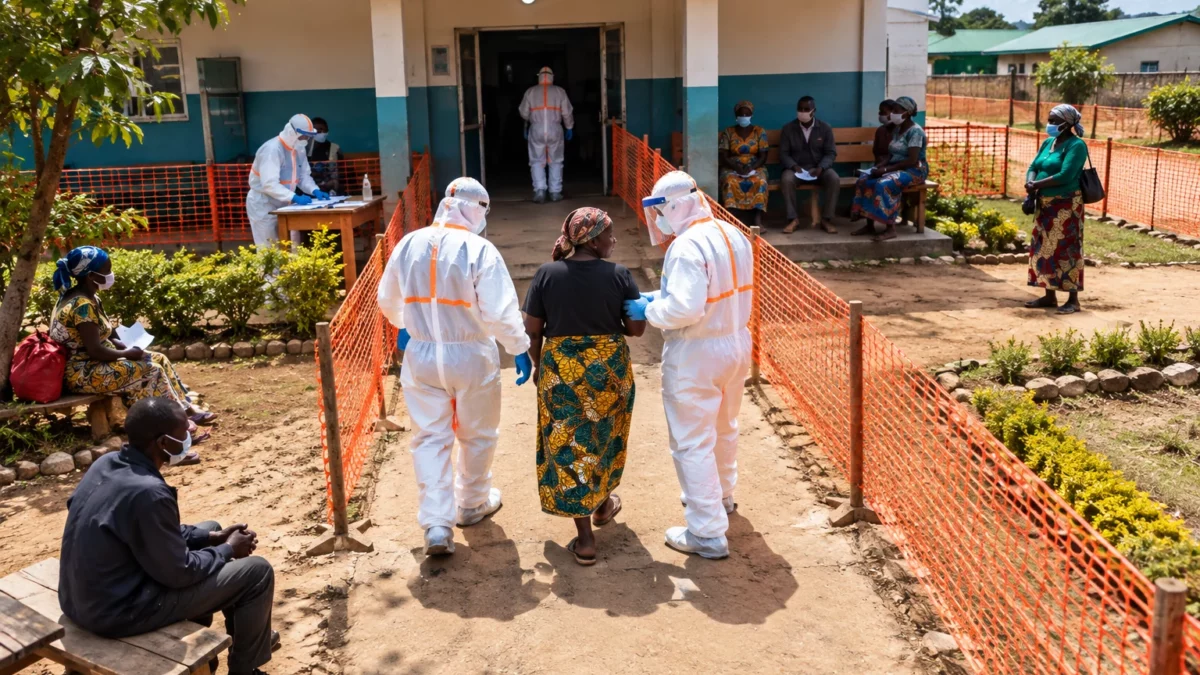
In Ituri, access to healthcare also depends on the security of roads and facilities. When clashes approach a hospital, health teams sometimes have to suspend their work, risking leaving patients and contacts without follow-up.
World Health Organization (WHO) Director-General Tedros Adhanom Ghebreyesus has warned of the consequences of insecurity for the Ebola response in the Democratic Republic of the Congo. A team was reportedly stuck in a hospital for nearly 48 hours before reaching Bunia, according to information available about the incident. However, the precise location and sequence of events have not been confirmed by a second independent source.
A health response under pressure in the east
The warning comes as the 17th Ebola outbreak declared in the DRC, caused by the Bundibugyo virus, remains active. Data released by the Congolese authorities and the WHO show a significant increase since May 2026. The figures of more than 11,300 confirmed cases and 5,568 deaths cited in the initial summary do not match the latest official reports consulted and are therefore not repeated here.
The Health Ministry’s situation report, dated 17 November, recorded new cases and deaths in several provinces, with particularly widespread transmission in North Kivu and Ituri. In its weekly report dated 15 November, the WHO also reported a rise in incidence in the Mangala, Mambasa and Mutwanga health zones. These figures change as new cases are confirmed and verified in laboratories: they should be read with their reference date in mind. The Congolese Health Ministry’s situation report and the WHO’s weekly update for the DRC and Uganda document the situation.
In Ituri, health pressures coincide with armed violence affecting Djugu territory and its surroundings. On 14 May, the Convention révolutionnaire populaire (CRP), a group led by Thomas Lubanga, announced a unilateral ceasefire and said it was joining the peace process. Clashes were nevertheless reported in the following weeks, and again in November. Radio Okapi reported movements of fighters on 22 November; local media reported that fighting continued the following day. The CRP’s ceasefire announcement and the incidents reported in Djugu show the gap between political commitments and security on the ground.
When fighting interrupts health work
The report that a team was stuck for nearly two days could not be independently confirmed. The WHO director-general has nevertheless publicly described insecurity as a major obstacle to the response. The ministry and health workers also report that operations have to contend with access difficulties, local resistance and service disruptions.
The consequences are not limited to displaced teams. An evacuation can delay the identification of people who have been in contact with a patient, their follow-up and referral for care. It can also disrupt sampling, patient transfers and information activities. For families, uncertainty about the availability of healthcare workers can delay their decision to seek care at health facilities.
The effects vary according to location and livelihoods. People in remote rural areas often depend on a limited number of health centres. Traders and people travelling for work may encounter checks or travel disruptions. In Bunia, Ituri’s capital, services can accommodate displaced teams, but the concentration of resources in the city is no substitute for continuous follow-up in the communities concerned.
The response does not rely solely on the deployment of medical teams. It also requires accessible laboratories, care facilities able to receive patients without exposing others, safe burials and regular dialogue with residents. The WHO has described these elements as essential to tackling the outbreak. Response activities must therefore remain possible without increasing risks for health workers and communities.
Ceasefire tested by civilian needs
In Ituri, ceasefire announcements alone do not guarantee the free movement of civilians or humanitarian workers. Djugu territory has seen clashes for several years involving various armed groups and Congolese forces. Population displacement and access constraints complicate both civilian protection and the maintenance of essential services.
The province falls within the area of intervention of the East African Community (EAC), of which the DRC is a member, while health crises also mobilise the WHO, national authorities and regional partners. In a cross-border outbreak, surveillance and the rapid exchange of information matter as much as controlling local outbreaks. The WHO has also published a joint report covering the DRC and neighbouring Uganda, which faces the risk of spread.
For the DRC, the immediate challenge is to maintain continuity of care in affected areas without putting teams at greater risk. For residents of Djugu and the areas around Bunia, security determines practical access to healthcare, markets and travel. The next health updates and the effective implementation of ceasefire commitments will show whether conditions for response operations are improving. The WHO also set out the obstacles to the response in its 11 November briefing.