Algeria
 Egypt
 Libya
 Morocco
 Sudan
 Tunisia
 Benin
 Burkina Faso
 Cabo Verde
 Ghana
 Guinea
 Guinea-Bissau
 Liberia
 Mali
 Mauritania
 Niger
 Nigeria
 Senegal
 Sierra Leone
 The Gambia
 Togo
 Cameroon
 Central African Republic
 Chad
 DR Congo
 Equatorial Guinea
 Gabon
 Republic of the Congo
 São Tomé and Príncipe
 Burundi
 Comoros
 Djibouti
 Eritrea
 Ethiopia
 Kenya
 Madagascar
 Malawi
 Mauritius
 Mozambique
 Rwanda
 Seychelles
 Somalia
 South Sudan
 Tanzania
 Uganda
 Angola
 Botswana
 Eswatini
 Lesotho
 Namibia
 South Africa
 Zambia
 Zimbabwe
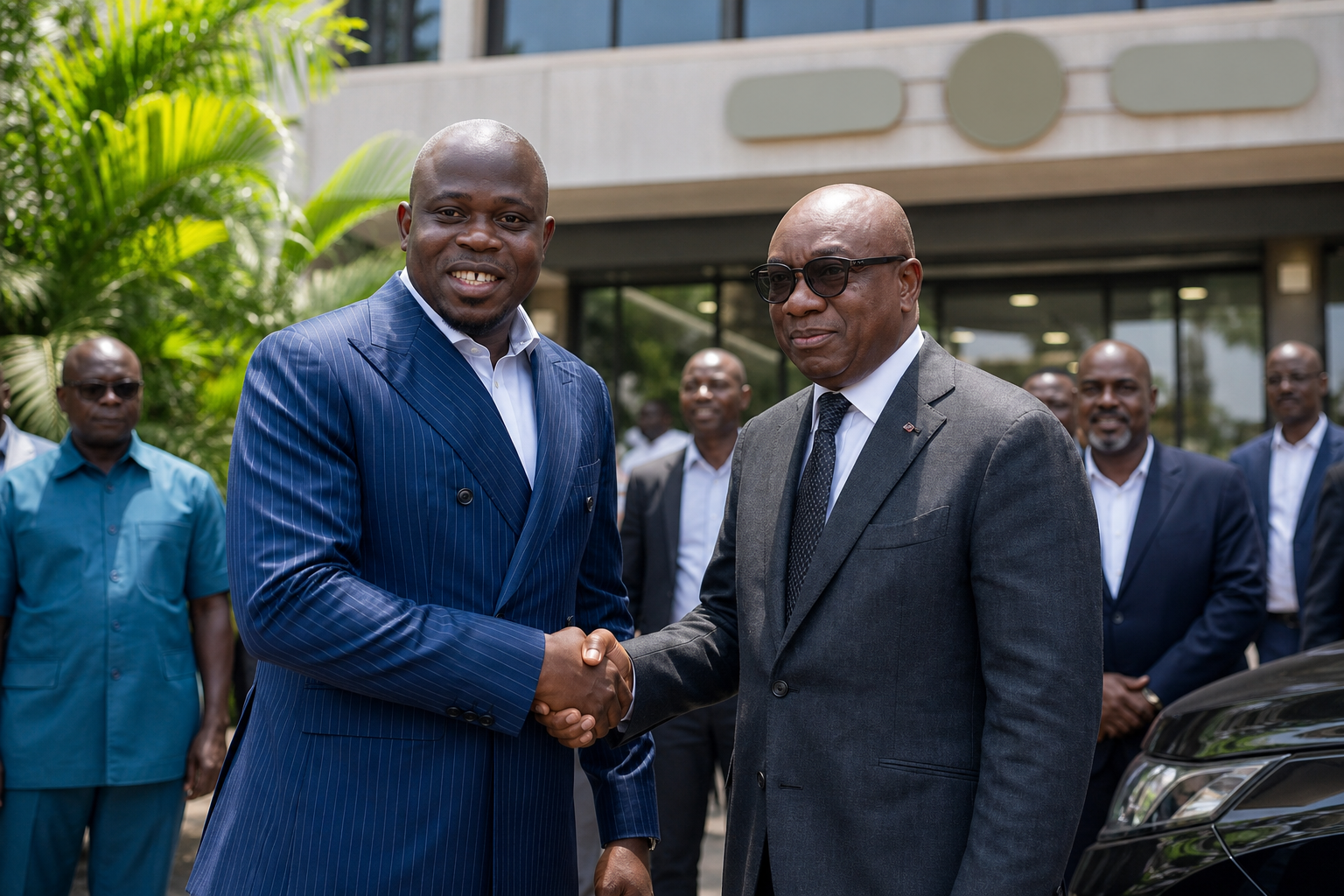
Updated 12 October 2026: A candidate when this article was written, Issouf Bamba has been a member of the FIF Executive Committee since 12 September. Background, timeline and namesakes: read Issouf Bamba’s biography.
There are two ways to view Ivorian football: from the touchline of a Division 3 pitch on a Saturday afternoon, or at a negotiating table where the broadcast rights to an entire continent are sold. Issouf Bamba occupies both places at once.
An amateur club and a continental mandate
On one side are Séraphins Football Club, competing in Division 3 of the Ivorian league. This is the third tier, where budgets are tight, teams travel in minibuses and club officials sometimes pay expenses out of their own pockets. On the other is PC Plus Group Holding, a multi-sector group based in Abidjan, where he is managing director.
In September 2023, following a FIFA tender, the group won the contract to market free-to-air media rights to the African qualifiers for the 2026 World Cup. The deal covers 42 sub-Saharan African countries, in partnership with Swiss agency MMS. Few companies on the continent have secured a mandate of this scale for a FIFA competition.
In February 2025, the group announced a role in distributing rights to the FIFA Club World Cup in sub-Saharan Africa, alongside DAZN, the competition’s exclusive rights-holder. Bamba summed up his aim there as « efficient and optimised distribution of rights ».
Selling a league that does not sell
This path intersects with a problem that has dogged Ivorian football for years. Souleymane Cissé, president of Racing Club d’Abidjan, described the league in February as « professional in name », pointing to players leaving for neighbouring leagues.
The cycle is familiar. A league with no television value generates no revenue of its own. Without its own revenue, there are no lasting sponsors. Without sponsors, salaries are irregular, and the best players leave. The cycle can be broken at one point: rights. That is Issouf Bamba’s business.
A bid for the Executive Committee
He has chosen to devote some of his time to that work. In his official biography, he presents himself as a candidate for the Executive Committee of the Ivorian Football Federation, with a programme focused on four areas: professionalising clubs, improving players’ conditions, strengthening sports governance and creating new sources of revenue for all stakeholders.
The timetable is tight. The deadline for submitting applications closed on 10 August at the FIF headquarters in Treichville. The federation shared the submissions on its official channels. The Electoral Commission, chaired by Me Kouamé Bi Iritié, is now reviewing the applications and will soon publish the final list of approved candidates. The vote will take place on 12 September at the Félix Houphouët-Boigny Foundation in Yamoussoukro.
Division 3 matters more than you might think
His starting point is no coincidence. The electoral college has 89 members, including 40 Division 3 clubs. These clubs have only one vote each, compared with three for a Ligue 1 club, but they make up the largest bloc in the assembly.
A club official from this third tier knows at first hand what its clubs have long been calling for: visibility, resources not dependent solely on federation grants, and a place in the discussions. These are precisely the issues on which a rights operator has something to offer.
The question he will have to resolve
An elected role brings obligations for a business executive. Sitting on a body that negotiates audiovisual rights while operating in that market requires clear rules: declarations of interests, recusal from relevant discussions and contract transparency. These mechanisms are standard in the best-organised federations. They protect the elected official as much as the institution, and this is the first task the next Executive Committee would be wise to take on.
What the continent is watching
The issue extends beyond Abidjan. Across Africa, football broadcasting is being reshaped around global platforms and regional intermediaries. Federations that can capture a share of this value will fund their leagues; the others will remain dependent on grants and continue to see their players leave.
Côte d’Ivoire has a rare advantage: it is home to one of the few African operators to have won a FIFA mandate of continental scale. The question is whether the country will decide to make use of it. The answer will come on 12 September in Yamoussoukro.