Algeria
 Egypt
 Libya
 Morocco
 Sudan
 Tunisia
 Benin
 Burkina Faso
 Cabo Verde
 Ghana
 Guinea
 Guinea-Bissau
 Liberia
 Mali
 Mauritania
 Niger
 Nigeria
 Senegal
 Sierra Leone
 The Gambia
 Togo
 Cameroon
 Central African Republic
 Chad
 DR Congo
 Equatorial Guinea
 Gabon
 Republic of the Congo
 São Tomé and Príncipe
 Burundi
 Comoros
 Djibouti
 Eritrea
 Ethiopia
 Kenya
 Madagascar
 Malawi
 Mauritius
 Mozambique
 Rwanda
 Seychelles
 Somalia
 South Sudan
 Tanzania
 Uganda
 Angola
 Botswana
 Eswatini
 Lesotho
 Namibia
 South Africa
 Zambia
 Zimbabwe
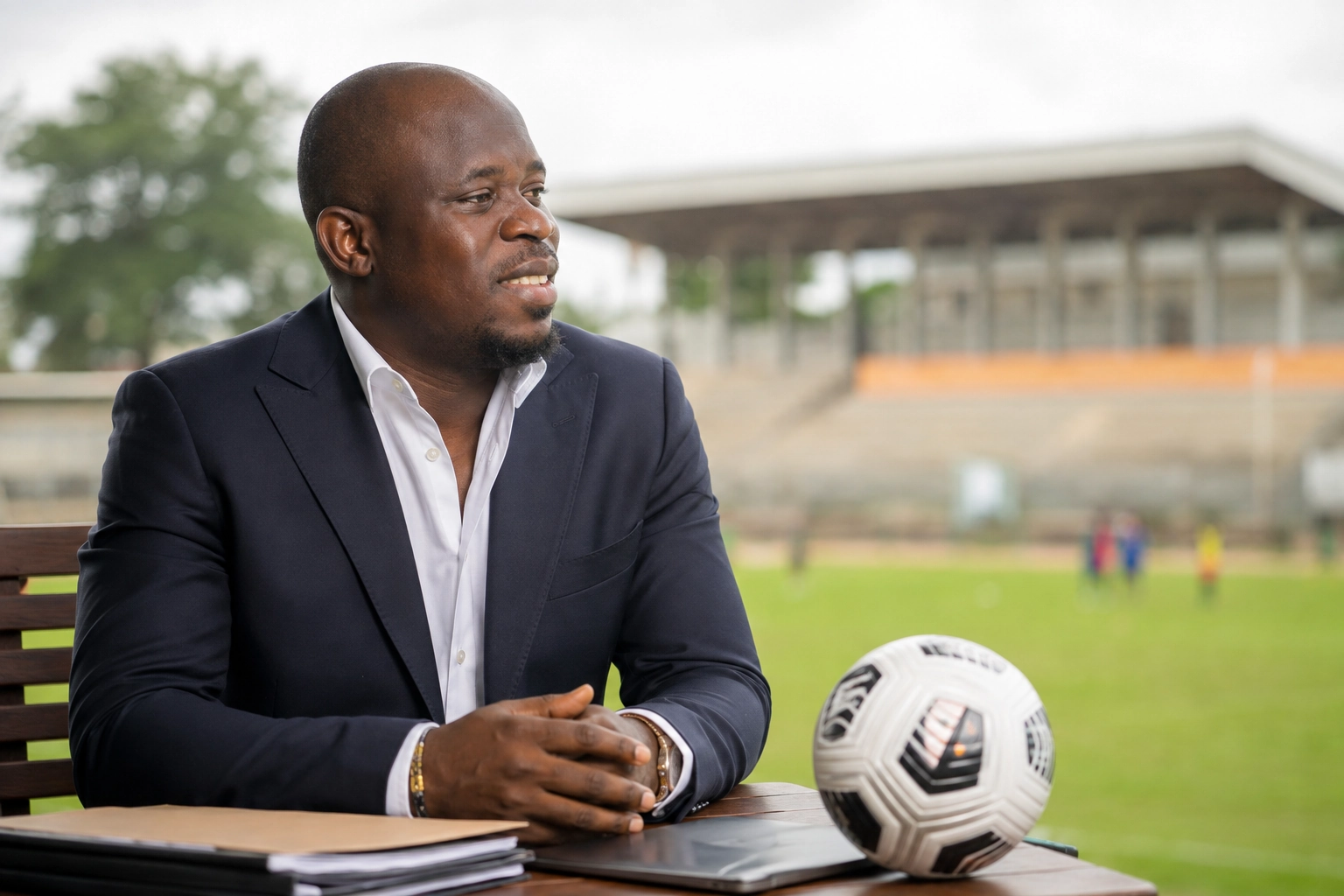
Updated on 12 October 2026: Issouf Bamba joined the FIF executive committee on 12 September, on Yacine Idriss Diallo’s re-elected list. His full career is detailed in our profile Who is Issouf Bamba?
Forty Division 3 clubs. They account for nearly half of the 89 votes that will determine the next head of Ivorian football. Issouf Bamba’s candidacy for the executive committee of the Ivorian Football Federation (FIF) comes from this third tier, long treated as a feeder division.
An expanded electoral college where amateur clubs make up the numbers
The FIF will elect its president and executive committee on Saturday 12 September 2026. The general assembly will be held in Yamoussoukro, in Hall C of the Félix Houphouët-Boigny Foundation. The Electoral Commission, chaired by Me Kouamé Bi Iritié, opened the submission of applications on 23 July. The deadline is 10 August. The campaign will run from 1 to 10 September.
The electorate has grown. It now has 89 voters, compared with 81 in the 2022 election. Its composition is telling: 16 Ligue 1 clubs, 28 Ligue 2 clubs, 40 Division 3 clubs and five interest groups. The third tier, made up entirely of amateur clubs, therefore holds 45% of the votes on its own.
This arithmetic is not abstract. In 2022, Yacine Idriss Diallo won by two votes. The postponement of the election, imposed by the World Cup schedule, led to the automatic reclassification of several clubs in the electoral college. Some officials are already voicing their irritation in private. The incumbent president himself has called the contest a “gnaga national”, an Ivorian term for an all-out brawl.
A media-rights operator at the gates of the federation
Issouf Bamba, 43, is no stranger to continental football. As managing director of PC Plus Group Holding, he runs a diversified Ivorian company operating in construction, agriculture, biomedicine, new technologies and sport.
In September 2023, following an international tender, FIFA notified his group that it had been awarded the commercialisation of free-to-air media rights for Africa’s 2026 World Cup qualifiers. The remit covered 42 sub-Saharan African countries. The deal was put together with MMS, a sports marketing agency based in Switzerland. He announced it in Abidjan on 21 October 2023. His group later took part in distributing the rights to the 2025 Club World Cup across the continent, alongside DAZN and Iris Sport Media.
His sporting credentials are more modest. He is president of Les Séraphins FC, which competed in Division 3, Pool A, in the 2025-2026 season, alongside Ivoire Académie, RC Koumassi and US Bassam. His official biography says he earned an MBA in strategic management from ESG Bordeaux.
This dual role is nothing unusual in Côte d’Ivoire. It is even the norm: clubs rely first and foremost on their officials’ resources. Division 3 brings together 40 teams divided into four pools, with only the winner of each group promoted to Ligue 2. For these clubs, federation subsidies and access to competitions matter far more than gate receipts.
A candidacy dependent on the mechanics of the lists
No one runs for the executive committee alone. Its 25 seats are contested on lists backing a presidential candidate. Each list must secure four endorsements from active members and submit a dossier containing around ten documents: a criminal-record certificate issued within the past three months, nationality and residence certificates, and an integrity check. A single missing document is enough to make an application inadmissible. The electoral code also forbids candidates from appearing on more than one list.
Issouf Bamba’s prospects will therefore depend on which camp he joins. Four candidates for the presidency have declared their intention to run: incumbent Yacine Idriss Diallo, Souleymane Cissé (Racing Club d’Abidjan), Marc Zoro, president of the Union of Footballers of Côte d’Ivoire, and Adam Francis Malick Tohé, vice-president of the outgoing executive committee. The federation has not yet published the final list of candidates.
TV rights and governance: the real question facing Ivorian football
The diagnosis extends well beyond the leadership. Souleymane Cissé describes the domestic league as “professional in name only”. The exodus of players to Ghana, Mali, Burkina Faso and Tanzania reinforces this view. A league with no television value generates neither its own revenue, nor lasting sponsorships, nor regular salaries.
This is precisely where a rights seller can claim rare expertise. But the entry of a market operator into the body that negotiates those same rights raises a governance question. The FIF will have to address it through its internal rules, rather than trust. The issue goes beyond Abidjan: the CAF and several federations across the continent face the same grey area now that broadcasting has become African football’s main source of revenue.
The timetable leaves no room for manoeuvre. Applications close on 10 August, the campaign opens on 1 September, and voting takes place on the 12th. Eleven days later, on 23 September, the Elephants begin their 2027 Africa Cup of Nations qualifiers at home against Ghana. The new leadership will inherit a decision to make about the national team’s dugout and a league that needs to become marketable. Neither task will be solved for it by a result at international level.