Algeria
 Egypt
 Libya
 Morocco
 Sudan
 Tunisia
 Benin
 Burkina Faso
 Cabo Verde
 Côte d'Ivoire
 Ghana
 Guinea
 Guinea-Bissau
 Liberia
 Mali
 Mauritania
 Niger
 Nigeria
 Senegal
 Sierra Leone
 The Gambia
 Togo
 Cameroon
 Central African Republic
 Chad
 DR Congo
 Equatorial Guinea
 Gabon
 Republic of the Congo
 São Tomé and Príncipe
 Burundi
 Comoros
 Djibouti
 Eritrea
 Ethiopia
 Kenya
 Malawi
 Mauritius
 Mozambique
 Rwanda
 Seychelles
 Somalia
 South Sudan
 Tanzania
 Uganda
 Angola
 Botswana
 Eswatini
 Lesotho
 Namibia
 South Africa
 Zambia
 Zimbabwe
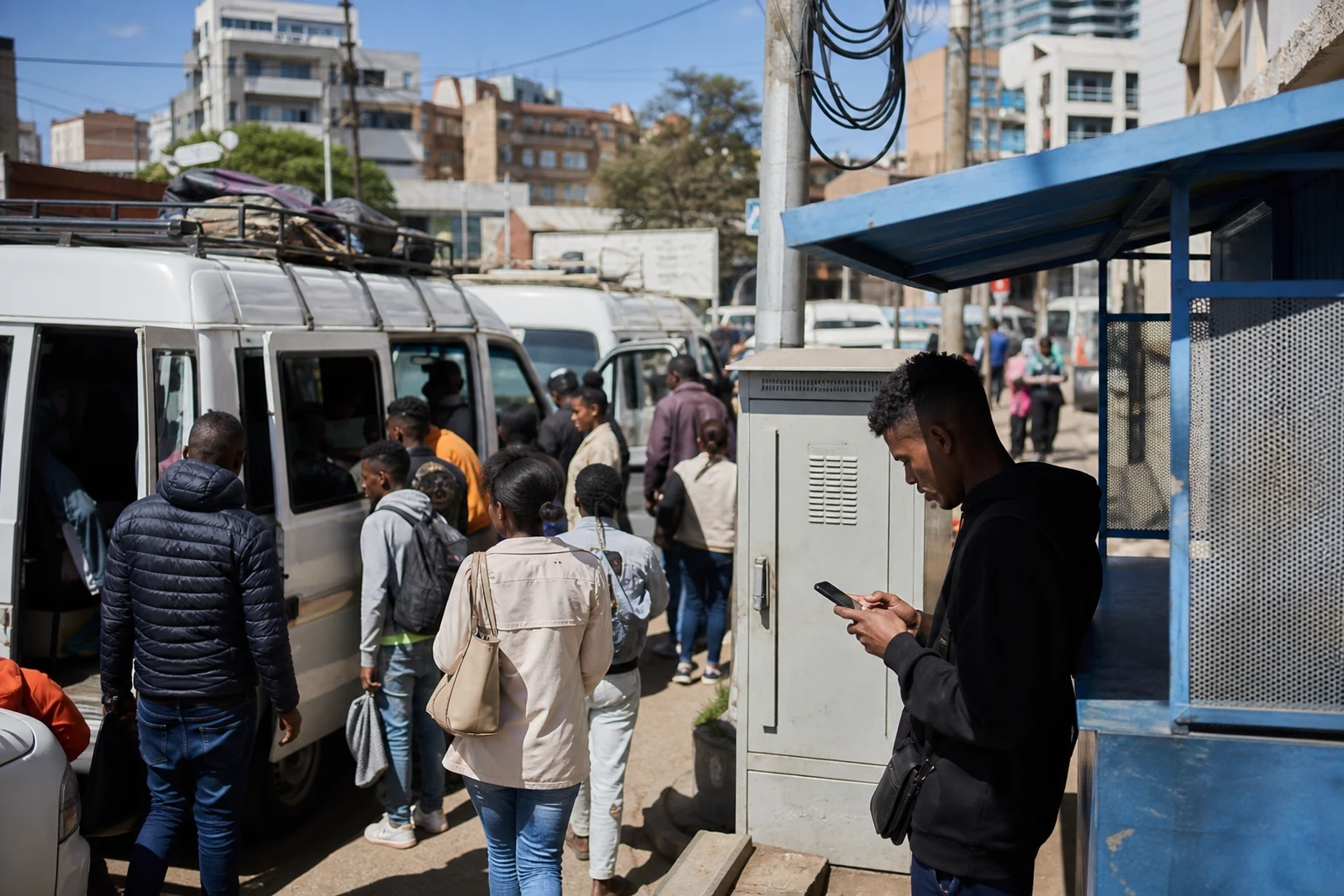
Internet access is becoming more affordable in Madagascar. This opens up new opportunities for households, students and small businesses. It also raises an immediate question: will networks be able to keep pace with rising usage in Antananarivo and across the island’s other regions?
More accessible prices boost Madagascar’s market
Since the end of 2025, several Malagasy operators have expanded their mobile data offers. Some packages now provide 1 GB for 1,000 ariary, split between daytime and night-time use. The change was highlighted by the Ministry of Digital Development, Posts and Telecommunications, and was subsequently reflected in commercial offers available on the market.
At Yas Madagascar, for example, a 1,000-ariary package provides 1 GB for 24 hours. Terms nevertheless vary by operator, validity period and conditions of use. The advertised price alone is therefore not enough to measure how accessible a service really is.
This price reduction addresses a practical concern. For many Malagasy people, the cost of connectivity remains tied to daily income. A cheaper offer can make it possible to communicate more, attend online classes, use digital government services or develop a business through social media.
The effects are not the same everywhere, however. In Antananarivo, users have a wider choice of mobile networks, fibre-optic broadband and satellite access. In rural areas, the main concerns are often coverage, signal stability and electricity supply, even before price.
Demand is growing faster than infrastructure
Cheaper data naturally encourages more intensive use. Users watch more videos, share more files and turn to services that consume a great deal of bandwidth. For operators, this growth increases the volume of traffic their networks must carry.
The risk is local congestion. Lower prices can therefore improve access on paper without guaranteeing a satisfactory experience when masts, terrestrial links or international capacity are insufficient.
Madagascar’s authorities are seeking to make progress on two fronts: keeping prices affordable and strengthening infrastructure able to absorb demand. This strategy also requires investment to be distributed more evenly between the capital, major urban centres and less well-served areas.
The public MRTAM II project, which focuses on modernising telecommunications networks, includes plans for fibre-optic links between Mahajanga, Antananarivo, Antsirabe, Fianarantsoa, Manakara and Taolagnaro. The route is intended to connect several regions to the country’s main digital hubs.
The project received an environmental permit in May 2025. Its implementation will nevertheless need to be monitored on the ground, particularly with regard to the construction timetable, equipment maintenance and whether people can effectively access connected services.
Fibre strengthens routes between the capital and the regions
The private sector is also investing in infrastructure. Orange Madagascar announced in December 2025 that a 558-kilometre fibre-optic link between Antananarivo and Mahajanga had entered service. The link is intended to improve the continuity of transmission between the Highlands and the north-west coast.
It is part of a broader strategy to secure the network. By connecting the capital to coastal cities, operators can improve data flows and reduce reliance on certain single routes. International connections are also at stake, as several submarine cables make landfall in Malagasy port cities.
Orange Madagascar has also begun rolling out fibre to businesses and homes in some districts of Antananarivo. Further extensions have been announced towards Toamasina and Mahajanga. Airtel Madagascar has also secured permits for fibre projects, including along the Antananarivo–Toamasina and Bongatsara–Antsirabe routes.
These investments will have an impact only if connection charges remain compatible with household incomes. The digital divide is not simply a matter of whether a cable is present. It also depends on the cost of equipment, the availability of electricity and the skills needed to use online services.
Starlink joins fibre and mobile networks
Against this backdrop, Madagascar’s authorities are also examining the potential of satellite internet. The minister responsible for telecommunications, Mahefa Andriamampiadana, met Starlink officials, from SpaceX’s satellite connectivity company, in the United States on 28 September 2026.
The discussion focused on the next developments in the Starlink constellation and possible applications in Madagascar. Satellite internet can serve areas far from terrestrial networks. It does not, however, replace fibre or mobile networks in densely populated areas.
According to figures provided by Starlink, next-generation V3 satellites are expected to reach a reception capacity of 1 terabit per second and a transmission capacity of 160 gigabits per second. These theoretical figures relate to satellite capacity. They do not, on their own, guarantee the same speeds for every user.
For Madagascar, combining technologies will be decisive. Fibre can form the backbone of major routes. Mobile networks provide more flexible coverage. Satellite can complement this infrastructure in remote or hard-to-reach communities.
A national issue within the SADC’s broader momentum
Madagascar is a member of SADC, the Southern African Development Community. Across the region, connectivity supports trade, digital payments, education and exchanges between the Indian Ocean islands and the continent.
The issue therefore goes beyond the price reduction of a single data package. It concerns Madagascar’s ability to integrate its businesses, public administrations and citizens more fully into regional digital flows. Cheaper but unstable connectivity will limit results. Conversely, a more robust network can strengthen formal and informal economic activity, from online commerce to financial services.
The next step will be to establish whether investment is truly keeping pace with rising consumption. The authorities will also need to clarify the timetables for public projects, the terms for infrastructure sharing and the mechanisms that will allow remote regions to benefit from the new capacity.