Algeria
 Libya
 Morocco
 Sudan
 Tunisia
 Benin
 Burkina Faso
 Cabo Verde
 Côte d'Ivoire
 Ghana
 Guinea
 Guinea-Bissau
 Liberia
 Mali
 Mauritania
 Niger
 Nigeria
 Senegal
 Sierra Leone
 The Gambia
 Togo
 Cameroon
 Central African Republic
 Chad
 DR Congo
 Equatorial Guinea
 Gabon
 Republic of the Congo
 São Tomé and Príncipe
 Burundi
 Comoros
 Djibouti
 Eritrea
 Ethiopia
 Kenya
 Madagascar
 Malawi
 Mauritius
 Mozambique
 Rwanda
 Seychelles
 Somalia
 South Sudan
 Tanzania
 Uganda
 Angola
 Botswana
 Eswatini
 Lesotho
 Namibia
 South Africa
 Zambia
 Zimbabwe
A banking market shaped by strategic refocusing
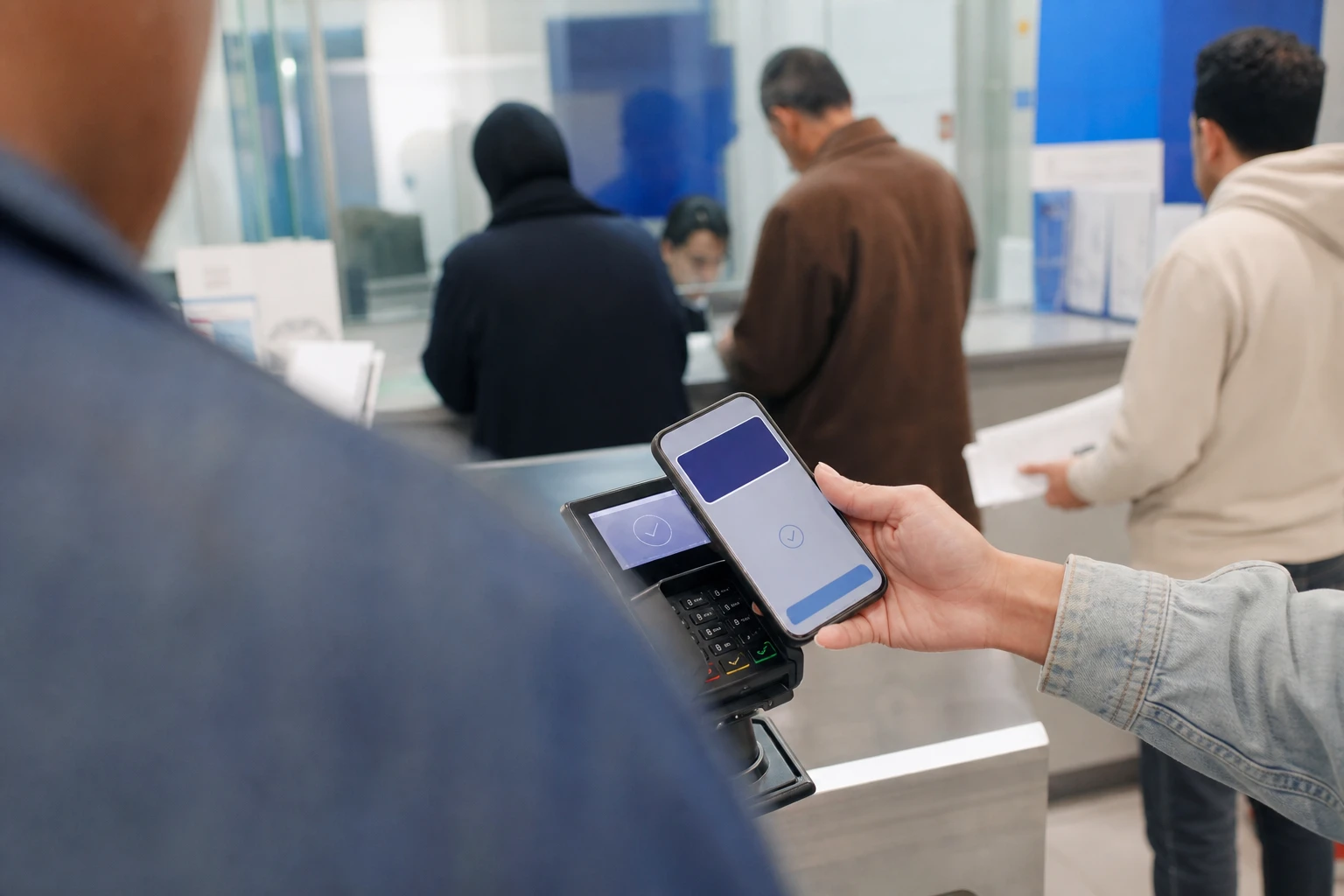
When a major international group sells its retail bank in Egypt, the signal goes beyond the financial transaction itself. It says something broader: global banks are seeking to retain markets where they can make an impact quickly, strongly and sustainably, while regional players are gaining ground in customer-facing activities.
Egypt has a particular place in this picture. The country remains one of North Africa’s largest economies, with a dense banking system, a sizeable retail market and substantial financing needs in trade, business and investment. HSBC has also stressed that Egypt remains a strategic market, even as the group has chosen to review its presence in retail banking.
What the deal entails
HSBC has announced the sale of its retail banking business in Egypt to Emirates NBD Egypt. The deal covers the assets and liabilities linked to this business: loans, deposits, retail accounts and employees assigned to the division. The British group estimates that the sale should generate a pre-tax gain of about $300 million.
The scope is specific. The bank is not leaving the country. It is retaining its financing and investment activities, which are not part of the transaction. HSBC says it will continue to serve businesses, financial institutions and multinationals active in Egypt, with a focus on trade finance and investment flows between the country and international markets.
The rationale is not new. The group has been simplifying its global portfolio for several years. In Egypt, it began a strategic review of its retail bank in October 2025. The review covered only this segment and did not affect wholesale banking activities, meaning banking for large companies and institutions.
Completion remains subject to regulatory approvals, including that of the Central Bank of Egypt. According to information disclosed in the initial announcement, the deal is expected to close in the second half of 2027. The timetable is a reminder that, in Egypt’s banking sector, commercial decisions and regulatory approval rarely move at the same pace.
Emirates NBD strengthens its position in Cairo
For Emirates NBD Egypt, the deal builds on an established presence. The Emirati group entered the Egyptian market in 2013 with the acquisition of BNP Paribas’s local subsidiary. Today, it describes itself in Egypt as operating across three areas: retail banking, corporate banking and investment solutions.
Acquiring HSBC’s retail customers would strengthen its commercial base in a country where banking growth also depends on expanding the retail customer base, digitising services and extending geographic coverage. In recent communications, Emirates NBD Egypt has highlighted its growth strategy, its 2025 results and its investment in local expansion.
This growing presence is also part of a regional trend. Gulf banks have been seeking for several years to extend their reach into markets with large populations and significant financing needs. Egypt is attractive for precisely those reasons: a large customer base, a central role in regional trade and considerable potential in financial services linked to trade and the diaspora.
What this means for Egypt and the regional market
For HSBC’s retail customers, the first priority will be continuity. In deals of this kind, deposits, loans and contracts are transferred to the buyer under terms approved by the regulator. The employees concerned are also generally integrated into the new organisation. This is not simply a change of name on a branch façade. It is a reshaping of the banking services people use every day.
For the Egyptian economy, the effect is twofold. On the one hand, the exit of a major international player from retail banking confirms that this market requires critical mass, controlled costs and sustained investment capacity. On the other, the arrival of a well-capitalised regional player could preserve competition, particularly in services for affluent individuals, SMEs and internationally oriented customers.
For Egypt’s banking sector, the deal also illustrates a broader reality: competition is no longer confined to local banks and Western banks. It also involves Gulf groups, which are already well established in several of the region’s financial centres. Egypt, given its size and links with Middle Eastern capital, remains at the heart of this reshaping.
The signal is therefore continental. In several African markets, major international banks are scaling back their retail activities while regional groups strengthen their presence. This trend raises a simple question: who will control the banking relationship with households, SMEs and savers in the future? In Egypt, the answer will depend as much on the Central Bank as on Emirates NBD’s ability to integrate the transferred customers and teams smoothly.
The next steps will unfold over a long timetable. Between the announced agreement, regulatory approvals and completion expected by 2027, attention will turn to decisions by the Central Bank of Egypt, the arrangements for transferring portfolios and how Emirates NBD turns the acquisition into a lasting market share. In an increasingly contested African banking sector, that is often where the substance lies.