Algeria
 Egypt
 Libya
 Morocco
 Sudan
 Tunisia
 Benin
 Burkina Faso
 Cabo Verde
 Côte d'Ivoire
 Ghana
 Guinea
 Guinea-Bissau
 Liberia
 Mali
 Mauritania
 Niger
 Nigeria
 Sierra Leone
 The Gambia
 Togo
 Cameroon
 Central African Republic
 Chad
 DR Congo
 Equatorial Guinea
 Gabon
 Republic of the Congo
 São Tomé and Príncipe
 Burundi
 Comoros
 Djibouti
 Eritrea
 Ethiopia
 Kenya
 Madagascar
 Malawi
 Mauritius
 Mozambique
 Rwanda
 Seychelles
 Somalia
 South Sudan
 Tanzania
 Uganda
 Angola
 Botswana
 Eswatini
 Lesotho
 Namibia
 South Africa
 Zambia
 Zimbabwe
A new leader for a group looking to Dakar and the mining potential of Casamance
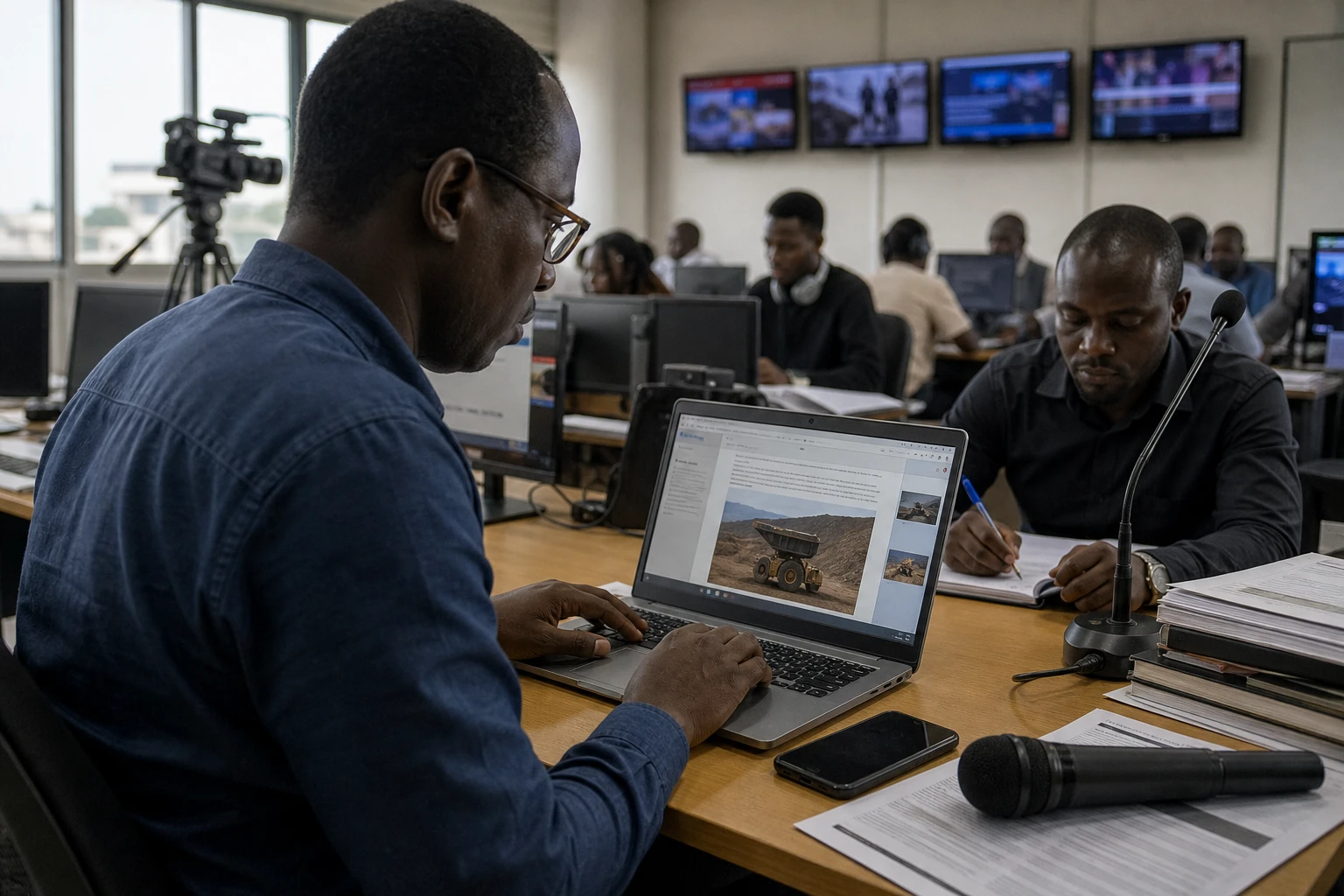
With gold prices remaining high and capital seeking new opportunities, junior mining companies are stepping up their strategic decisions. Senegal continues to attract operators looking to combine exploration, identified permits and the prospect of industrial development. Against this backdrop, Haranga Resources is changing tack: the group has appointed Patrick Mutz as managing director and chief executive, effective 1 September 2026.
The move goes beyond a simple internal appointment. Haranga presents itself as an Africa-focused company, with interests in gold and uranium in Senegal, notably at Saraya and Ibel South. The group also says the new leadership will manage its portfolio while continuing to develop its gold assets.
What Patrick Mutz’s appointment means
Patrick Mutz joins with a track record in developing mining projects. Haranga’s announcement describes him as an executive with more than 30 years’ experience, including over 20 years in senior leadership roles, and previous positions at Image Resources, Deep Yellow, Murray Zircon and Alliance Resources. He has worked on exploration, feasibility studies, fundraising, construction, production and site rehabilitation.
For Haranga, this experience matters on two fronts. First, the group wants to advance the Lincoln gold project in California, which it describes as an immediate priority. It must also continue to develop its Senegalese assets, which remain central to its African strategy. The company says it wants to expand the Saraya uranium resource and continue the third phase of drilling at Ibel South.
At Saraya, Haranga reports a total mineral resource of 17.6 million pounds of uranium oxide, or 7,984 tonnes, according to the JORC estimate cited in its announcement of 1 September 2026. At Ibel South, the group says it is targeting an initial resource estimate after a new phase of exploration. These figures are technical details, but above all they point to one thing: Senegal is no longer just a country of geological opportunities; it is also a place where junior companies are seeking to cross the threshold from drilling to developing value.
Senegal’s mining framework is clearer, but more demanding
The project falls within a relatively structured Senegalese framework. The country regulates exploration and exploitation through a Mining Code, supplemented by its implementing decree, and requires an environmental assessment for relevant projects. For investors, this means geology alone is not enough: they must also deal with the authorities, impact studies and compliance mechanisms.
This requirement matters all the more as Senegal’s gold sector expands. Industrial projects are moving ahead in Kédougou, in the south-east. Fortuna Mining announced major milestones at Diamba Sud in 2026, including an environmental permit and an application for an exploitation permit. Thor Explorations, meanwhile, is strengthening its presence at Douta, another project in south-eastern Senegal. The country is thus taking shape as a mining corridor where several international groups are testing the depth of resources and the robustness of the regulatory framework.
Market conditions also play a part. The World Gold Council said the yellow metal hit record highs in 2026, reaching a peak of $5,405 an ounce in January before falling back. In such a volatile market, exploration companies are seeking to secure their leadership teams and accelerate technical milestones before the cycle turns.
Why this matters for Senegal’s economy and the region
In Senegal, mining affects more than the balance sheets of listed companies. It also has an impact on local employment, subcontractors, roads, water, land relations and public revenue. In June 2026, the Sabodala Mining Company reported a cumulative economic impact of 1,500 billion CFA francs over five years, equivalent to 1.7% of the country’s GDP, according to APS. The figure is a reminder that gold already carries weight in the real economy, far beyond the trading floor.
But the effects are not uniform. For the state, the issue is fiscal and regulatory. For operators, it is financial and operational. For communities in the east of the country, it concerns access to land, jobs and tangible benefits. In Dakar, the decisions are reflected in investment and revenue. In mining areas, they are felt above all in infrastructure, direct employment and pressure on the environment. Senegal must therefore balance its attractiveness with oversight, particularly in a sector where projects can quickly move from promise to dispute if consultation fails to keep pace with drilling.
Across West Africa, Haranga’s case reflects a broader trend: junior mining companies are repositioning themselves towards areas considered promising, while governments seek to capture more of the value created. Senegal is part of this balance between the West African Economic and Monetary Union, which provides a common framework, and its own national priorities. If Haranga succeeds in converting its Senegalese permits into better-defined resources and then a bankable project, that will strengthen the view that the country is no longer merely an exploration area, but a more mature mining development territory. The next steps will therefore hinge on drilling, technical studies and permits, far more than on the announcement itself.
For the company information discussed here, readers can consult Haranga’s investor page and its announcement of 1 September 2026, available on the group’s website.