Algeria
 Egypt
 Libya
 Morocco
 Sudan
 Tunisia
 Benin
 Burkina Faso
 Cabo Verde
 Côte d'Ivoire
 Ghana
 Guinea
 Liberia
 Mali
 Mauritania
 Niger
 Nigeria
 Senegal
 Sierra Leone
 The Gambia
 Togo
 Cameroon
 Central African Republic
 Chad
 DR Congo
 Equatorial Guinea
 Gabon
 Republic of the Congo
 São Tomé and Príncipe
 Burundi
 Comoros
 Djibouti
 Eritrea
 Ethiopia
 Kenya
 Madagascar
 Malawi
 Mauritius
 Mozambique
 Rwanda
 Seychelles
 Somalia
 South Sudan
 Tanzania
 Uganda
 Angola
 Botswana
 Eswatini
 Lesotho
 Namibia
 South Africa
 Zambia
 Zimbabwe
A closely watched vote in Bissau
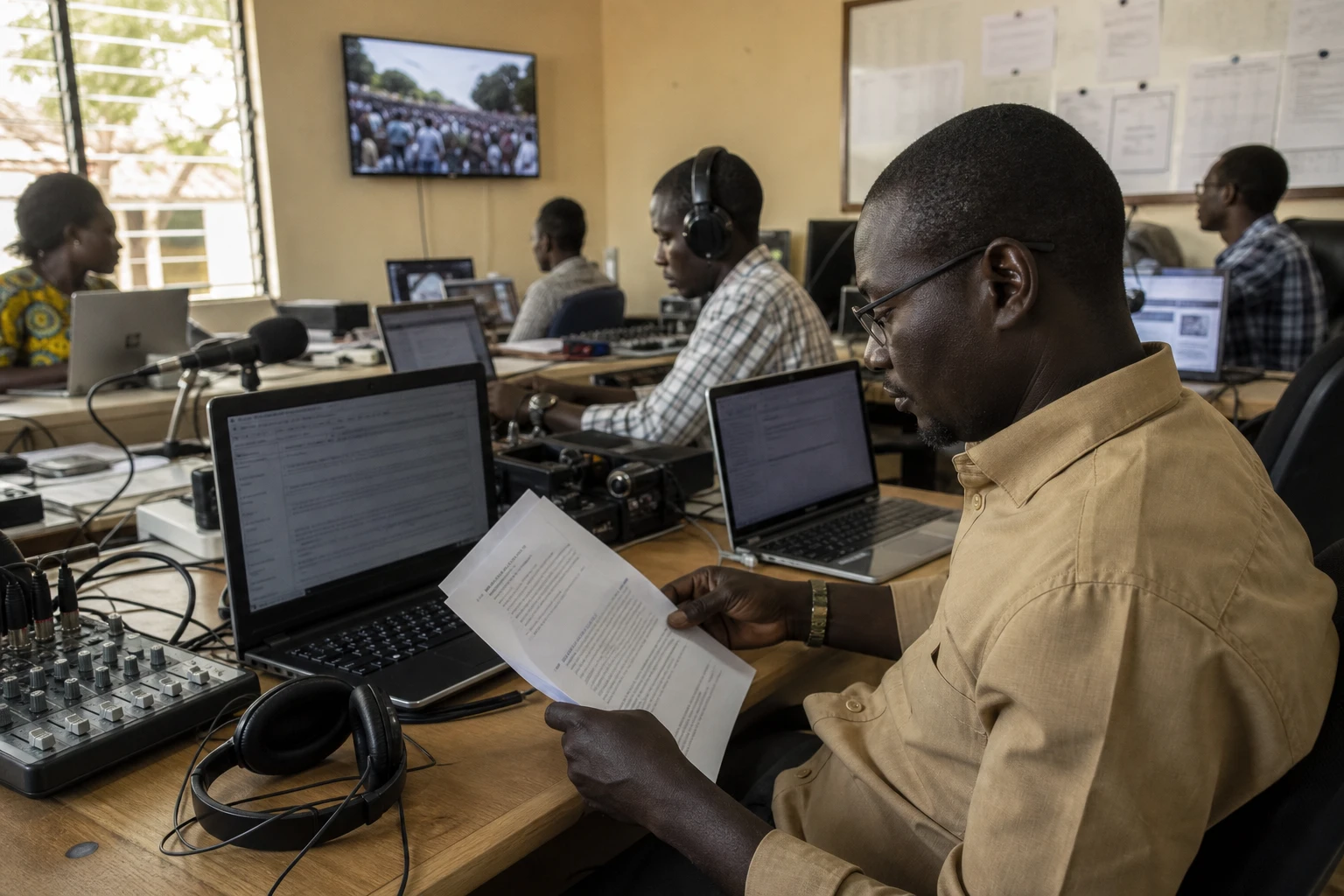
In Bissau, a constitutional referendum is never decided solely at the ballot box. It also shows who holds the political initiative in a country where the balance between the presidency, government and parliament remains fragile. This Sunday, 30 August 2026, Guinea-Bissau therefore went to the polls under close scrutiny, a few months before a general election is scheduled to return.
The National Electoral Commission gave an initial turnout estimate of more than 55%, after a day described as calm, with no major incidents. Polling stations opened at 7am and closed at 5pm. The regions of Bafatá, Gabú and Oio recorded the highest turnout, while some areas of Bissau saw more moderate participation.
This vote comes amid a tense political climate. Guinea-Bissau is governed by a transitional authority installed after the coup of 27 November 2025, which took place the day after a disputed presidential election. The authorities have since scheduled legislative and presidential elections for 6 December 2026, promising a return to constitutional order.
What the reform would really change
The proposal put to voters aims for a clear institutional shift. If adopted, the head of state would chair the Council of Ministers, appoint and dismiss the prime minister, and wield more concentrated executive power than at present. The text would also reduce the number of MPs from 102 to 65, and the number of constituencies from 29 to 12, in the name of a simpler, less costly structure.
For supporters of the reform, the argument is clear: Guinea-Bissau has endured years of repeated crises between the presidential palace, government headquarters and National Assembly. In a country often paralysed by institutional rivalries, a stronger executive is presented as a way to make decisions more quickly. For opponents, led by the PAIGC, the logic is reversed: the military transition lacks the legitimacy to rewrite the Constitution, and the change could further weaken parliamentary checks and balances.
The atmosphere surrounding the vote matters as much as the text itself. The electoral commission emphasised the security of the poll, the protection of voting materials and the absence of serious incidents. It also urged people to avoid any premature announcement, as the count and centralisation of results got under way. The first provisional results are expected within three to seven days, a timetable that leaves considerable scope for political interpretations.
Significance beyond Guinea-Bissau
Across West Africa, this referendum recalls a reality familiar to ECOWAS, the Economic Community of West African States: resolving an institutional crisis is about more than setting an election timetable. It also depends on the parties, the military, the electoral administration and inland regions accepting the rules of the game. The announced turnout of more than 55% shows genuine interest in several parts of the country, but resolves neither the question of legitimacy nor that of how powers will coexist in future.
For urban households, traders and Bissau’s informal economy, the issue is stability. In inland areas, which have often turned out in greater numbers, the question is also one of political representation and effective access to the state. If the results confirm a “yes” vote, Guinea-Bissau will enter a new phase of transition, with presidential and legislative elections scheduled for 6 December 2026. If rejection or contestation prevails, the country could prolong an already longstanding period of instability.
Beyond Guinea-Bissau, the vote echoes a wider tension in West Africa: how to restore civilian rule after a military rupture without turning the transition into mere institutional window-dressing. The next stage will now hinge on this question, in Bissau and in the regional capitals following the issue closely.