Algeria
 Egypt
 Libya
 Morocco
 Sudan
 Tunisia
 Benin
 Burkina Faso
 Cabo Verde
 Côte d'Ivoire
 Ghana
 Guinea
 Liberia
 Mali
 Mauritania
 Niger
 Nigeria
 Senegal
 Sierra Leone
 The Gambia
 Togo
 Cameroon
 Central African Republic
 Chad
 DR Congo
 Equatorial Guinea
 Gabon
 Republic of the Congo
 São Tomé and Príncipe
 Burundi
 Comoros
 Djibouti
 Eritrea
 Ethiopia
 Kenya
 Madagascar
 Malawi
 Mauritius
 Mozambique
 Rwanda
 Seychelles
 Somalia
 South Sudan
 Tanzania
 Uganda
 Angola
 Botswana
 Eswatini
 Lesotho
 Namibia
 South Africa
 Zambia
 Zimbabwe
As Bissau seeks support, Moscow makes its move
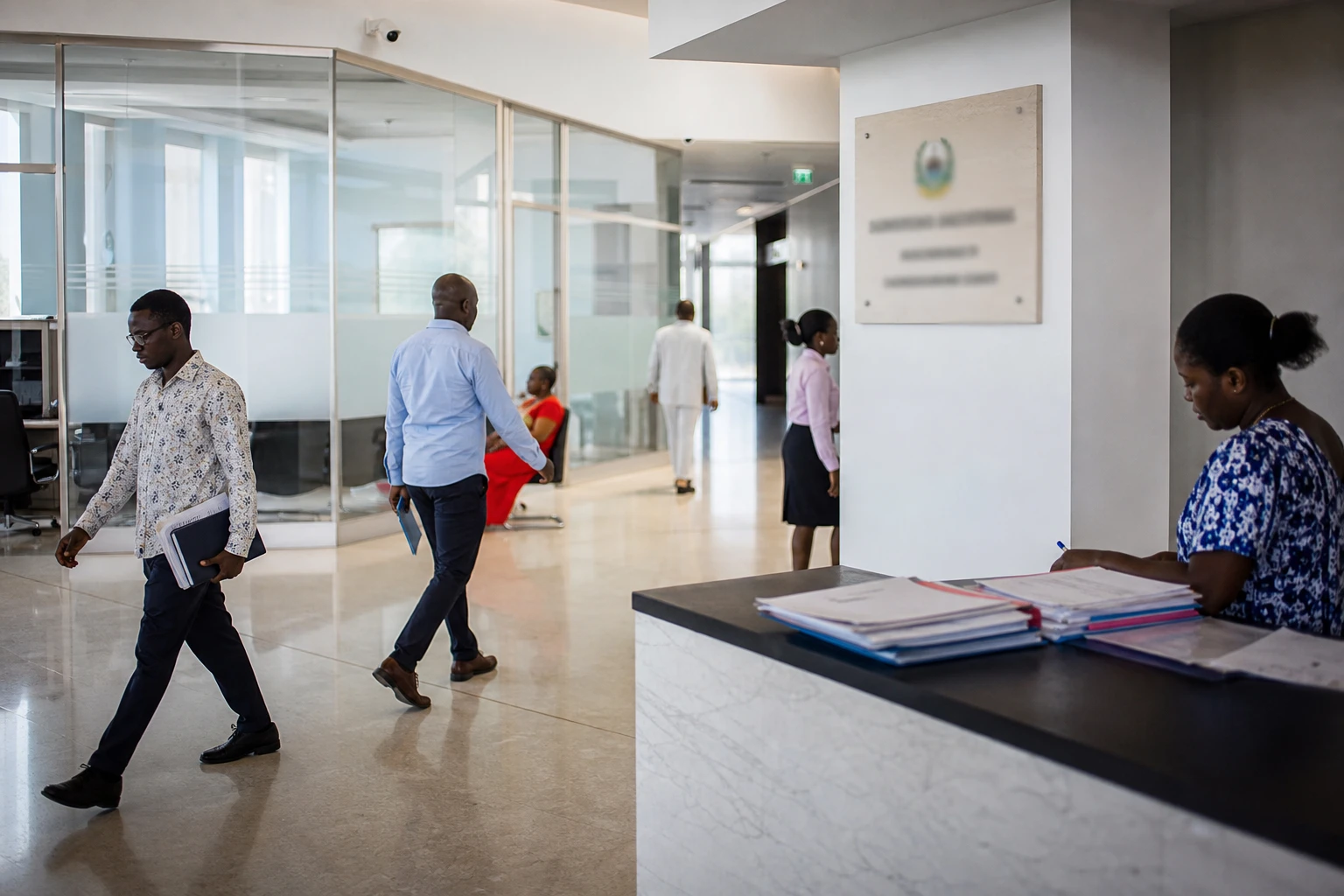
In Bissau, diplomacy is about more than flags and communiqués. For a young, politically exposed coastal country, every opening abroad matters. Guinea-Bissau is seeking partners able to offer markets, training and room for manoeuvre. Russia, meanwhile, sees another entry point in West Africa, as Moscow steps up its contacts across the continent.
This latest development also comes against a broader regional backdrop. ECOWAS remains the leading organisation in West Africa, while the African Union is closely monitoring Guinea-Bissau’s political transition and institutional stability. In May 2026, the AU Peace and Security Council held a meeting on the transition and security situation in Guinea-Bissau. The stakes are clear: preventing a domestic issue from becoming a fresh source of regional instability.
The facts: a meeting in Moscow, and highly political promises
On 16 July 2026, Sergei Lavrov received Fatumata Jau, Guinea-Bissau’s Minister for Foreign Affairs, International Cooperation and Communities, in Moscow. Talks covered bilateral cooperation, as well as the political situation in West Africa and relations between Guinea-Bissau, ECOWAS and the African Union. Several consistent accounts indicate that the minister was on a working visit and that discussions also covered preparations for elections scheduled for December 2026.
According to details made public after the meeting, the two sides discussed deepening ties in agriculture, food security, fisheries, the blue economy and higher education. Fatumata Jau also proposed holding a joint economic forum, while the Russian side stressed the prospect of a future business forum and preparations for Guinea-Bissau to take part in the Russia-Africa summit scheduled to be held in Moscow in October 2026.
Lavrov also said that Russia supported the normalisation of relations between Guinea-Bissau and ECOWAS, and wanted Guinea-Bissau, Mali, Niger and Burkina Faso to be fully involved in the African Union’s activities. This position reflects Russia’s current diplomatic approach: emphasising state sovereignty, criticising what it sees as selective Western interpretations, and engaging directly with African capitals.
Why these sectors matter to Guinea-Bissau
The sectors mentioned are no accident. Agriculture, fisheries and coastal activities remain central to Guinea-Bissau’s real economy, including for households far removed from formal markets. Focusing on food security and the blue economy means addressing incomes, fish stocks, local processing and jobs directly. Higher education, meanwhile, points to another urgent need: training more professionals without relying solely on outside help.
The economic dimension is all the more sensitive because Guinea-Bissau’s authorities have been seeking for several months to consolidate public revenue and organise trade. In 2025, ECOWAS welcomed the introduction of VAT in Guinea-Bissau, describing it as a means of mobilising revenue. In a country where the informal economy remains dominant, any partnership promising investment, agricultural markets or technical capacity could have a tangible impact. But such promises count only if they lead to visible projects beyond the capital.
This meeting must also be viewed through the lens of international power dynamics. Moscow is seeking diplomatic footholds in Africa at a time when its presence is contested on several fronts. Bissau, for its part, wants to broaden its contacts without being locked into a single camp. This diversification strategy is common among small coastal states in West Africa: it allows them to negotiate from a stronger position, provided competition between partners does not create a new form of dependence.
A development that extends beyond Bissau
The Guinea-Bissau issue extends beyond national borders because it intersects with three sensitive subjects across West Africa: political transition, regional security and the reshaping of external alliances. The AU is watching the situation closely, and ECOWAS remains attentive to the country’s institutional balance. In this context, every diplomatic move also sends a signal to neighbouring countries, African partners and the powers courting the region.
One central question remains: what concrete follow-up will there be? The next steps announced are preparations for a business forum, the Russia-Africa summit in Moscow in October 2026 and Guinea-Bissau’s general elections in December 2026, mentioned by several sources reporting remarks made in Moscow. That is where the real significance of the visit will be determined. If the announcements lead to projects, cooperation will gain substance. If they remain political signals, they will chiefly have confirmed one thing: Guinea-Bissau has once again become a place where regional calculations and global ambitions intersect.