Algeria
 Egypt
 Libya
 Morocco
 Sudan
 Tunisia
 Benin
 Burkina Faso
 Cabo Verde
 Côte d'Ivoire
 Ghana
 Guinea
 Liberia
 Mali
 Mauritania
 Niger
 Nigeria
 Senegal
 Sierra Leone
 The Gambia
 Togo
 Cameroon
 Central African Republic
 Chad
 DR Congo
 Equatorial Guinea
 Gabon
 Republic of the Congo
 São Tomé and Príncipe
 Burundi
 Comoros
 Djibouti
 Eritrea
 Ethiopia
 Kenya
 Madagascar
 Malawi
 Mauritius
 Mozambique
 Rwanda
 Seychelles
 Somalia
 South Sudan
 Tanzania
 Uganda
 Angola
 Botswana
 Eswatini
 Lesotho
 Namibia
 South Africa
 Zambia
 Zimbabwe
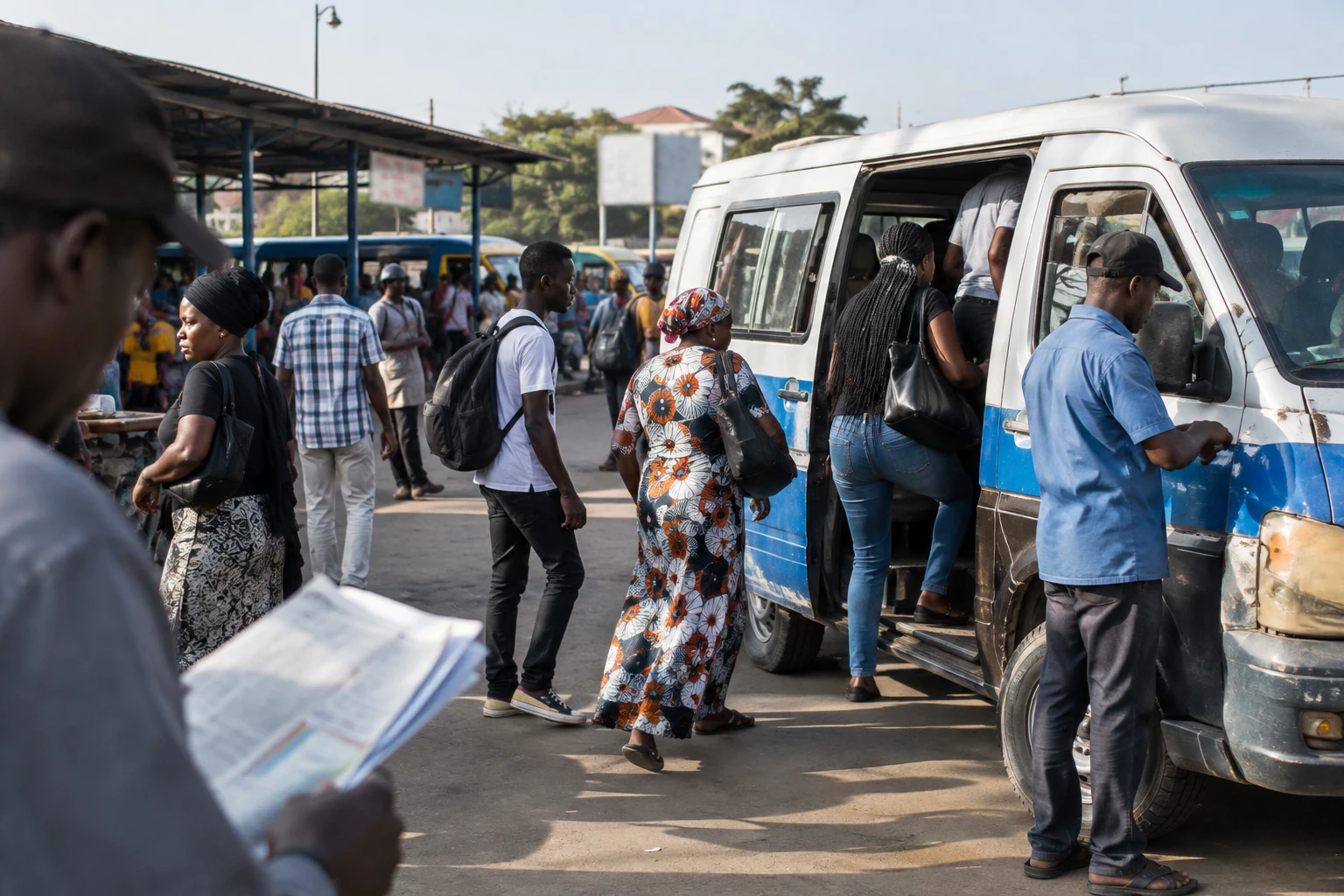
Two months before the election announced for 6 December, changes at the top of Guinea-Bissau’s administration have affected two key portfolios: the interior and fisheries. The replacements come as former president Umaro Sissoco Embaló remains outside the country and says he intends to stand in the election.
A transition under electoral pressure
Guinea-Bissau has been going through another period of institutional rupture since the military coup of November 2025. The military halted the electoral process as results from the presidential and legislative elections were expected. General Horta Inta-a, also known as Horta N’Tam, took charge of the transition.
The junta subsequently announced a return to civilian rule and set 6 December 2026 for the next presidential and legislative elections. This date is now at the heart of the balance of power. ECOWAS, the Economic Community of West African States, called for the restoration of constitutional order after the coup. The African Union also suspended Guinea-Bissau from its decision-making bodies.
In this context, control of the interior ministry is particularly sensitive: it is involved in territorial administration and public security, just weeks before an election. Fisheries, meanwhile, is one of the country’s important economic sectors and matters to coastal communities.
Two ministers replaced in Bissau
On Tuesday 6 October, the transition president dismissed General Mamasaliu Embaló, the interior minister, and Virgínia Maria da Cruz Godinho Pires Correia, the fisheries and maritime economy minister. Reports of the appointments were carried by several media outlets, including Ivorian outlet KOACI and Portuguese daily Observador.
António Suca Intchama was appointed interior minister. Fidelis Forbs takes over the fisheries portfolio. He previously served as an adviser to transition prime minister Ilídio Vieira Té. Mamasaliu Embaló is the younger brother of the former president, while Pires Correia is described as close to a figure from the former government. This political connection alone, however, is not enough to establish the reasons for the dismissals.
The timing gives these decisions particular significance. Just days earlier, the junta had prevented Umaro Sissoco Embaló from returning to Bissau, citing insufficient security conditions. The former head of state, who has lived abroad since the coup, had announced his intention to stand in the December election.
The military authorities say they want to preserve security and public order. Embaló, for his part, maintains that he is a candidate and is calling for his candidacy to be assessed impartially. The blocked return and the ministerial changes are separate events; their sequence nevertheless raises questions about the conditions under which the transition will unfold.
Portfolios with tangible effects
For voters, the stakes around the interior ministry go beyond the balance between political figures. The neutrality of the administration, freedom of assembly and the safety of travel will affect the ability to campaign and vote in different regions. In Bissau, national decisions are immediately visible. In rural areas and remote localities, their implementation also depends on territorial services and the resources available.
Fisheries, meanwhile, affects a wide range of people: government departments, companies, artisanal fishers and women traders who depend on landing and marketing networks. Stable rules and access to marine resources affect their incomes. Changes at the head of the ministry alone are not enough to conclude that the sector’s policies will soon change.
The appointment of António Suca Intchama also warrants careful attention. Older allegations concerning him have been reported in the material available, but they are not established here by a sufficiently robust independent source. They therefore cannot be presented as proven facts.
The replacements may be part of a reorganisation of the transition executive. They may also alter the balance within institutions that will play a role in the pre-election period. Without a detailed official explanation of the reasons for the dismissals, it would be premature to attribute a specific intention to them or to see them as proof of a co-ordinated plan against the former president.
The election, the next test of credibility
The transition authorities will have to show that the announced date can lead to a process open to the different political forces. Embaló’s candidacy, the rules for registering candidates, access to the media and security guarantees are among the issues to watch. The make-up of the teams responsible for internal administration will be particularly important in this context.
For ECOWAS and the African Union, the challenge is to encourage a return to constitutional order without reducing the transition to a succession of official announcements. Talks with the authorities in Bissau will also have to take account of the confidence of parties, civic organisations and voters. The presidential and legislative elections are scheduled for the same day, but holding them will not be enough to guarantee their credibility if the contest is considered unfair.
In the short term, three factors will help assess the trajectory: the reasons for and scope of the ministerial changes, the conditions imposed on candidacies and the concrete guarantees surrounding the campaign. For the people of Guinea-Bissau, the stakes go beyond rivalries between leaders: the question is whether the announced timetable will lead to civilian institutions elected in a competitive vote.