Algeria
 Egypt
 Libya
 Morocco
 Sudan
 Tunisia
 Benin
 Burkina Faso
 Cabo Verde
 Côte d'Ivoire
 Ghana
 Guinea
 Liberia
 Mali
 Mauritania
 Niger
 Nigeria
 Senegal
 Sierra Leone
 The Gambia
 Togo
 Cameroon
 Central African Republic
 Chad
 DR Congo
 Equatorial Guinea
 Gabon
 Republic of the Congo
 São Tomé and Príncipe
 Burundi
 Comoros
 Djibouti
 Eritrea
 Ethiopia
 Kenya
 Madagascar
 Malawi
 Mauritius
 Mozambique
 Rwanda
 Seychelles
 Somalia
 South Sudan
 Tanzania
 Uganda
 Angola
 Botswana
 Eswatini
 Lesotho
 Namibia
 South Africa
 Zambia
 Zimbabwe
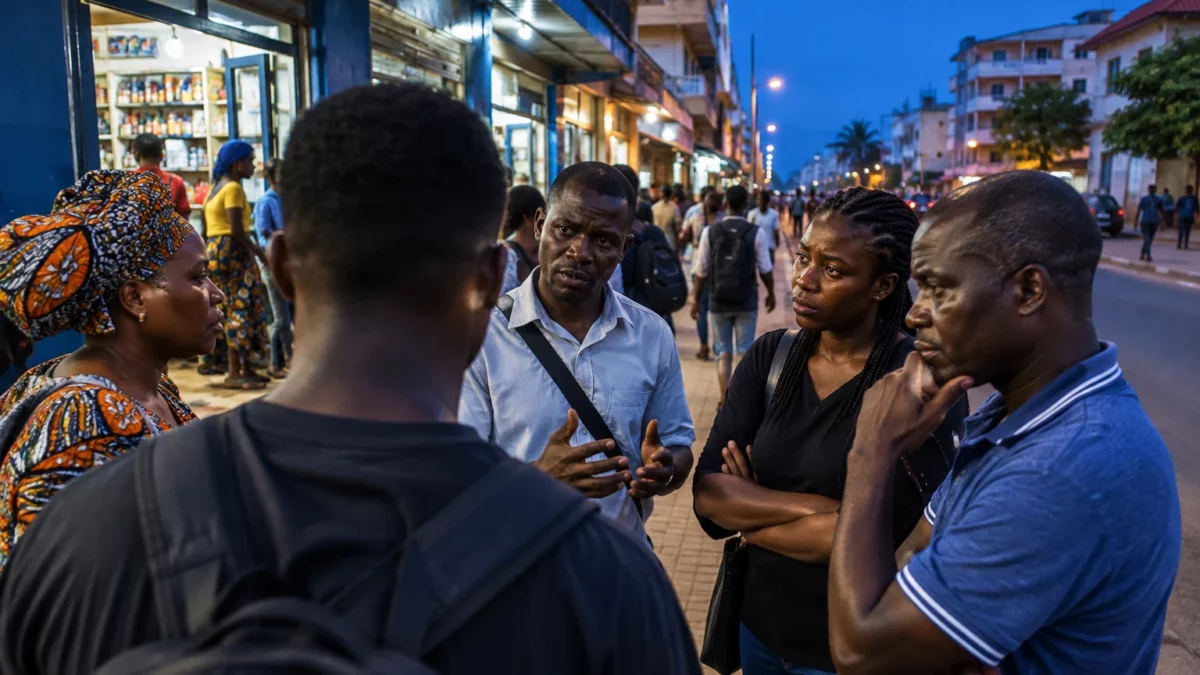
In Bissau, postponing the elections does more than move a date on the calendar. It pushes back the prospect of a return to civilian rule and leaves traders, voters and institutions without a near-term deadline for emerging from uncertainty.
A transition stretching on after the 2025 rupture
Guinea-Bissau is entering another phase in its long-running political instability. On 23 November 2025, Bissau-Guineans voted in presidential and legislative elections. Three days later, before provisional results were published, military personnel seized power and suspended the electoral process. The African Union and ECOWAS condemned the coup and called for the restoration of constitutional order.
ECOWAS, a political and economic cooperation organisation of West African states, subsequently called for a short transition and a return to civilian rule. The African Union also suspended Guinea-Bissau’s participation in its activities. These decisions place the transitional authorities under regional pressure, although their implementation depends on discussions with the military leaders.
The crisis is part of a national trajectory marked by coups and attempted putsches since independence in 1973, which Portugal recognised in 1974. It adds to tensions between institutions and political actors, as well as disagreements over electoral rules and the timetable. This context helps explain the process’s fragility, without justifying the suspension of the vote.
Poll set for 26 November 2028
General Horta N’Tam, head of the transition, announced on 26 November 2026 that presidential and legislative elections would be held on 26 November 2028. They had originally been scheduled for 6 December 2026. The new timetable therefore postpones the vote by nearly two years and extends military rule.
To explain his decision, Horta N’Tam cited a lack of the technical, material and financial resources needed to organise the elections. He also announced a national voter registration exercise and a revision of constituency boundaries. According to the authorities, the number of constituencies would fall from 29 to 12, while the National Assembly would have 65 MPs instead of 102.
These changes could alter the conditions for political representation and require substantial administrative work. But announcing them does not, on its own, answer the decisive questions: how will the new boundaries be drawn, who will oversee voter registration, and how will parties be able to verify the lists? Without a detailed timetable or independent guarantees, technical justifications are not enough to dispel doubts about the length of the transition.
The election date is also a political commitment. The November 2025 elections had already been interrupted before results were published. African Union and ECOWAS observer missions described the vote as orderly and peaceful, while noting a tense political climate and disagreements over the process. Resuming the electoral cycle therefore requires more than setting a new date: it requires results to be established and published within a recognised framework.
Uncertainty extends beyond institutions
In Bissau, residents voiced their bewilderment after the announcement. A trader quoted in reports of the event described a market operating at a slower pace and said he did not understand the reasons for the postponement. This account illustrates one concern, but cannot by itself measure the state of the national economy.
The effects of a prolonged transition are not the same for everyone. Military leaders control the state apparatus, while parties and candidates await the rules for the next vote. For traders and small businesses, political uncertainty can complicate decisions about supplies or investment. In regions far from the capital, voter registration or new constituency boundaries may also raise practical issues around access to registration and polling stations.
Depending on how it is implemented, reducing the number of MPs could change the relative weight of constituencies. That is why the method of revision will matter as much as the figure announced. Credible electoral reform requires public rules, political consultations and oversight mechanisms accessible to the actors concerned.
Regional credibility at stake
For ECOWAS and the African Union, the issue is both how to resolve the crisis and the precedent it sets. If a transition born of an interrupted election can delay a return to the polls by several years, confidence in regional commitments to defend constitutional order could weaken. The response of West African organisations will therefore be watched beyond Bissau.
The next step will be to see whether the authorities publish an operational timetable covering voter registration, constituency boundary revisions, adoption of electoral rules and guarantees for parties and observers. The reactions of ECOWAS, the African Union and Bissau-Guinean political actors will also need to be monitored. The November 2028 date has now been announced; its credibility will depend on measures taken well before the vote.
Information on the 2025 coup and regional responses is documented by the African Commission on Human and Peoples’ Rights and the African Union Peace and Security Council. The postponement and announced reforms were reported by Africanews, Anadolu and Associated Press.