Algeria
 Egypt
 Libya
 Morocco
 Sudan
 Tunisia
 Benin
 Burkina Faso
 Cabo Verde
 Côte d'Ivoire
 Ghana
 Guinea
 Liberia
 Mali
 Mauritania
 Niger
 Nigeria
 Senegal
 Sierra Leone
 The Gambia
 Togo
 Cameroon
 Central African Republic
 Chad
 DR Congo
 Equatorial Guinea
 Gabon
 Republic of the Congo
 São Tomé and Príncipe
 Burundi
 Comoros
 Djibouti
 Eritrea
 Ethiopia
 Kenya
 Madagascar
 Malawi
 Mauritius
 Mozambique
 Rwanda
 Seychelles
 Somalia
 South Sudan
 Tanzania
 Uganda
 Angola
 Botswana
 Eswatini
 Lesotho
 Namibia
 South Africa
 Zambia
 Zimbabwe
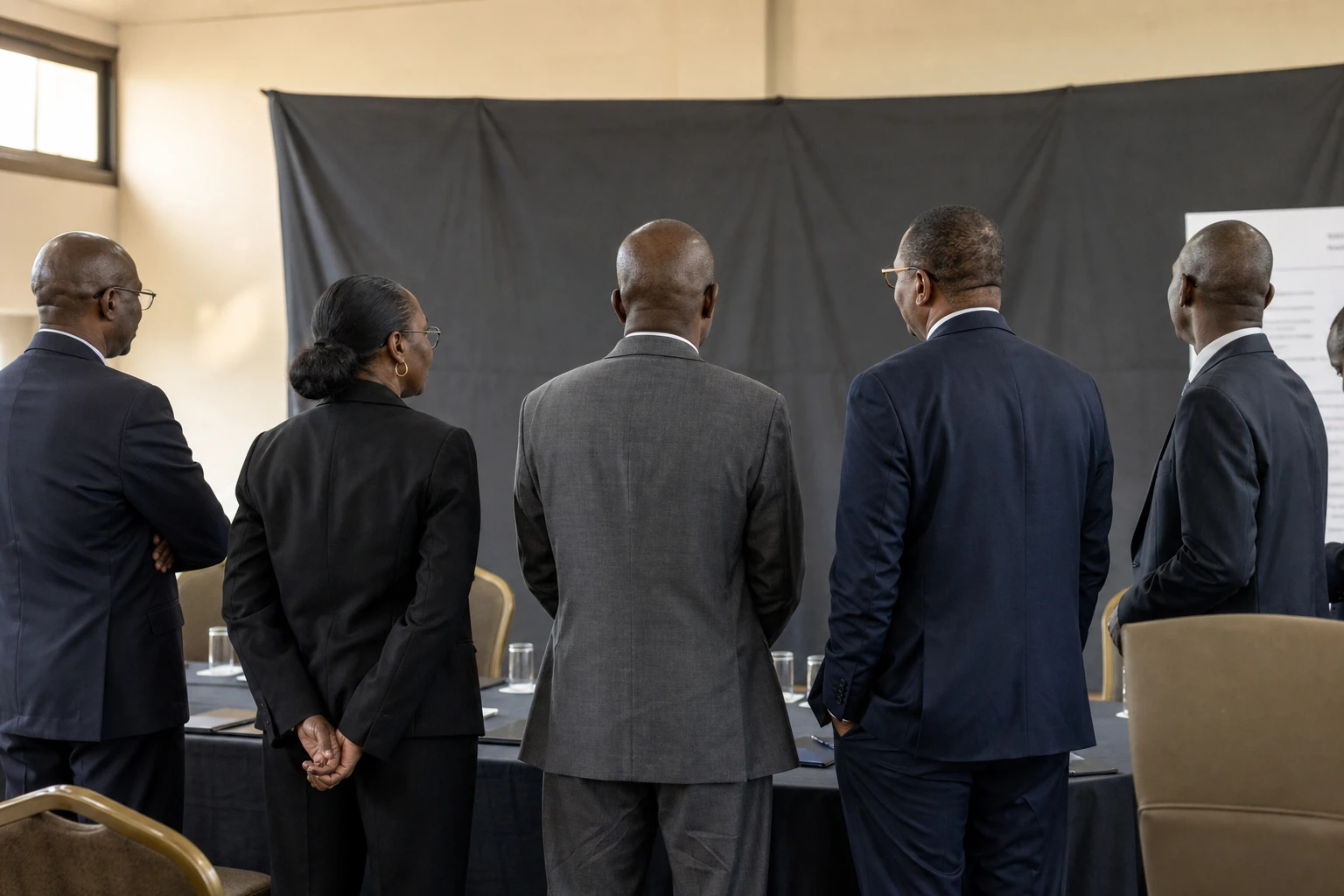
In Bissau, the electoral timetable is already running up against the question of the return of political figures sidelined by the military transition. Umaro Sissoco Embaló, the former president in exile, wanted to return on Sunday 4 October 2026 and seek the country’s highest office. The army has now placed an obstacle in his way that goes beyond the simple arrangements for a journey: it says security conditions are not in place.
Return blocked weeks before the vote
The High Military Command for the Restoration of National Security and Public Order announced on Thursday 1 October that Embaló’s return could not be guaranteed « for the time being ». In its statement, the institution cited national security, the preservation of public order and the prevention of unrest that could affect the country’s stability.
The former head of state had announced his return from his place of exile in Morocco. He had also said he intended to run in the presidential election scheduled for 6 December 2026. According to remarks reported by Agence France-Presse, he is calling for the examination of candidacies to be conducted impartially and independently.
The military decision is therefore not merely an administrative measure. At this stage, it deprives a former president and candidate of normal access to his country and to the electoral contest. The junta has not specified how long the restriction will last. The phrase « for the time being » nonetheless leaves open the possibility of a change, without setting out the conditions for one.
A transition born of an unresolved electoral crisis
Guinea-Bissau remains in a transition that began after the army seized power in November 2025. The military halted the electoral process while the presidential vote was being counted. Umaro Sissoco Embaló and his rival Fernando Dias each claimed victory, while the full results were never published.
Since then, the transitional authorities have promised a return to constitutional order. They have set 6 December 2026 for presidential and legislative elections. The timetable is intended to restore civilian institutions, but remains closely controlled by the military authorities.
In August 2026, a constitutional referendum approved changes that the authorities presented as necessary for institutional stability. The proposal includes stronger presidential powers and a reduction in the number of seats in Parliament. Opponents argue, by contrast, that these changes could further concentrate authority in the hands of the executive.
This debate matters in the current crisis. By blocking Embaló’s return, the army says it is acting to prevent tensions. Its opponents may see this as a way to control the contest even before candidacies are officially registered. Neither interpretation alone is enough to establish the authorities’ real intentions. The verifiable fact is that the transition retains control over the conditions for access to the election.
A former president who has no consensus behind him
Umaro Sissoco Embaló enters this period without unanimous support. His time in power, which began in 2020, was marked by institutional clashes with the opposition and a highly personalised presidency. Parliament was dissolved in December 2023 after violence in Bissau that the government described as an attempted coup. The opposition disputed that interpretation.
The armed forces themselves do not necessarily form a unified bloc around the former president. Analyses reported by the regional press point to disagreements within the military establishment and tensions that emerged after his return was announced. These accounts remain difficult to verify independently. They nonetheless help explain why an arrival in Bissau could become a test of loyalty for the various security units.
The issue also concerns civilians. In Bissau, a political mobilisation around Embaló’s return could quickly draw in supporters of the former government, his opponents and the forces responsible for maintaining order. In the regions, the stakes are different. Voters are above all waiting for a predictable process, the resumption of public services and a campaign that does not rekindle rivalries in the capital.
For businesses, electoral uncertainty can also delay investment decisions and complicate trade. Guinea-Bissau’s economy depends heavily on the cashew sector and regional trade links. Another political crisis could disrupt transport, public administration and export networks, including in areas far from Bissau.
ECOWAS faces a new test
Guinea-Bissau is a member of ECOWAS, the Economic Community of West African States. The regional organisation has previously monitored political crises in Guinea-Bissau, including after the 2019 presidential election, when a dispute over the results paralysed institutions.
The current situation is unfolding in a West African environment weakened by several military takeovers. ECOWAS must therefore defend the principle of a return to constitutional order without appearing to support any particular political camp. It will also have to assess in practical terms the guarantees offered to candidates, voters and civil society organisations.
The next flashpoint will be the registration of candidacies. The authorities will have to clarify whether the former president can run, under what conditions and according to which rules. They will also have to explain who verifies the eligibility criteria and what avenues of appeal remain available.
The 6 December election will be credible only if the people of Guinea-Bissau can know the rules, candidates and timetable in advance. The blocked return of Embaló already shows that the transition is not playing out at the ballot box alone. It is also about control of the political space, the relationship between the army and civilian institutions, and ECOWAS’s ability to secure verifiable guarantees.