Algeria
 Egypt
 Libya
 Morocco
 Sudan
 Tunisia
 Benin
 Burkina Faso
 Cabo Verde
 Ghana
 Guinea
 Guinea-Bissau
 Liberia
 Mali
 Mauritania
 Niger
 Nigeria
 Senegal
 Sierra Leone
 The Gambia
 Togo
 Cameroon
 Central African Republic
 Chad
 DR Congo
 Equatorial Guinea
 Gabon
 Republic of the Congo
 São Tomé and Príncipe
 Burundi
 Comoros
 Djibouti
 Eritrea
 Ethiopia
 Kenya
 Madagascar
 Malawi
 Mauritius
 Mozambique
 Rwanda
 Seychelles
 Somalia
 South Sudan
 Tanzania
 Uganda
 Angola
 Botswana
 Eswatini
 Lesotho
 Namibia
 South Africa
 Zambia
 Zimbabwe
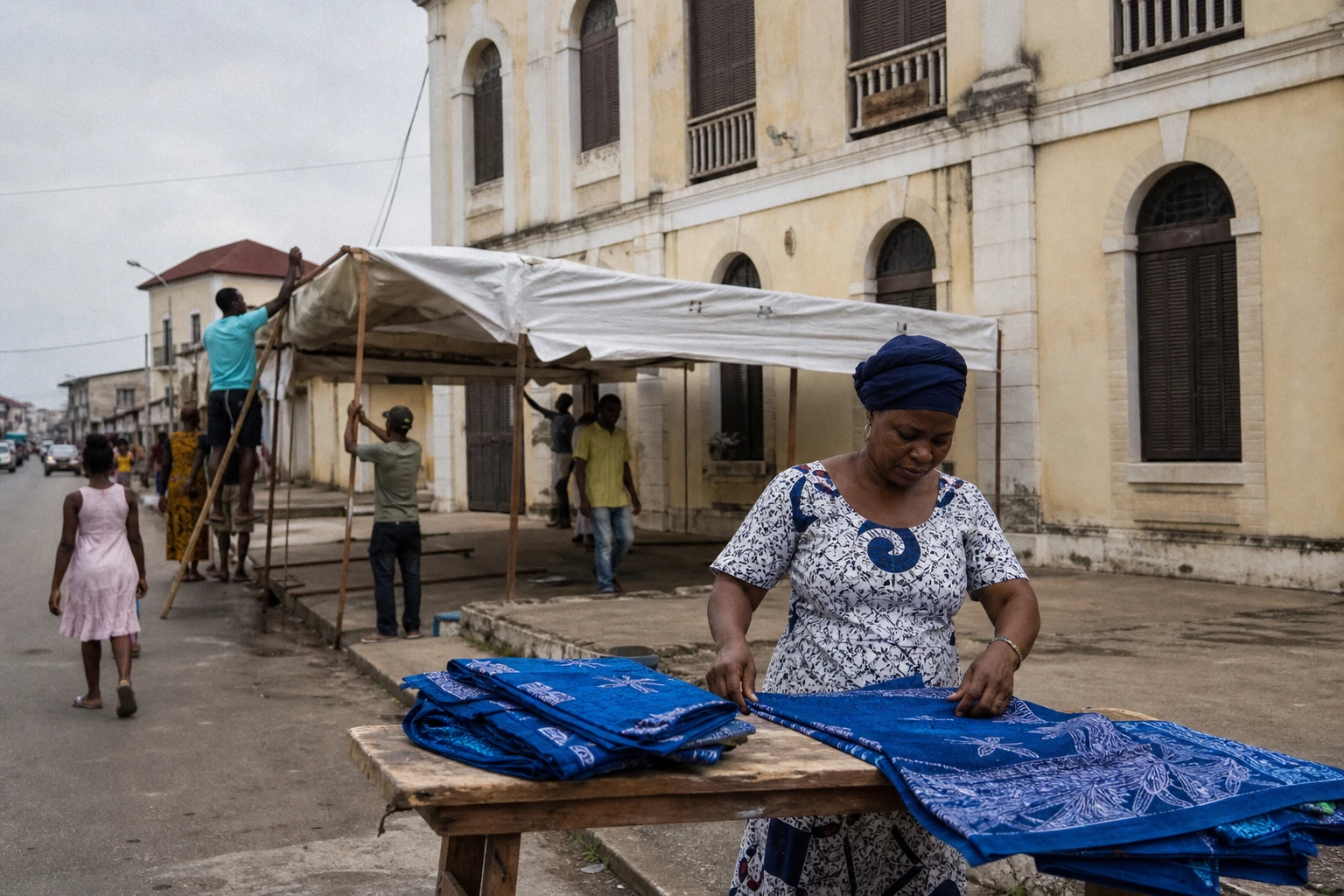
In Grand-Bassam, Abissa is prepared not only on a stage. The festival gradually transforms the streets, shops and workshops of the France district. For the Nzima Kôtôkô people, it marks the start of a new year. For the Ivorian city, it is also a major cultural, commercial and tourism event.
A festival rooted in Nzima history
Every year, Abissa brings together the seven major families that make up the Nzima people. Each has its own symbols, responsibilities and place in the social organisation. The N’Vavilé family is notably associated with the transmission of the Abissa dance. The other families also have attributes linked to nature, agricultural activities, metals or ritual objects.
The ceremony takes place mainly in Grand-Bassam, in the south-east of Côte d’Ivoire. The former capital, located on the coast, is listed as a UNESCO World Heritage Site for its historic district. The France district, around the royal palace, becomes the heart of the celebrations.
Abissa is not limited to dances and popular gatherings. It includes periods of purification, reconciliation, transmission and social criticism. The sacred drum, songs, royal processions and traditional costumes structure the different stages of the festival.
Heritage documents devoted to this tradition also highlight its links with Nzima communities established on both sides of the Côte d’Ivoire-Ghana border. The festival therefore has a cross-border cultural dimension, beyond its roots in Grand-Bassam.
Preparations take shape in the streets
As the 2026 edition approaches, the first installations are already signalling the celebration’s return. Structures are being set up near Abissa Square. Reception areas are being prepared. Traders are also increasing their stocks to meet expected demand.
The preparations involve a range of professions. Artisans make or adapt accessories. Fabric sellers prepare orders. Restaurant owners anticipate the arrival of visitors. Teams responsible for security, cleanliness, logistics and communications are also working alongside the organising committee.
Grand-Bassam benefits directly from this activity. Hotels, restaurants, transport operators and small businesses gain from the temporary rise in visitor numbers. The informal economy plays an important role in this momentum, allowing many traders and artisans to benefit from the festival days.
However, revenues vary by sector and location. Businesses near the ceremonies benefit more from passing visitors. Activities in more distant neighbourhoods depend more on festival-goers’ movements and the programme.
The pagne: identity and economic activity
Each edition showcases a pagne designed for the event. The fabric becomes a sign of recognition. It allows families and visitors to show their participation while giving particular visibility to Nzima symbols.
The design presented for a recent edition combined blue shades with the attributes of the seven families. This clothing design is therefore about more than fashion. It expresses collective memory and makes the components of Nzima society visible in public space.
Pagne sales benefit suppliers, retailers and dressmakers. They also feed a production chain that extends beyond Grand-Bassam. Fabrics are ordered, transported, cut and then turned into clothes, scarves or accessories.
This cultural economy remains tied to the festival calendar. Sellers often generate a significant share of their business over a short period. Abissa thus creates a seasonal market, as well as opportunities for local designers seeking to refresh textile patterns and uses.
A widening community effort
The 2025 edition mobilised volunteers across several committees. This organisation shows that the festival relies on collective effort. The tradition does not depend solely on royal authorities or cultural leaders. It also involves young people, women, traders, associations and residents.
Transmission is central. Some days are devoted to young people and queen mothers. These gatherings give younger generations a role in preserving stories, gestures and symbols. They also allow the festival to evolve without breaking with its foundations.
Côte d’Ivoire’s Ministry of Culture supports this effort. In 2025, it presented Abissa as an expression of cohesion, transmission and cultural renewal. The Ivorian authorities are also supporting a process to document the tradition in preparation for possible inclusion on UNESCO’s Intangible Cultural Heritage list.
Such an effort takes time. It requires gathering the communities’ memories, defining the practices concerned and ensuring their transmission. It must also preserve the Nzima people’s ability to decide for themselves how their heritage is presented.
From Grand-Bassam to the West African region
Abissa is part of Côte d’Ivoire’s policy of promoting cultural tourism. Grand-Bassam already has recognised architectural heritage. The festival adds a living dimension to that heritage, linking historic buildings with the practices, languages, families and ceremonies that shape the city.
This connection can boost the appeal of south-eastern Côte d’Ivoire. However, it must be accompanied by careful management of visitor flows, waste, traffic and prices. High visitor numbers produce lasting benefits only if residents genuinely share in the activity.
Abissa’s significance also extends beyond Côte d’Ivoire. The links between Ivorian and Ghanaian Nzima communities are a reminder that present-day borders do not always correspond to historical cultural areas. In a mobile West Africa, the festival shows how a local tradition can serve as a regional bridge.
For the 2026 edition, the announced calendar places the main celebrations around the end of October. The final programme will set out the different ritual and cultural days. Until then, preparations in Grand-Bassam already reveal the essentials: a festival built on memory, community and everyday economic activity.