Algeria
 Egypt
 Libya
 Morocco
 Sudan
 Tunisia
 Benin
 Burkina Faso
 Cabo Verde
 Côte d'Ivoire
 Ghana
 Guinea
 Guinea-Bissau
 Liberia
 Mali
 Mauritania
 Niger
 Nigeria
 Sierra Leone
 The Gambia
 Togo
 Cameroon
 Central African Republic
 Chad
 DR Congo
 Equatorial Guinea
 Gabon
 Republic of the Congo
 São Tomé and Príncipe
 Burundi
 Comoros
 Djibouti
 Eritrea
 Ethiopia
 Kenya
 Madagascar
 Malawi
 Mauritius
 Mozambique
 Rwanda
 Seychelles
 Somalia
 South Sudan
 Tanzania
 Uganda
 Angola
 Botswana
 Eswatini
 Lesotho
 Namibia
 South Africa
 Zambia
 Zimbabwe
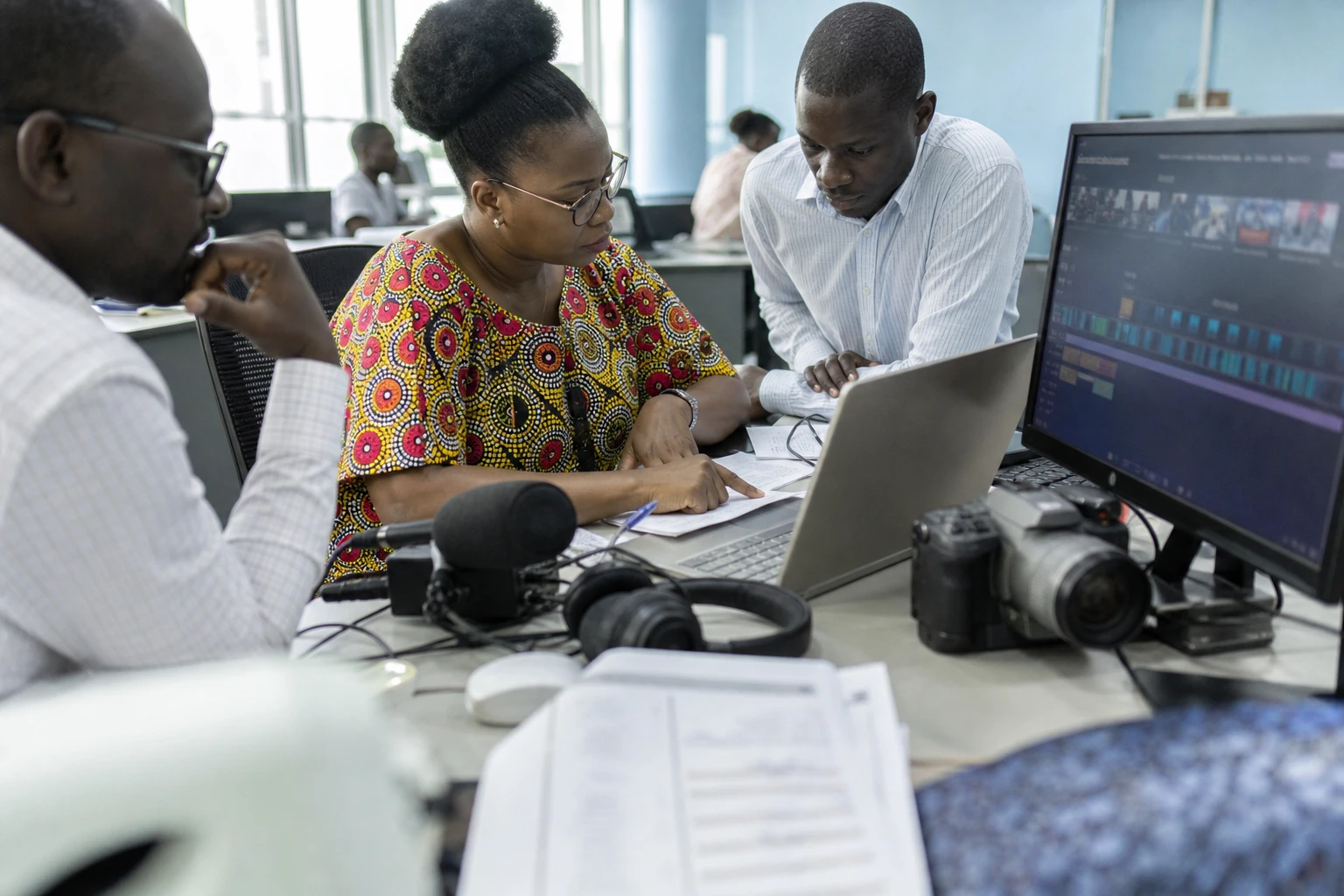
On an island rich in symbolism, a school investing in girls’ advancement
On Gorée, one of Senegal’s most memory-laden places, another story is unfolding behind the walls of a boarding school: that of young Senegalese women being prepared to take their place in preparatory classes, universities, the civil service, engineering and entrepreneurship. In this tiny place facing Dakar, the school is more than an educational institution. It is becoming a lever for social mobility and a marker of intellectual sovereignty.
Mariama Bâ School is part of a broader landscape. Senegal has made expanding girls’ access to education a pillar of its sectoral policy, with a national strategy aimed at narrowing the gap between girls and boys and strengthening inclusion. On paper, the ambition is clear. On the ground, schools of excellence play a decisive role, particularly when they select pupils through competitive examinations and offer them a stable environment in which to study.
A school born of political will, then rooted on Gorée
The school’s history dates back to 1978. According to a UNESCO mission devoted to Gorée Island, the institution was first established by President Léopold Sédar Senghor under the name Maison d’Éducation de l’Ordre national du Lion, to accommodate 25 selected girls. In 1979, it was transferred to Gorée and became a boarding school. Then, in 1984, its entrance examination was opened to the whole country. In 1985, the school was renamed Maison d’Éducation Mariama Bâ, in honour of the Senegalese author who has become a touchstone for several generations of female readers.
This choice is no accident. Senegal has long regarded public education and academic excellence as instruments of genuine equality. A boarding school for girls, located on a heritage island, makes that idea especially visible. The institution combines academic discipline, rigorous selection and protected study time. In an education system where regional inequalities remain pronounced, this model attracts pupils from well beyond Dakar.
The school’s presence on Gorée also gives it particular symbolic weight. The island has been a UNESCO World Heritage Site since 1978, as a major testimony to the history of the transatlantic slave trade. Today it attracts significant heritage tourism, but it also remains an inhabited, living place, shaped by the challenges of conservation, housing and land use.
What the school says about Senegal today
Mariama Bâ’s message goes beyond academic success alone. At a time when public policies seek to consolidate girls’ access to and retention in school, the institution shows that a promise of equality only becomes real when translated into facilities, support and opportunities. UNESCO notes that enrolment is rising in Senegal, particularly for girls, while the Ministry of National Education presented a sector analysis in 2025 highlighting progress as well as the social cost of learning deficits.
In practice, this type of boarding school changes the equation for several groups of pupils. For families in remote regions, it offers a route to the most demanding schools without relying entirely on the quality of local provision. For the pupils themselves, it creates an environment in which concentration, communal life and support foster academic work. For the state, finally, it serves as a showcase for an education policy seeking to produce visible and credible female leaders.
This visibility has particular significance in a West African region where the question of girls’ education remains central. Continental and regional institutions, from UNESCO to ECOWAS, have for several years stressed the need to narrow gender gaps and the importance of investing in women’s human capital. Senegal, which often presents itself as a country of institutional stability in West Africa, is thus showcasing a form of success that could inspire other education systems in the sub-region.
Gorée: the beauty of the site, and its fragility
Gorée’s location nevertheless exposes the school to specific vulnerabilities. For more than 20 years, UNESCO has documented marine erosion affecting the island’s coastline. In several reports, the organisation explicitly lists Mariama Bâ School among the threatened buildings, citing damage to fences, embankments and some structures. In 2023, a project involving “emergency measures” even provided for the rehabilitation of the school’s retaining walls and the renovation of some structures.
In other words, the issue is not solely educational. It is also a matter of heritage and the environment. As the coastline recedes, part of daily school life is put at risk. As infrastructure ages, study and boarding conditions, as well as safety, are at stake. The challenge therefore concerns teaching quality, the safeguarding of built heritage and the Senegalese state’s ability to protect an emblematic site without freezing it in the past.
On Gorée, the school also shares space with other activities: tourism, remembrance, housing, worship and conservation. This coexistence requires the authorities to constantly weigh visitor access against the preservation of the island’s integrity. UNESCO notes that the island is an exceptional testament to the history of the slave trade, but its reports also highlight the tension between heritage conservation and the practical management of an inhabited island.
A Senegalese showcase with an African reach
Gorée’s school matters beyond Senegal because it brings together several contemporary African debates. First, the education of girls as a strategic investment. Then, schools of excellence as a means of reducing regional inequalities. Finally, the preservation of a living historic site amid growing climate and urban pressures.
In West Africa, where education systems often face overcrowded classrooms, a shortage of boarding schools and difficulties with post-secondary guidance, Mariama Bâ acts as a laboratory. It shows that a girls’ school can be selective and demanding while also fostering empowerment, without lapsing into empty symbolic rhetoric. It also serves as a reminder that education policy should be judged not only by its texts, but by its ability to endure over time in a real place, with actual buildings, real pupils and sustained resources.
This model is therefore worth close attention. Its future will say much about how Senegal intends to combine academic excellence, equal opportunity and heritage protection. And across Africa, it will serve as a reminder of a frequently overlooked truth: future leaders are not born only in speeches, but in schools capable of educating them, protecting them and opening up new horizons.