Algeria
 Egypt
 Libya
 Morocco
 Sudan
 Tunisia
 Benin
 Burkina Faso
 Cabo Verde
 Côte d'Ivoire
 Ghana
 Guinea
 Guinea-Bissau
 Liberia
 Mali
 Mauritania
 Niger
 Nigeria
 Senegal
 Sierra Leone
 The Gambia
 Togo
 Cameroon
 Central African Republic
 Chad
 DR Congo
 Equatorial Guinea
 Gabon
 Republic of the Congo
 São Tomé and Príncipe
 Burundi
 Comoros
 Djibouti
 Eritrea
 Ethiopia
 Kenya
 Madagascar
 Malawi
 Mauritius
 Mozambique
 Rwanda
 Seychelles
 Somalia
 South Sudan
 Tanzania
 Uganda
 Angola
 Botswana
 Eswatini
 Lesotho
 Namibia
 Zambia
 Zimbabwe
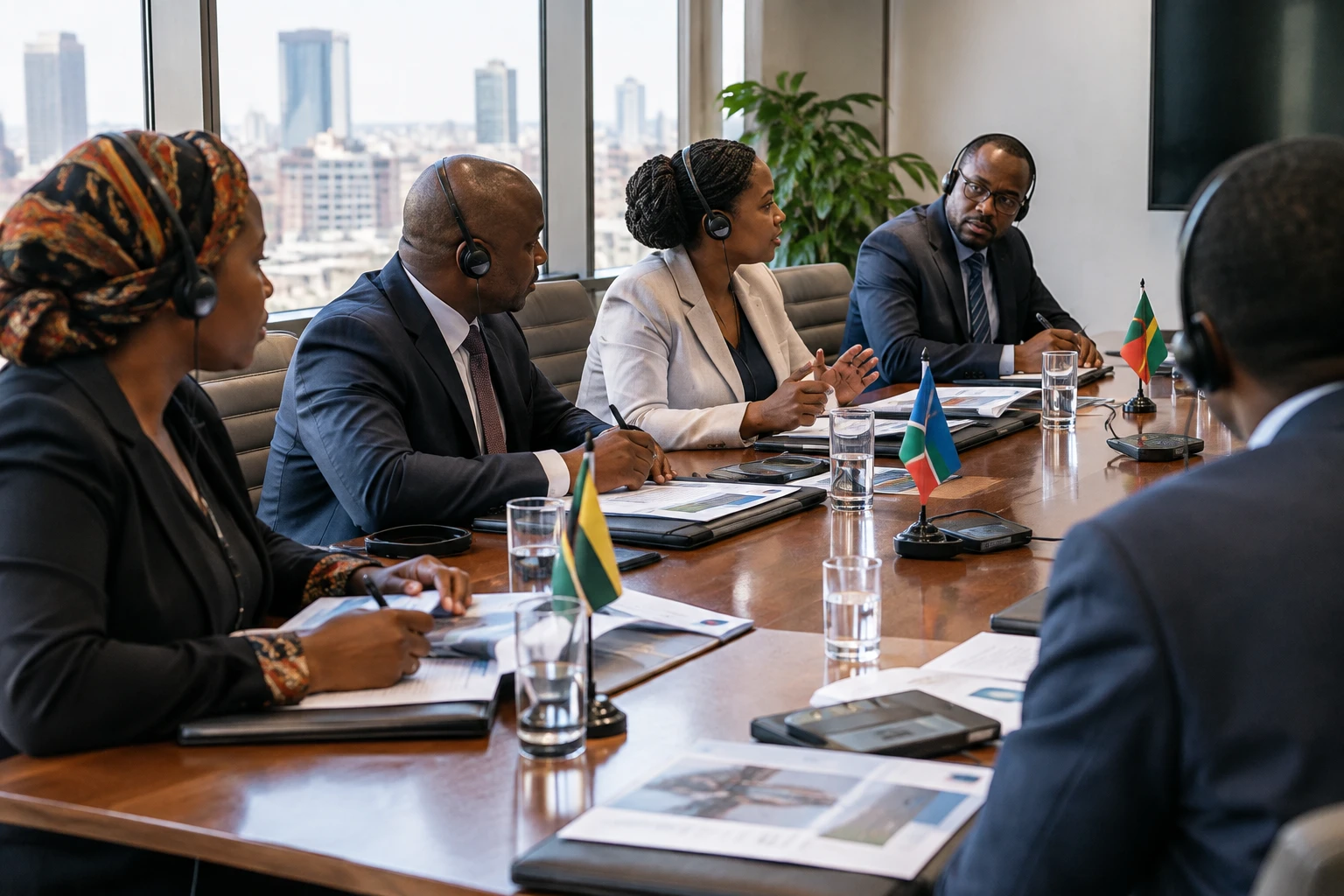
Can a mothballed nickel plant return to activity before the market has recovered? That is the question Gold Fields will have to answer in Western Australia. The South African mining group has struck a deal to take over the Kambalda concentrator and associated mining rights. The transaction would broaden its portfolio, but guarantees neither a swift restart nor nickel production.
A deal at the heart of the Kambalda mining basin
On 7 October 2026, BHP announced that it had signed agreements with Gold Fields to sell the Kambalda nickel concentrator, along with a package of tenements and rights related to mineralisation. Completion is expected in 2027, subject in particular to regulatory approvals. Neither group has disclosed the financial details of the deal.
Kambalda is in the Goldfields region of Western Australia. The site is part of a basin where processing infrastructure and relations with local communities matter as much as access to ore. A concentrator crushes and processes ore to produce concentrate for subsequent stages of the metallurgical chain.
The sale follows BHP’s decision, announced in 2024 amid oversupply in the global market, to temporarily suspend its nickel operations in Western Australia. The group said Gold Fields would consider long-term options for using the facility and offer jobs to people directly affected by the asset. Until completion, BHP remains responsible for its management.
The timing merits attention: BHP also plans to review the future of its other nickel assets in the region by February 2027; these remain suspended. The sale of Kambalda therefore does not mean that the entire complex is restarting. It transfers an asset and rights, while operational decisions and market conditions remain decisive.
For Gold Fields, diversification remains measured
Gold Fields is a South African company historically focused on gold. It is headquartered in Johannesburg, while Pretoria is South Africa’s capital. The group already operates in several countries and is seeking gradually to broaden its exposure to other metals. The acquisition of Kambalda would give it direct access to nickel-processing infrastructure, but at this stage it would not make nickel a pillar comparable to gold.
The group already knows the local sector. Its 2025 annual report shows a 30.2% stake in Lunnon Metals, an exploration company whose assets are also in the Kambalda region. This stake represents financial and partnership exposure; it should not be confused with direct ownership or operation of a nickel mine.
Gold Fields also produces copper. The company reported 22,863 tonnes of copper in 2025, mainly from Cerro Corona in Peru. Diversification is therefore already under way, but remains limited compared with the weight of its gold operations. The Kambalda deal could strengthen this shift if the concentrator secures viable feedstock and a commercial outlet.
For local teams and suppliers, the immediate stakes are more concrete than portfolio strategy: jobs, maintenance of the facilities and the prospect of sustainable activity. BHP says it aims to organise a responsible transition and continue dialogue with workers and communities. These commitments remain to be monitored during the period before the transfer and then as Gold Fields sets out its plans.
An industrial asset facing an uncertain market
Nickel is used in stainless steel and some batteries. The growth of electrification supports long-term demand prospects, but batteries do not all use the same chemistries or the same quantities of nickel. Demand growth therefore does not automatically translate into higher prices or the profitability of every facility.
In recent years, the arrival of new production capacity, particularly in Indonesia, has contributed to abundant supply and put pressure on prices. This backdrop weighed on BHP’s Australian operations. For Gold Fields, taking over an already-built plant could avoid some of the costs and delays associated with an entirely new project. But a facility does not create value by itself: it needs ore, supply contracts, sustainable energy and transport costs, and customers for the concentrate.
The group has not yet detailed its plans for Kambalda. It will be important to know whether it intends to process ore from its own rights, those of partners or other operators in the region. Capacity, the condition of the equipment and the required investment will also weigh on the decision. Without these details, the deal represents a strategic option, not a restart already secured.
A signal beyond South Africa’s borders
The deal illustrates how a South Africa-based group is deploying its capital and expertise beyond the continent. In itself, it is neither a mining project in southern Africa nor a SADC initiative, the Southern African Development Community. Its regional significance lies instead in the growing role of African companies in global mining supply chains and their ability to diversify their activities.
For South Africa, this international expansion comes within a mining sector that must also contend with its own challenges: asset renewal, costs, infrastructure and local mineral processing. The Kambalda case raises a question familiar to the continent’s mining economies: how can a facility and jobs be sustained when prices and demand fluctuate, without mistaking an acquisition for a guaranteed recovery?
The next step will be securing approvals and completing the deal, expected in 2027. Gold Fields’ subsequent announcements on the plant’s use, staffing needs and supply sources will make it possible to assess the deal’s real significance. Until then, Kambalda remains an industrial gamble subject to nickel market conditions.
Details of the deal are reported by BHP and corroborated by Australian mining outlet Australian Mining Review. Portfolio and production data come from Gold Fields’ documents for the 2025 financial year.