
 Algeria
 Egypt
 Libya
 Morocco
 Sudan
 Tunisia
 Benin
 Cabo Verde
 Côte d'Ivoire
 Ghana
 Guinea
 Guinea-Bissau
 Liberia
 Mali
 Mauritania
 Niger
 Nigeria
 Senegal
 Sierra Leone
 The Gambia
 Togo
 Cameroon
 Central African Republic
 Chad
 DR Congo
 Equatorial Guinea
 Gabon
 Republic of the Congo
 São Tomé and Príncipe
 Burundi
 Comoros
 Djibouti
 Eritrea
 Ethiopia
 Kenya
 Madagascar
 Malawi
 Mauritius
 Mozambique
 Rwanda
 Seychelles
 Somalia
 South Sudan
 Tanzania
 Uganda
 Angola
 Botswana
 Eswatini
 Lesotho
 Namibia
 South Africa
 Zambia
 Zimbabwe
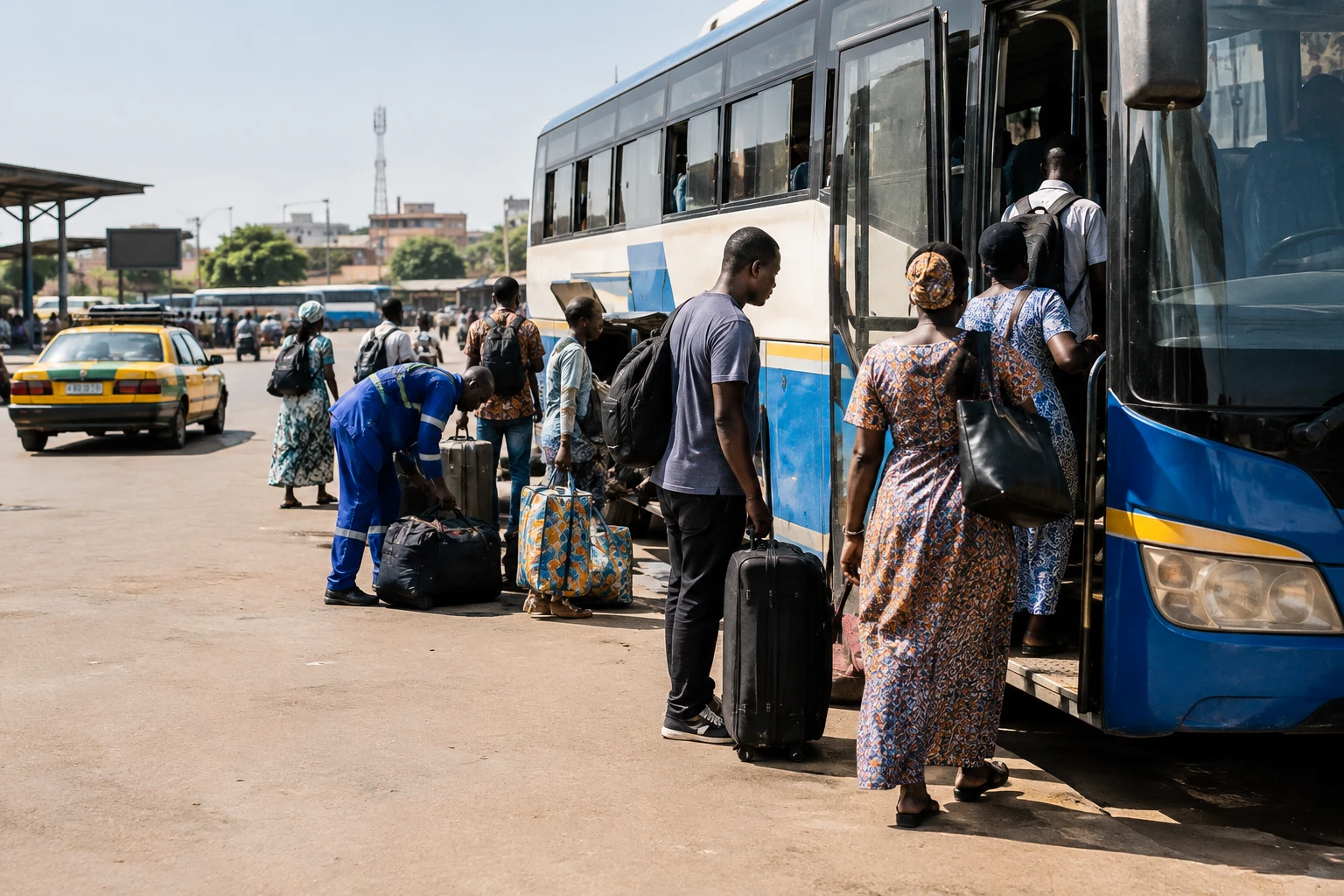
For people in Burkina Faso, Mali and Niger, regional cooperation is measured less by handshakes than by its tangible effects: safe travel, uninterrupted trade and protection for communities. Assimi Goïta’s visit to the two neighbouring countries puts these expectations at the heart of relations between members of the Confederation of Sahel States (AES).
A day of consultations between Niamey and Ouagadougou
General Assimi Goïta, Mali’s Transition president, travelled to Niger and then Burkina Faso on Thursday 5 November 2026. In Niamey, he met General Abdourahamane Tiani. In Ouagadougou, Captain Ibrahim Traoré received him. Available accounts describe the visits as working and friendship visits devoted to bilateral relations and cooperation within the AES.
The joint communiqué issued in Ouagadougou confirms that the Malian and Burkinabè presidents discussed the fight against terrorism, as well as several bilateral, confederal and regional issues. They asked their foreign ministries to prepare the 11th session of the Burkina Faso–Mali Joint Commission for Cooperation. No date has been given for the meeting.
The official Burkinabè document, however, details neither new military resources nor an operational timetable or monitoring mechanism. It therefore does not allow the conclusion that an operational decision was taken. Information about the Niger leg also refers to cooperation discussions, without publishing specific measures. The tour’s immediate significance thus remains diplomatic, pending any concrete announcements.
The AES seeks to turn closer ties into mechanisms
Burkina Faso, Mali and Niger began their rapprochement with the Liptako-Gourma Charter, signed in September 2023. In July 2024, they announced the creation of a confederation. The AES is both a shared political framework and an attempt to strengthen coordination between three states facing cross-border security challenges.
This development is part of a broader regional realignment. The three countries have left the Economic Community of West African States (ECOWAS), a West African regional organisation, and have signalled their intention to set their own priorities. But declarations of sovereignty alone cannot replace the institutions, intelligence-sharing, channels for redress or services that people need.
The visit also comes at a time when the AES is seeking to give its confederal structure greater substance. Joint initiatives have been announced in several sectors. To assess their effectiveness, it will be necessary to distinguish projects that have actually been implemented from announced policy objectives. The Ouagadougou meeting adds a diplomatic engagement to this process, but does not by itself establish its results.
Security is also judged from the regions
Cooperation against armed groups directly affects residents of border areas, transport operators, traders and public services. Better coordination could, in principle, facilitate exchanges between security forces and make responses to threats that cross borders more coherent. But at the end of the visit, the leaders did not make public the arrangements that would allow any such improvement to be measured.
The effects of a security strategy are not the same everywhere. Ouagadougou, the capital where the meeting took place, is home to national institutions. In regions far from decision-making centres, day-to-day priorities also include access to markets, schools, healthcare and public services. For businesses, road security matters as much as summit announcements: it determines the movement of goods and travel between towns and rural areas.
The communiqué also mentions the reception in Mali of Burkinabè nationals turned back from Guinea, which the president of Burkina Faso welcomed. This passage is a reminder that cooperation between AES countries is not limited to military issues. The movement of people and their treatment at borders are also part of regional relations. The communiqué does not, however, give the number of people concerned or the circumstances of their return.
Commitments to be assessed in the coming months
The next identifiable step in the communiqué is the Burkina Faso–Mali Joint Commission meeting in Ouagadougou, for which a timetable has yet to be set. The Malian president also invited Ibrahim Traoré to make an official visit to Mali. The Burkinabè head of state accepted, but no date was announced. These engagements could extend the dialogue, but their value will depend on the decisions made public and their implementation.
Across West Africa, the challenge is to reconcile distinct political paths with problems that cross borders. The AES is promoting a common response based on its own institutions. ECOWAS, meanwhile, remains an important regional framework for the other countries in the area. Relations between these groupings, and the possibility of maintaining practical forms of cooperation, will affect the movement of people and goods as well as the management of cross-border issues.
The 5 November tour therefore confirms the three capitals’ determination to maintain close consultations. It does not yet provide public evidence of a change on the ground. The next indicator will be not the number of meetings but the publication of verifiable measures, their implementation in the regions and their effects on people across the Sahel.



