Algeria
 Egypt
 Libya
 Morocco
 Sudan
 Benin
 Burkina Faso
 Cabo Verde
 Côte d'Ivoire
 Ghana
 Guinea
 Guinea-Bissau
 Liberia
 Mali
 Mauritania
 Niger
 Nigeria
 Senegal
 Sierra Leone
 The Gambia
 Togo
 Cameroon
 Central African Republic
 Chad
 DR Congo
 Equatorial Guinea
 Gabon
 Republic of the Congo
 São Tomé and Príncipe
 Burundi
 Comoros
 Djibouti
 Eritrea
 Ethiopia
 Kenya
 Madagascar
 Malawi
 Mauritius
 Mozambique
 Rwanda
 Seychelles
 Somalia
 South Sudan
 Tanzania
 Uganda
 Angola
 Botswana
 Eswatini
 Lesotho
 Namibia
 South Africa
 Zambia
 Zimbabwe
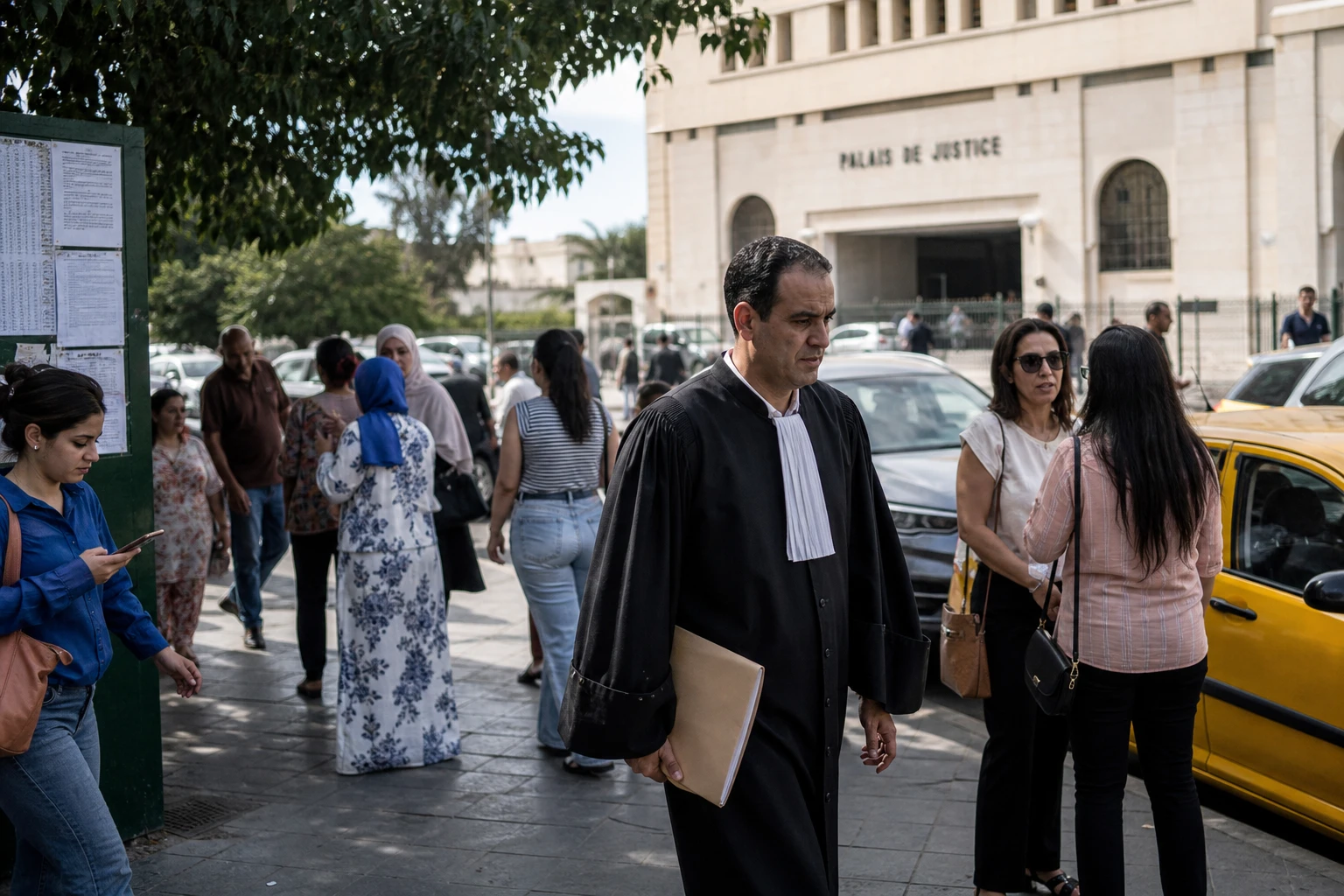
Another sign of Tunisia’s political tensions
In Tunisia, the issue is no longer limited to the judicial fate of Rached Ghannouchi. It also concerns what happens in practice to the rights of political detainees, access to family visits and the ability of institutions to retain a minimum level of public trust.
In Tunis, the case has returned to the forefront in an already charged climate. Since the institutional shift of 25 July 2021, power has been concentrated around President Kaïs Saïed, while several Tunisian and international organisations have described a decline in civil liberties. In this climate, every incident in prison takes on significance far beyond the confines of the prison system.
On Thursday 23 July 2026, lawyers for the former Speaker of Parliament and Ennahdha leader said his health was « critical ». They say he suffered a medical episode and what they described as severe exhaustion after being denied visits from his family. According to information relayed by the defence, the 85-year-old is said to have lost consciousness amid intense heat. For now, these details are attributed to the defence and accounts from people close to him, with no independent confirmation of the medical facts.
Rached Ghannouchi has been detained since 2023. In 2026, the Tunisian judiciary handed him heavier sentences in several separate cases. In April, a Tunis court sentenced him and other Ennahdha officials in the case known as the « conspiracy » against state security. In June, another ruling sentenced him to life in prison, with an additional 30-year sentence, in the « secret security apparatus » case. APA also reported in February that he had been sentenced on appeal to 20 years in another part of the same case.
What the case reveals about the Tunisian state
The issue is not just Ghannouchi himself. It is how Tunisia now treats opposition figures, in a system where political trials, prolonged detention and restrictions on access to prisoners are fuelling dissent. In January 2026, the Tunisian Human Rights League had already denounced a Justice Ministry decision requiring prior authorisation for certain prison visits. The NGO saw the measure as a further obstacle to civic oversight of prisons.
Ghannouchi’s defence now says the authorities have refused all visits, whether by lawyers or family members. The General Committee for Prisons and Rehabilitation, for its part, recently denied other rumours circulating on social media about incidents in prisons, noting that the facilities have security and prevention measures in place. The episode chiefly highlights a battle over competing accounts: families and lawyers are demanding transparency, while the prison administration invokes discipline and issues denials.
For the Tunisian authorities, these cases reflect a tough judicial approach to what they present as threats to the state. For opponents, they instead represent the political use of criminal law. Caught between the two, the public sees a more closed public sphere, fewer opportunities for dissent and a national debate increasingly being played out in courtrooms.
The regional context also matters. Tunisia is part of the Maghreb and the Arab Maghreb Union, but it is also closely watched by African and Arab actors following the evolution of its checks and balances. The country was long presented as the political exception born of the 2011 uprisings. Today, its trajectory is more an indicator of the fragility of the transition: when procedural safeguards erode, the credibility of the entire institutional framework is weakened, including for investors, trade unions, judges and journalists.
A Tunisian case, but a continental warning
The Ghannouchi case resonates far beyond the capital, Tunis. It raises questions about the real place of opposition groups when power is being recentralised, an issue found elsewhere in North Africa and, more broadly, in several political transitions across the continent. It is also a reminder that an elderly or sick detainee, or one prevented from seeing loved ones, can quickly become a test of the rule of law as a whole.
What happens next will depend on three very practical issues: the detainee’s exact state of health, whether his lawyers and family can gain effective access to him, and how the Tunisian judiciary handles the appeals still pending in these multiple cases. As long as these matters remain opaque, the debate over Rached Ghannouchi’s detention will continue to be seen, in Tunis and beyond, as a measure of the relationship between executive power, the judiciary and civil liberties.