Algeria
 Egypt
 Libya
 Morocco
 Sudan
 Tunisia
 Benin
 Burkina Faso
 Cabo Verde
 Côte d'Ivoire
 Guinea
 Guinea-Bissau
 Liberia
 Mali
 Mauritania
 Niger
 Nigeria
 Senegal
 Sierra Leone
 The Gambia
 Togo
 Cameroon
 Central African Republic
 Chad
 DR Congo
 Equatorial Guinea
 Gabon
 Republic of the Congo
 São Tomé and Príncipe
 Burundi
 Comoros
 Djibouti
 Eritrea
 Ethiopia
 Kenya
 Madagascar
 Malawi
 Mauritius
 Mozambique
 Rwanda
 Seychelles
 Somalia
 South Sudan
 Tanzania
 Uganda
 Angola
 Botswana
 Eswatini
 Lesotho
 Namibia
 South Africa
 Zambia
 Zimbabwe
A long-promised subsurface now put to the test
In Ghana, the next stage of oil exploration is not taking place at sea, but inland in the north. At Chegu, in the Mion District, the state-owned company is preparing its first onshore well in the Volta Basin, a project that will put decades of geological studies and seismic surveys to the test once and for all.
The symbolism is strong for Accra. Since the discovery of Jubilee in 2007, Ghana’s oil economy has relied mainly on offshore blocks in the Gulf of Guinea. But that foundation is weakening. The Petroleum Commission says national production peaked at about 195,700 barrels per day in 2019 before entering a period of decline.
The new bet is therefore on the Volta Basin, a vast formation covering nearly 40% of Ghana’s territory. It spans several regions and, according to the authorities, holds potential that remains largely untested. The planned drilling at Chegu will show whether that potential can become a commercial resource or remain an exploration prospect.
What GNPC and its technical teams are preparing
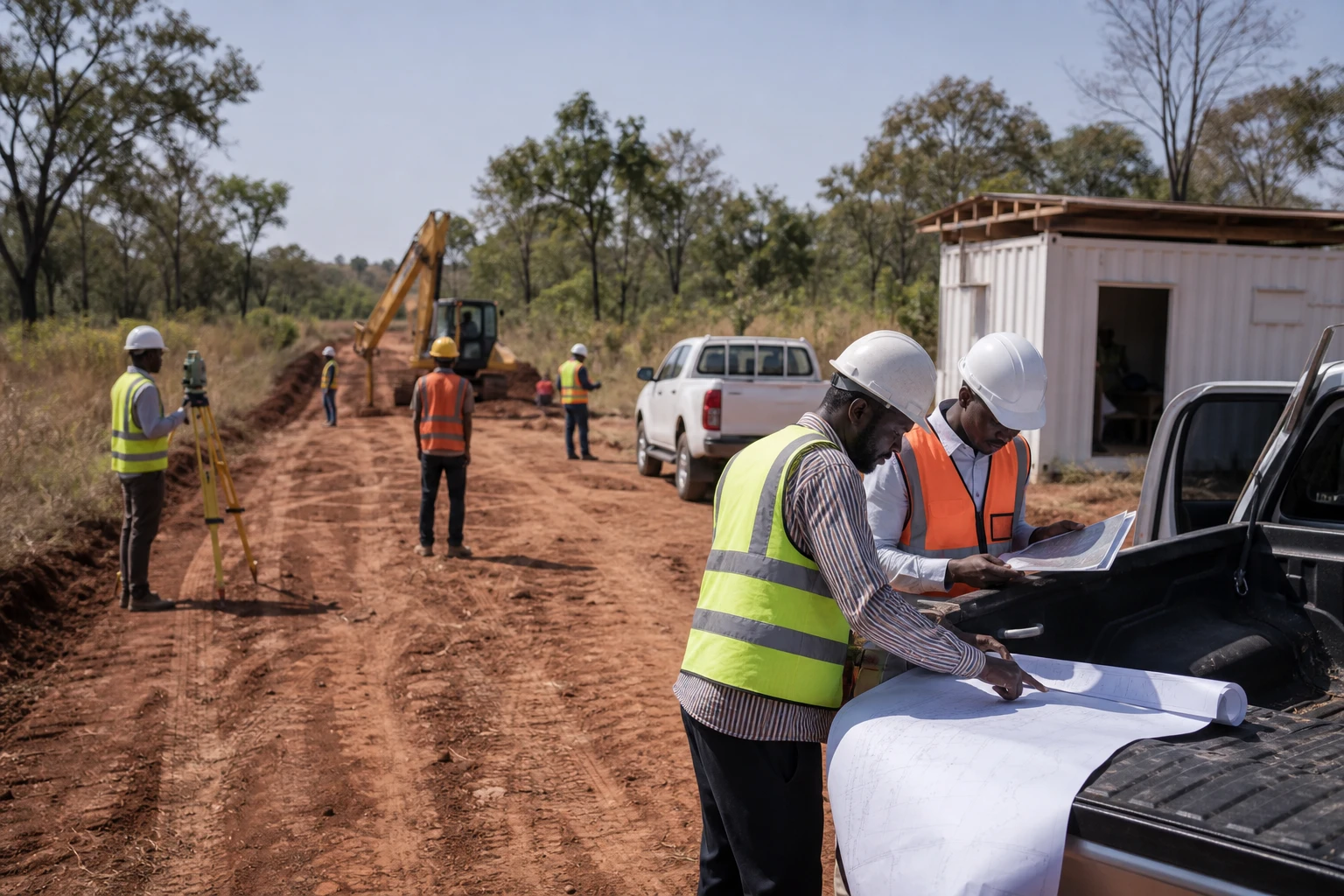
GNPC, the national oil company, and its exploration subsidiary GNPC Explorco have visited the site to assess the terrain and begin preparatory work. The announced sequence is clear: construction of a 13.5-kilometre access road, preparation of a drilling pad, installation of a base camp, and then earthworks ahead of the TUA-1X well.
Company officials say they intend to start work on the road in the coming weeks. The sector regulator is a little more cautious, placing the first drilling between the fourth quarter of 2026 and the first quarter of 2027. This difference in timing does not point to a fundamental contradiction; rather, it shows that an oil project often moves at several speeds, between political announcements, technical preparation and regulatory approval.
The Volta Basin is not uncharted territory. The Petroleum Commission notes that exploration in Ghana began as early as 1896, and that the Premuase-1 well, drilled in 1977, remains the only deep well drilled in this area, without commercial success. Since then, GNPC has accumulated seismic and geological data. A regulator’s report also cites about 6,025 kilometres of 2D seismic data acquired and processed for the project, as well as successive phases of surveys across the basin.
Why northern Ghana is becoming strategic
The choice of the north is no mere detail. The stakes go beyond the subsurface. The authorities are seeking to reduce Ghana’s dependence on its mature coastal fields, as production declines and new fields take time to offset that fall. The Petroleum Commission explicitly links the decline to the absence of new producing fields and a slowdown in exploration drilling over several years.
In this context, the onshore project is also an industrial test. Drilling on land has different costs, requires different skills and can generate more direct benefits for the areas it crosses. Roads, earthworks, temporary jobs, service contracts and local logistics have a greater impact on the regional economy than in an offshore campaign far from urban centres. This is a key consideration for the north, which is often less connected to the country’s major energy hubs. This view is consistent with the government’s stated strategy of reviving upstream oil investment while increasing the value created locally.
President John Dramani Mahama himself backed the idea of a first onshore well before the end of 2026, during a public address in June. This position gives the project a clear political dimension. It places the Volta Basin on the economic roadmap for the new term, at a time when the government wants to reassure investors and operators about the stability of Ghana’s framework.
The project also sits within a clearly defined institutional framework. Ghana’s Petroleum (Exploration and Production) Act sets the rules for the sector, while the Petroleum Commission acts as regulator and authority responsible for permits. This architecture matters because it determines the speed of approvals, the safety of operations and the management of relations with local communities and traditional authorities.
What this well could change, and what it will not solve
GNPC estimates that the Volta Basin’s prospective resources exceed 11 billion barrels of oil equivalent. This is an estimate of potential, not a proven reserve, and should therefore be treated with caution. The first well will not tell the whole story, but it will finally provide a concrete measure of the subsurface. If successful, it could open up a new onshore energy frontier for the country. If not, Ghana will at least have reduced the uncertainty surrounding the area for decades.
The financial stakes are significant. A Ghanaian think tank, the Africa Centre for Energy Policy, has already estimated that GNPC has committed more than $120 million to the basin over time. That figure explains the political pressure to see the project through. It also shows why the state-owned company is seeking to turn lengthy and costly studies into a visible result.
For residents of Mion and neighbouring areas, the question is twofold. On the one hand, the project promises new activity in a part of the country often left out of major energy investments. On the other, it brings construction-related disruption, a need for local support and the requirement for environmental vigilance. The Petroleum Commission says it wants to increase local value added and links with the national economy. That promise must still be delivered on the ground, through contracts, safety and services.
A Ghanaian project with West African significance
The project extends beyond Ghana’s borders. Across West Africa, several producer states are seeking to offset the maturity of their longstanding fields by exploring new areas, while attracting capital in a more selective energy environment. Ghana’s case illustrates this transition: maintaining upstream revenues, securing domestic supply and preventing the decline of offshore fields from weighing too quickly on public revenue.
The next milestones to watch are now very concrete: opening the access road, mobilising heavy equipment, and then starting drilling. If these stages go ahead as planned, the Volta Basin will finally move from the realm of hypotheses into that of field data. That is when Ghana will know whether the north, too, can become a lasting part of its oil geography.